
Original briefings. Zero spin.
Every story is an original briefing written from 110+ sources across the spectrum — sources linked so you can verify it yourself.
 politics
Major Story (7/10)
September 2, 2026 at 08:32 AM
politics
Major Story (7/10)
September 2, 2026 at 08:32 AM
Tarrant County Republicans Vote to Cut 92 Polling Sites Ahead of Texas Senate Race
The vote
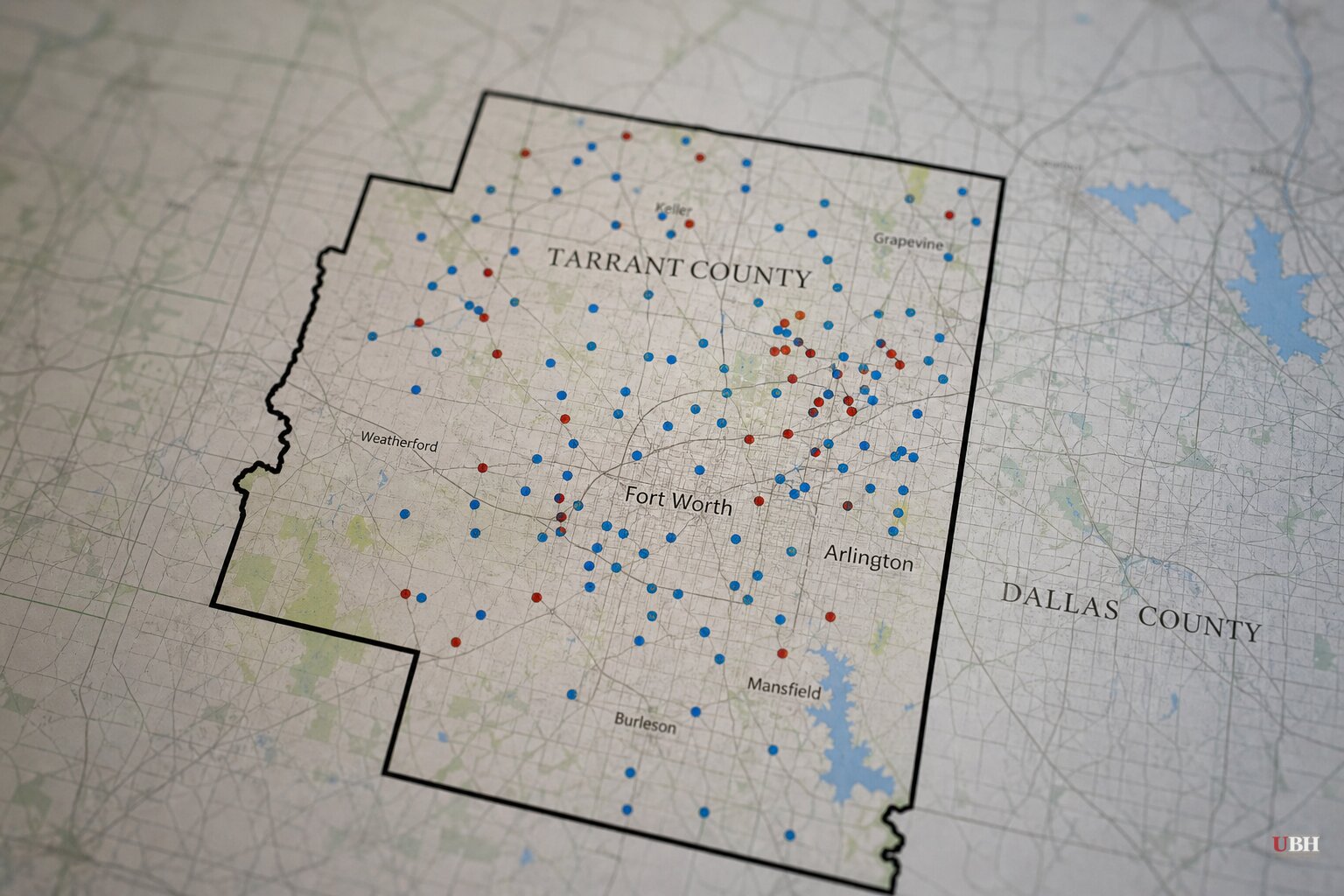
Tarrant County's Commissioners Court voted 3-2 on Tuesday, September 1, to slash the number of Election Day polling sites for the November midterms, according to NBC News, ABC News and the Associated Press. The county will go from 316 sites used in the 2022 midterms to 224, a cut of 92 locations, roughly 30%.
The three Republicans on the five-member court, County Judge Tim O'Hare and commissioners Matt Krause and Manny Ramirez, voted for the plan. The two Democrats, Alisa Simmons and Roderick Miles Jr., voted against it, according to ABC News.
Tarrant County, Texas' third-largest with more than 2 million residents including Fort Worth, is a genuine swing county. President Trump carried it in 2024 after Joe Biden won it in 2020, per NBC News, and Democrats Beto O'Rourke in 2018 and Colin Allred in 2024 both narrowly won the county in Senate races even while losing statewide. This year's Senate race pits Democratic state Rep. James Talarico against Republican Attorney General Ken Paxton.
What each side says
County officials frame the cuts as fiscal housekeeping. Judge O'Hare told ABC News the new plan averages 2.85 miles between early voting locations and 1.56 miles between Election Day sites, and that 54 polling places will still exceed the state's statutory minimum. He said some locations changed because buildings stopped operating or failed to meet Americans with Disabilities Act requirements. Tarrant County Elections Administrator Clint Ludwig has said the goal is to eliminate sites that serve few voters, and the county prioritized keeping locations near bus stops that comply with federal accessibility law, according to the Associated Press.
Rep. Matt Shaheen, the Republican chairman of the Texas House Elections Committee, dismissed suppression claims as "a silly accusation," per the AP.
Democrats and civil rights groups see it differently. The NAACP, the ACLU of Texas and other groups wrote a letter warning the closures would land hardest in majority-minority parts of Fort Worth and Arlington, where about a third of county residents are Hispanic and 19.2% are Black, per Census data cited by the Associated Press. Research shows added travel time to a polling place can reduce turnout, NBC News reported. The concern is not that the county falls below any legal minimum, but that longer trips and fewer nearby options discourage some voters from showing up at all, particularly those without reliable transportation.
Hundreds of protesters gathered outside the courthouse for more than three hours before Tuesday's vote, according to MS NOW. Fort Worth resident Chris Tackett told the outlet that "the neighborhoods that are the most Black and brown lost the most." Nydia Cardenas, a local Democratic candidate, said she'd knocked on the door of a senior citizen with no ride to the polls. Resident Catherine Godby told commissioners, "You're on the wrong side of history."
Commissioners reduced early voting locations by nearly half ahead of the 2025 elections, according to Dallas ABC affiliate WFAA. An earlier, more aggressive version of this year's plan, which would have dropped sites to 176, was shelved last month after dozens of residents testified against it. Former Democratic state Rep. Lon Burnam was arrested and removed from that August meeting on a charge of disrupting proceedings, according to MS NOW.
A separate fight in Dallas County
A parallel controversy is playing out one county over. The Daily Signal reported that Barry Wernick, a Republican candidate for Dallas County commissioner, has circulated video of the current District 2 commissioner, Democrat Andrew Sommerman, taking credit for opening mosques as polling sites and crediting Muslim turnout with electing Democratic judicial candidate Tina Clinton in 2024 and with deciding mayoral races in Richardson. In the recordings cited by the Daily Signal, Sommerman says of one mosque, "any one of those mosques can say, collectively or individually, we chose that candidate." Wernick calls this using polling sites as "political weapons." Sommerman's remarks are his own recorded comments, not merely an accusation, but Wernick's broader claim that this amounts to improper manipulation is his own characterization and has not been the subject of any announced investigation or legal complaint.
National context and unresolved questions
MS NOW and NewsBeep frame the Tarrant County vote as part of a national climate "fueled by President Donald Trump's repeated claims of voter fraud," but neither ties Trump to this specific county decision. A locally driven, GOP-majority commissioners court made a resource decision under existing Texas law, which lets each of the state's 254 counties set its own polling site count.
No source in this reporting shows evidence of actual votes suppressed. What exists is a documented 30% reduction in sites in a fast-growing, closely divided county, a civil rights letter warning of disparate effect, and a county government insisting it still exceeds legal requirements. Whether the plan changes turnout patterns won't be testable until Election Day results and any post-election legal challenges arrive in November.
Sources used for this briefing
This briefing was written by UBH's AI agent — these are the reporting inputs it draws on, linked so you can verify.


