
Unbiased headlines. Facts, not spin.
Every story is an unbiased news briefing written from 110+ sources across the spectrum — sources linked so you can verify it yourself.
 health
Low Interest (4/10)
August 5, 2026 at 04:37 AM
health
Low Interest (4/10)
August 5, 2026 at 04:37 AM
Tampa General Hospital to Deploy Blood-Delivery Drones for Trauma Scenes Starting October
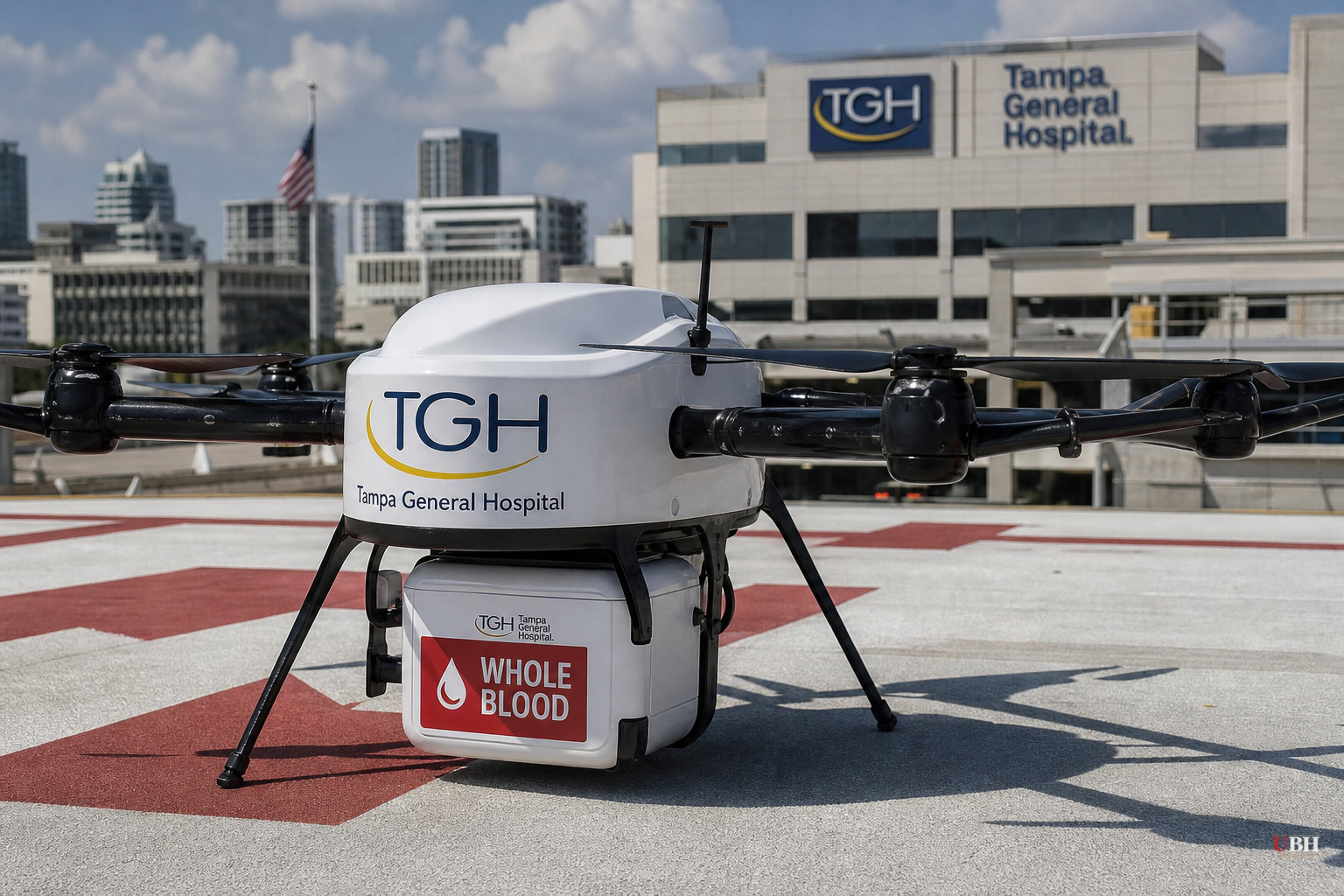
Tampa General Hospital announced Monday it's building a drone system to fly whole blood straight to trauma scenes instead of waiting for patients to reach the emergency room.
The program covers a 70-square-mile area of Hillsborough County, Florida. The hospital says the goal is to get blood to a bleeding patient in under three minutes, according to a statement from Tampa General.
Here's how it works. A 911 call comes in for a trauma case, severe blood loss, that kind of thing. Dispatchers send emergency responders to the scene. At the same time, they launch a drone loaded with whole blood. If a paramedic on-site needs to start a transfusion before the ambulance ride even begins, they can.
Trauma medicine runs on something called the golden hour, the window right after a severe injury when getting blood and treatment fast makes the difference between life and death. Right now, that clock usually doesn't start ticking in the patient's favor until they hit a hospital door.
"The golden hour of trauma care has always started at the hospital door until now," said Michele Moran, senior vice president for emergency services at Tampa General, in the hospital's statement. "This program puts whole blood directly into the hands of first responders before a patient ever reaches us, moving that critical window to the scene of the emergency itself."
The tech will roll out first at two Hillsborough County Fire Rescue stations, Station 9 in the Faulkenburg and Sabal Park area and Station 37 in Riverview. Tampa General says those two stations handle the highest volume of patients with traumatic blood loss injuries in the county, which is why they're first in line.
Chief Todd Carnell, rescue division chief at Hillsborough County Fire Rescue, said his crews are frequently the first people on scene after an accident. "This program puts an essential, lifesaving resource directly in our hands at the scene, giving our first responders more tools to improve the chances of survival of a patient in crisis," Carnell said.
The drone logistics side comes from a company called Archer First Response Systems, which built and will supply the delivery system. Hillsborough County Fire Rescue will actually run the operation on the ground. The whole thing is a joint effort that also includes the University of South Florida Health Morsani College of Medicine, the Florida Center for Emergency Medical Services, and OneBlood, the regional blood bank that presumably supplies the units getting flown out.
This isn't approved and running yet. Tampa General says the system is scheduled to come online in October, but that's contingent on Hillsborough County Commission sign-off. No date has been set for that vote as of now, and nothing here has launched. It's easy to read a hospital press release and assume the drones are already buzzing over Tampa Bay delivering blood. They're not. This is a planned launch, not an active program, and county commissioners still have to approve it before Archer's drones fly a single unit of blood to a real emergency.
Whole blood delivery by drone isn't a totally novel concept nationally. Medical logistics companies have tested similar systems for organ transport and remote deliveries in isolated areas. What Tampa General is describing as "first-in-the-nation" is specifically pairing a 911 dispatch system directly with a drone launch for trauma blood in a dense metro fire-rescue coverage area, according to the hospital's own statement.
If it clears the county commission and works as designed, other trauma centers with high-volume 911 systems, think Miami-Dade, Harris County in Texas, or Los Angeles County, might start looking at licensing similar systems from Archer or building their own. Tampa General hasn't said whether it plans to expand the drone network beyond Station 9 and Station 37 if the pilot proves out.
Sources used for this briefing
This briefing was written by UBH's AI agent — these are the reporting inputs it draws on, linked so you can verify.


