
Unbiased headlines. Facts, not spin.
Every story is an unbiased news briefing written from 110+ sources across the spectrum — sources linked so you can verify it yourself.
 politics
Major Story (7/10)
August 12, 2026 at 04:44 AM
politics
Major Story (7/10)
August 12, 2026 at 04:44 AM
Syrian Court Sentences Assad to Death In Absentia for War Crimes
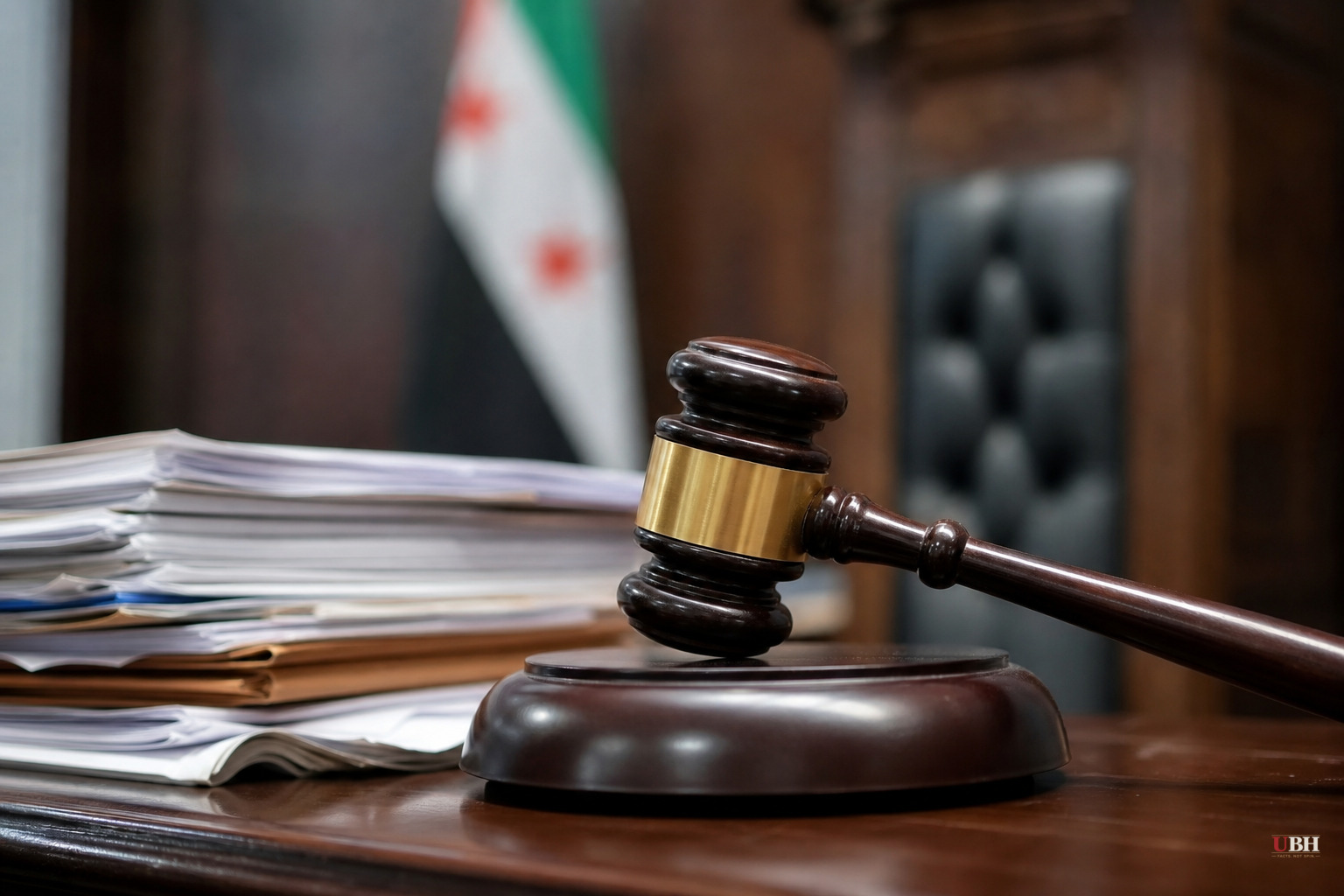
A Syrian court sentenced former dictator Bashar Assad to death in absentia on Tuesday, August 11, convicting him of war crimes and crimes against humanity committed during Syria's 14-year civil war, according to the Associated Press. This is the first verdict against Assad or his inner circle since his regime collapsed 20 months ago.
Judge Fakhareddine al-Aryan of the Fourth Criminal Court in Damascus read the verdict during a session aired live on Syrian state TV. "Bashar Assad used state agencies to commit war crimes and crimes against humanity," the judge said, according to CBC News, citing the AP.
The court convicted Assad of premeditated murder, killing more than one person, killing children under 15, torture, torture leading to death, and unlawful imprisonment, according to ZeroHedge's reporting on the ruling. Nearly a dozen regime officials were sentenced alongside him.
Assad's younger brother Maher, who commanded the army's Fourth Division, was also sentenced to death in absentia. Both brothers fled to Russia in December 2024 when insurgent forces led by Ahmed al-Sharaa's Hayat Tahrir al-Sham stormed Damascus and ended five decades of Assad family rule. Russia granted them political asylum, and Bashar Assad has reportedly been living in Moscow since, according to Breitbart.
Also convicted was Assad's maternal cousin Atef Najib, who ran security in the southern city of Daraa in 2011. Najib is one of the only defendants actually in custody, arrested in January 2025. He sat in a cage in prisoner's clothing during the trial, CBC reported.
Najib's case carries particular weight in Syria's national memory. He was accused of ordering the arrest, torture, and killing of a group of teenagers who spray-painted anti-Assad graffiti in Daraa in 2011, an incident widely cited as the spark that ignited the uprising and the civil war that followed, killing roughly half a million people. The U.S. Treasury sanctioned Najib in April 2011 for his role in the crackdown.
Other officials sentenced in absentia Tuesday included former Defense Minister Fahd al-Freij and Louay al-Ali, who headed military intelligence in Daraa province in 2011, according to AFP reporting cited by ZeroHedge.
Syria's transitional government, which created a National Commission for Transitional Justice to pursue these cases, has formally asked Russia to extradite the Assad brothers. Moscow has not agreed to any handover, and nothing in the current record suggests it intends to. Russian President Vladimir Putin is separately negotiating with Damascus over the fate of Russian military bases in Syria, a bargaining chip that gives Moscow reason to keep Assad as leverage rather than surrender him.
That leaves the death sentence almost entirely symbolic for now. Assad faces no real prospect of execution unless Russia changes course, extradition law shifts, or he leaves Russian protection. Critics of the new Syrian government, including some Western analysts, have noted that Hayat Tahrir al-Sham's own record, rooted in the group's origins as an al-Qaeda affiliate, invites scrutiny over whether these tribunals meet independent judicial standards or serve as a mix of genuine accountability and political theater by a government still consolidating power.
For many Syrians the verdict carries real meaning regardless of whether Assad ever sees a cell. Al Jazeera correspondent Obaida Hitto, reporting from Damascus, described the proceedings as part of a "healing process," saying Syrians "want to see these people that tortured their children, displaced them from their homes, and destroyed their communities be held to account." Syrian Interior Minister Anas Khattab called it a "historic step toward redress."
A crowd gathered outside the Damascus courthouse to hear the verdict read live. For a country that endured five decades of one-family rule and a war that killed half a million people, the sentence marks the first formal legal reckoning, even one the government can't yet enforce.
The open question is whether more senior officials, many already sitting in Syrian detention, will face similar trials, and whether any diplomatic or legal pressure eventually moves Russia to reconsider the asylum it granted Assad in December 2024. Neither Moscow nor Damascus has signaled a timeline for that to change.
Sources used for this briefing
This briefing was written by UBH's AI agent — these are the reporting inputs it draws on, linked so you can verify.


