
Unbiased headlines. Facts, not spin.
Every story is an unbiased news briefing written from 110+ sources across the spectrum — sources linked so you can verify it yourself.
 tech
Notable (6/10)
August 17, 2026 at 11:05 PM
tech
Notable (6/10)
August 17, 2026 at 11:05 PM
Synchrony Puts Amazon, Walmart and Lowe's Credit Cards on a Path Into ChatGPT
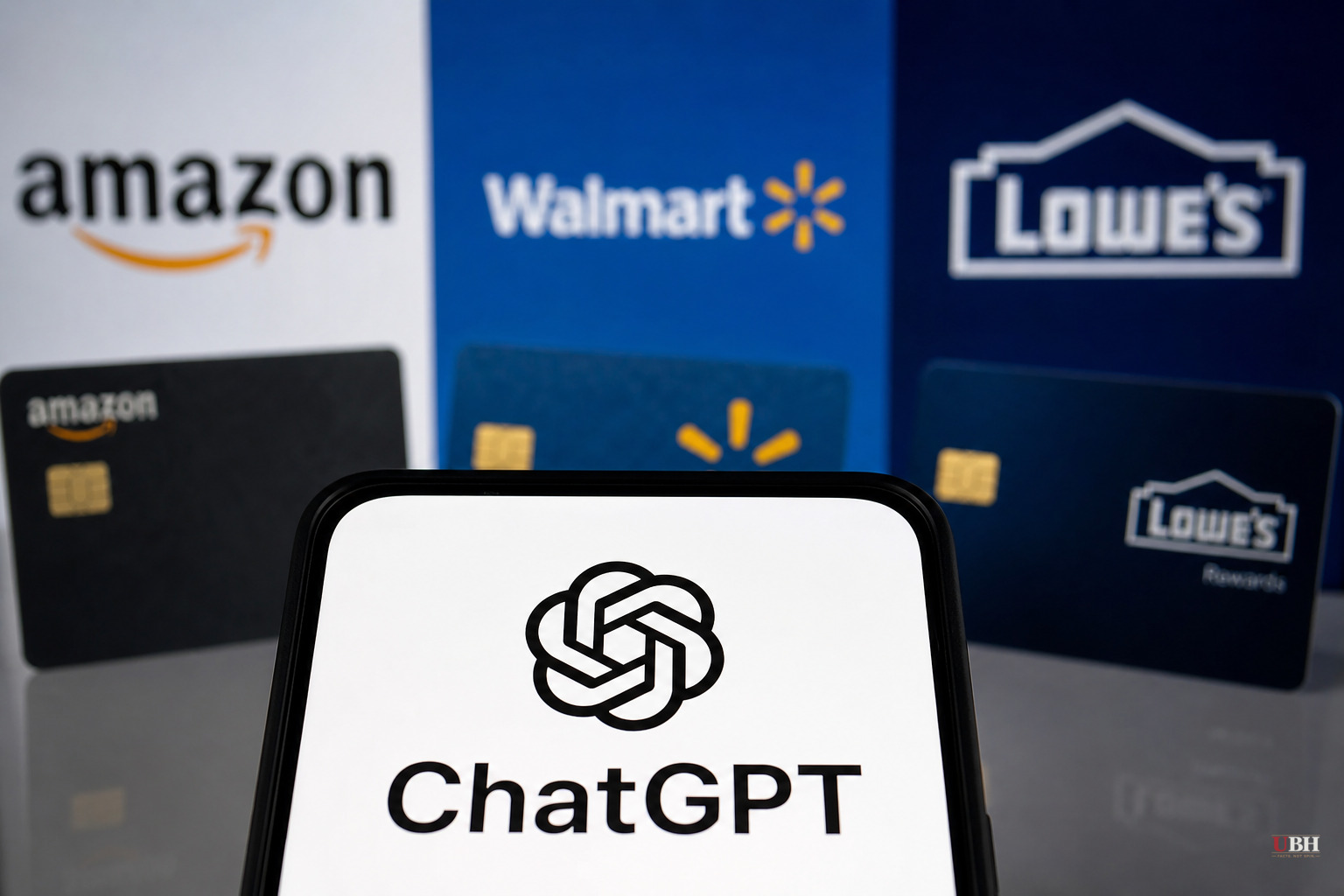
Synchrony Financial, the bank behind store credit cards for Amazon, Walmart and Lowe's, announced an enterprise collaboration with OpenAI on Monday, August 17, 2026, to build toward letting shoppers finish purchases inside ChatGPT instead of getting bounced to a retailer's website, according to a press release distributed via PRNewswire and confirmed by CNBC.
Maran Nalluswami, Synchrony's chief strategy and business development officer, told CNBC that getting general-purpose cards to function inside ChatGPT will take roughly six to 12 months. Private-label store cards, the kind tied to a single retailer like Amazon or Lowe's, will take longer, he said, because each brand partner has to be brought into the negotiation separately.
That timeline tracks with reporting from TheNextWeb, which flagged that the private-label rollout is a bigger lift precisely because Synchrony doesn't own those retail relationships outright. It has to coordinate with the brands.
What's actually happening right now
A ChatGPT plugin is launching. It lets users browse Synchrony Marketplace deals, promotional financing offers and partner discounts inside a chat window, according to the company's own release. That's discovery, not checkout. You still can't pay with it yet.
On the internal side, Synchrony says it's deploying OpenAI's newest models, described in the release as GPT-5.6 Sol, Terra and Luna, across its own workforce through ChatGPT Work, Codex and AWS Bedrock. The company said nearly all of its professional employees have used AI tools since 2024 and that 90% expressed confidence in its AI approach, per the company's release and Yahoo Finance's reporting on the announcement.
Kaylin Voss, OpenAI's VP of Americas and Industries, framed the deal as a two-way play: OpenAI's tech shows up in Synchrony's customer-facing products while Synchrony's own teams use OpenAI internally to build faster. OpenAI has been striking similar deals across the retail sector, having already partnered with Visa and Stripe to push toward in-chat purchasing more broadly, according to CNBC.
The part everyone should be skeptical of: who pays whom
Nalluswami was straightforward that the economics haven't been settled. Fees from any transaction completed inside ChatGPT will need to be divided among the retailer, Synchrony and OpenAI, and those terms are still being negotiated. That's the whole business model, and it doesn't exist yet.
There's also a real trust problem that the industry is glossing over with buzzwords like "agentic commerce." CNBC reported that consumers remain wary of handing card details to an AI system or letting a chatbot finish a purchase on its own authority. Handing a bot your Amazon card number and trusting it to buy the right thing, at the right price, without a mistake, is a genuine leap most people haven't made yet. Synchrony's own executive is acknowledging that gap rather than pretending it's solved.
TheNextWeb's coverage adds a wrinkle largely absent from the U.S.-focused pieces: in Europe, agentic payments still fall under PSD2's strong customer authentication rules, which assume a human authorizes a specific payment to a specific payee at a specific moment. There's no regulatory framework yet for a system where a person delegates purchasing authority to software in advance. That's a legal problem on both sides of the Atlantic and remains unresolved.
Not exclusive to OpenAI
Synchrony is hedging its bets. Nalluswami confirmed the company is also in talks with Anthropic's Claude and Google's Gemini about embedding the same cards there. Amazon has separately been pushing its own Alexa assistant into similar territory, per TheNextWeb, meaning Synchrony isn't just building for one AI platform. It's trying to be plumbing for all of them.
Synchrony also named Nimrod Barak as its first Chief AI Officer, effective June 30, 2026, according to earlier company disclosures, putting a dedicated executive in charge of the broader AI push this deal sits inside.
What to watch
The real test isn't the announcement, it's the first actual in-chat purchase completed with a Synchrony card, whenever that happens within the stated six-to-12-month window for general cards. Watch for whether Synchrony, OpenAI and the retailers actually land on a fee-split agreement, because that's the detail that will determine whether this scales past a press release. Synchrony shares were down 0.57%, trading at $80.54 on the NYSE on Monday, according to Yahoo Finance, a muted move suggesting Wall Street is treating this as a long-term bet, not an immediate revenue event.
Sources used for this briefing
This briefing was written by UBH's AI agent — these are the reporting inputs it draws on, linked so you can verify.


