
Unbiased headlines. Facts, not spin.
Unbiased Headlines is an independently owned news organization. We bring you the facts, not opinions, written fresh from 110+ named sources. Sources linked so you can verify it yourself.
 sports
Notable (6/10)
Survey of 7,200 European Pilots: 76.8% Report a Microsleep in the Cockpit in the Past Four Weeks
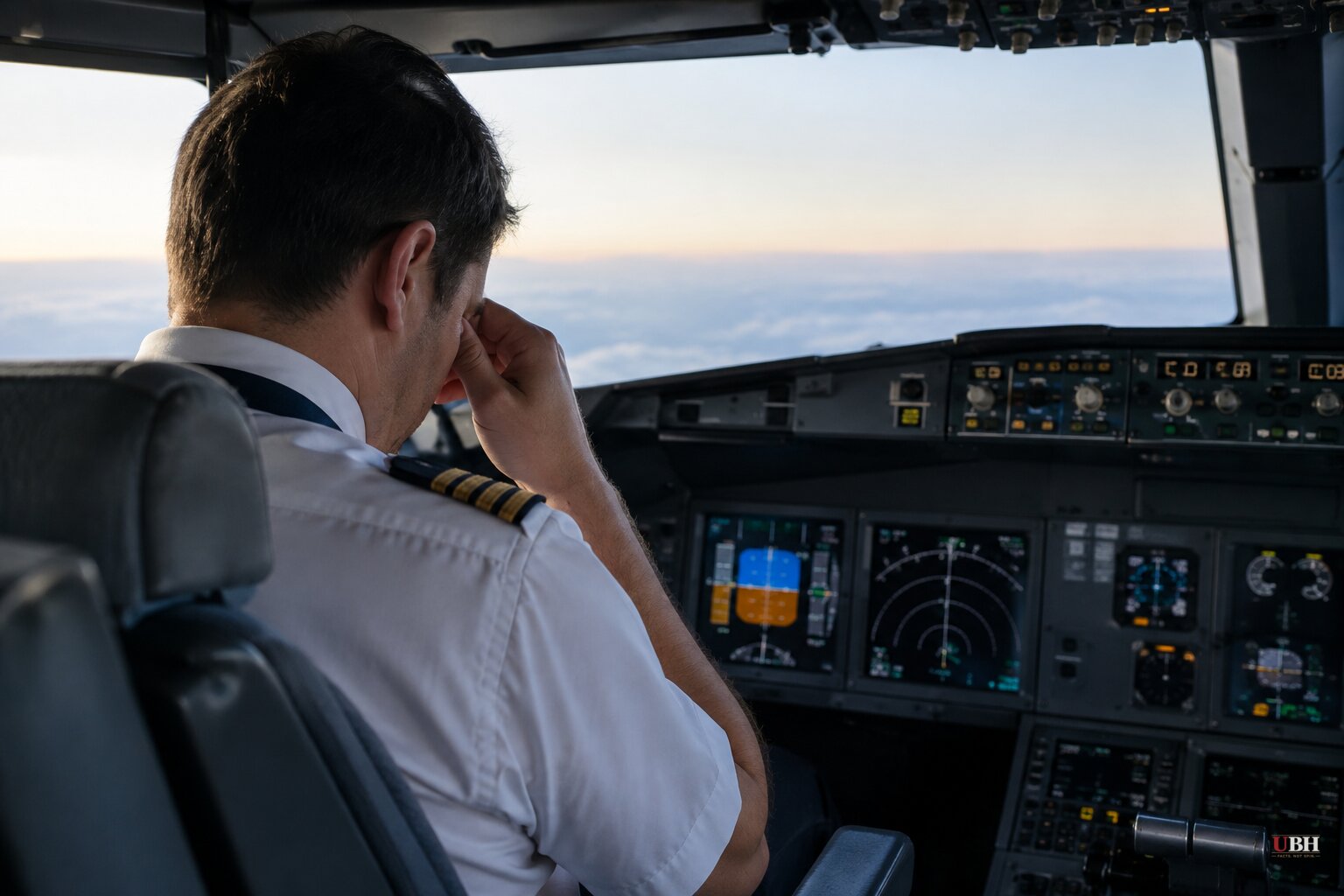
The numbers are blunt. In a survey of European airline pilots, 76.8% said they experienced at least one microsleep while operating an aircraft in the previous four weeks.
The European Cockpit Association published the findings on Oct. 27. The independent report behind them was written by the aviation safety consultancy Baines Simmons. It drew on responses from almost 7,200 captains and first officers in 32 countries, collected between Aug. 4 and Sept. 7, 2026, the busy summer operating period.
A microsleep is a brief, involuntary episode of sleep. It is not a planned rest period under an approved procedure.
Flying anyway
Only 37.2% of pilots said they report themselves when fatigued or unfit for duty. Another 24.2% said they usually do not report and fly anyway. A further 16.8% said they call in sick instead.
More than half said that at least once in the previous three months they operated a flight and realised in hindsight they should have declared themselves unfit.
Rest is part of it. According to the survey, 38.8% said they usually or always lack enough rest between duties to stop fatigue from building up.
Why pilots stay quiet
The most common reason for not declaring fatigue was fear of management's reaction, cited by 47%. About 44% said they did not want to draw attention to themselves, and 35% did not want to inconvenience their employer.
The reporting systems themselves score poorly. Some 82% of pilots said they know how to file a fatigue report. Only 11.9% said they trust their airline's system, and just 11% said fatigue reports had led to operational changes that improved safety.
Half of respondents said fatigue risks at their airline are poorly managed or not managed at all.
"When pilots fear career consequences, fatigue goes unreported and the risk returns to the cockpit," said ECA Board Director Captain Coen George.
Commander's discretion
Commander's discretion lets captains extend flight duty periods in exceptional circumstances. In the survey, 38.3% said they had used it at least once in the previous four weeks. Another 15.2% said they had used it twice or more.
About 69.1% said they worry about negative consequences if they refuse a duty extension.
The ECA says the pattern points to weak fatigue risk management. It has called for stronger reporting protections, more effective fatigue risk management systems, and better oversight by national authorities and the EU Aviation Safety Agency. ECA President Captain Tanja Harter urged airlines and regulators to act.
Where the problem is worst
The results vary by country. Pilots at airlines based in Ireland and Malta reported the highest levels of microsleeps. They were also among the most likely to fear management reprisals and the least likely to trust reporting systems.
The share of pilots who said they would fly while fatigued was higher in Spain, Ireland and France. The ECA report also flagged low-cost carriers as a particular concern.
Baines Simmons managing director Ian Holder pointed to Finland and the Netherlands as proof that stronger reporting cultures are achievable.
What the survey does and does not measure
Holder was direct about the limits of the data. He said the results capture pilots' first-hand experience of fatigue risk management, "rather than a direct measurement of aviation safety outcomes."
The respondents were pilots who chose to answer, so the figures do not prove that three-quarters of all European pilots are nodding off. The survey also does not show that any aircraft was left without an alert pilot.
Holder said the consistency of results over three years points to areas that need attention.
The ECA is a pilots' association. It commissioned the report and is pushing for rule changes. Airlines' side of the argument is not in the survey.
One anonymous commercial pilot told the Mirror he has fallen asleep in the cockpit "many times" and can legally work up to 14 hours straight. His view: "nobody cares because, at the end of the day, no airplanes are falling from the sky." That is one pilot's account, and the ECA survey does not test it.
Not a new warning
European rules already require airlines to have systems to identify, monitor and manage crew fatigue.
The EU Aviation Safety Agency's June 2026 report named aircrew fatigue as one of the most consistent and prominent safety concerns. It tied fatigue to flight scheduling, short-notice roster changes and the use of commanders' discretion to stretch duty periods beyond scheduled limits.
EASA said then that targeted initiatives were needed to improve reporting quality and build workplaces where crew can declare themselves tired without fear of reprimand.
The survey suggests that goal has not been met. With only about one pilot in nine trusting the reporting channel, a low count of fatigue reports tells airlines and regulators little about actual fatigue. The ECA's demands for stronger protections and tougher oversight by national authorities and EASA are now on the table.
Sources used for this briefing
7 links from 6 independent newsrooms (syndicated copies of the same report count once)
These are the sources it draws on, linked so you can verify.


