
Unbiased headlines. Facts, not spin.
Unbiased Headlines is an independently owned news organization. We bring you the facts, not opinions, written fresh from 110+ named sources. Sources linked so you can verify it yourself.
 sports
Low Interest (4/10)
One Dead, Three Injured as Two Helicopters Collide While Landing at Pheriche, Nepal
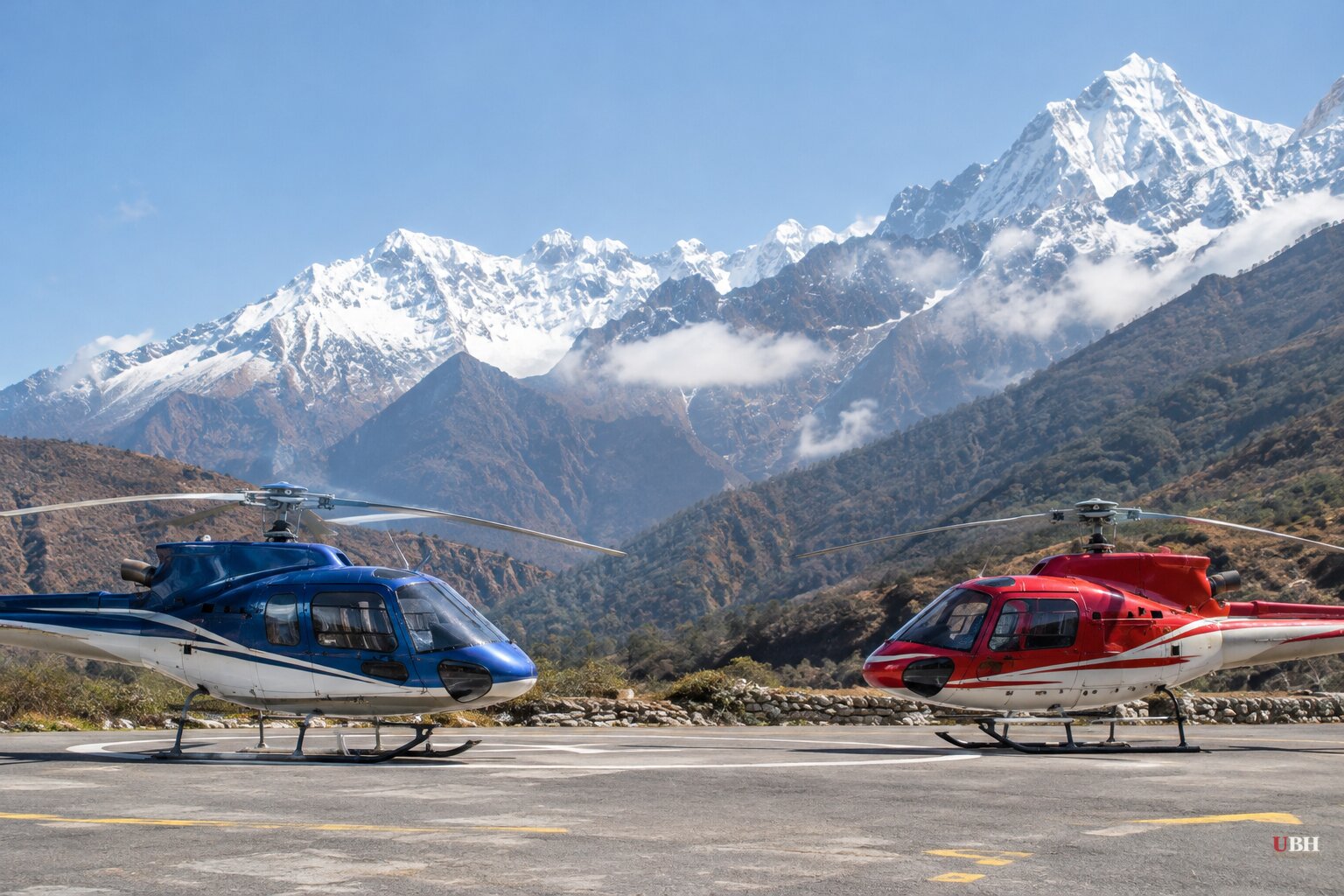
Two helicopters collided while trying to land at Pheriche, a village in Nepal's Everest region, on the morning of Tuesday, Nov. 3. One person died and three were injured.
Nepal Police said the collision happened at about 8:11 a.m. local time in Ward 4 of Khumbu Pasang Lhamu Rural Municipality, Solukhumbu district. Pheriche sits at 4,200 meters (13,780 feet), just below Everest base camp.
Who was hurt
Police identified the dead man as Vasanth Kumar Balaramaramadu, 47, an Indian national. He was a passenger on the Fishtail Air helicopter. Local police said he was a resident of Chennai. His body was taken to a hospital in Lukla.
Also on that helicopter was Shailesh Krishna Patel, 49, a New Zealand resident of Indian origin. Police inspector Mausam Tamang said Patel was airlifted to Mediciti Hospital in Kathmandu aboard a Prabhu Helicopter.
Both pilots were injured. Rabindra Prajapati flew for Fishtail Air and Prajwal KC for Air Dynasty. Both were taken to Kathmandu for treatment.
Some early accounts listed only two injured. Police put the injured at three: Patel and the two pilots.
What the operators say
Fishtail Air said in a statement that its helicopter was carrying passengers who had been rescued from the Everest region when it went down while landing. A Fishtail official said the Indian and New Zealand passengers were tourists.
An Air Dynasty official said its helicopter was carrying only cargo.
Kaman Singh Thapa Magar, chief district officer of Solukhumbu, said the New Zealander had been rescued. A local official also said one helicopter was coming from Lukla while the other was returning from the base camp area, and that both tried to land at the same spot.
The total number of people aboard both aircraft has not been confirmed. Police said they were still gathering details.
The video
Footage of the collision has spread widely online. It appears to show the rotors of the two helicopters striking each other just before touchdown, sending both aircraft onto the icy ground. A group of people is seen running clear.
NDTV said it could not independently confirm the authenticity of the video. The police account of where and when the collision happened matches what the footage appears to show.
Why the Everest region is hard to fly
There are no roads in the Everest region. Helicopters are the main way to evacuate trekkers and guides who fall sick or are exhausted, and they also move supplies.
Thin air at altitude cuts the lift rotor blades can generate. Engines also lose power because they draw in less oxygen. Weather in the area changes quickly.
The crash came during autumn, the busiest trekking season. Heavy snowfall had blocked trekking routes in the region, and conditions improved on Sunday, allowing thousands of trekkers to resume their journeys. Last week, a fire broke out at a hotel on the route to base camp, and snow hampered firefighting. No one was hurt in that fire.
The collision also follows a helicopter crash in India's Uttarakhand state a few days ago. That aircraft went down shortly after taking off from Badrinath, killing all six people aboard.
Open questions
No cause has been announced, and no official investigation has been described in public statements. Several questions remain.
- Why two helicopters were cleared or chose to land at the same helipad at the same time.
- Whether anyone was coordinating traffic at Pheriche.
- How many people were on each aircraft.
NDTV's report asked whether Nepal will bring in stricter rules for high-altitude flights. No official has answered that.
The next concrete developments are the medical updates on Patel and the two pilots in Kathmandu, and whether Nepali aviation authorities open a formal inquiry into a collision between two private operators at one of the busiest stops on the Everest route.
Sources used for this briefing
8 links from 8 independent newsrooms (syndicated copies of the same report count once)
These are the sources it draws on, linked so you can verify.


