
Unbiased headlines. Facts, not spin.
Unbiased Headlines is an independently owned news organization. We bring you the facts, not opinions, written fresh from 110+ named sources. Sources linked so you can verify it yourself.
 sports
Notable (5/10)
USOPC Explores Outside Investment in Team USA Commercial Rights, With Sources Citing a Multibillion-Dollar Valuation
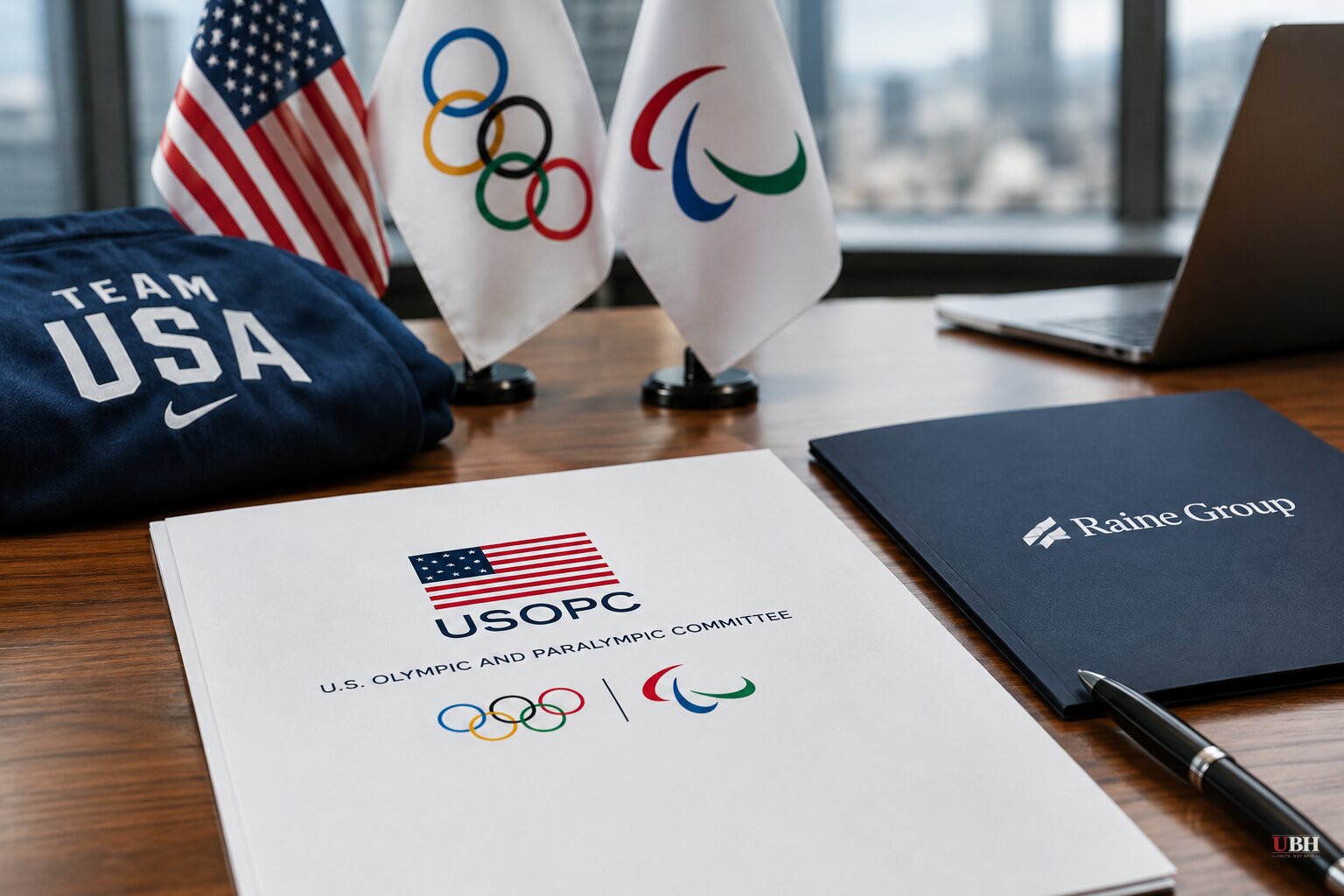
The U.S. Olympic and Paralympic Committee is shopping for outside capital, and it has said so on the record.
In a statement, the USOPC said it is "evaluating a range of commercial models to generate greater resources in support of its mission." It added that any path forward "will preserve the USOPC's mission, governance, leadership and commitment to Team USA athletes."
The specifics come from Sky News and from USOPC board minutes.
What is on the table
Sky News reporter Mark Kleinman reported today, Nov. 3, that the USOPC has engaged the Raine Group to explore possible transactions. His sources said a deal could value the committee's commercial rights at "several billion dollars." They also cautioned that nothing has been finalised and that the structure could be a debt raise instead of a stake sale.
Several investors have reportedly been approached, according to the Sky News sources. Several national governing bodies are understood to have been consulted closely on how a deal might be structured.
USOPC board minutes show the idea has been in development for months. They name the proposed vehicle United States Olympic and Paralympic Ventures, or USOPV.
The minutes say CEO Sarah Hirshland "reported encouraging feedback from preliminary discussions with potential investment and strategic partners." They add that prospective partners "generally validated the vision for the USOPV and strategic rationale underlying the initiative."
Hirshland: a planned transition
Hirshland told Reuters the commercial model for USOPV is "very much in progress" and declined to give details. She framed the move around a contract ending. The USOPC's commercial partnership with LA28, known as United States Olympic and Paralympic Properties, expires after the 2028 Los Angeles Games.
"This is a natural transition point and is one we've been talking about and preparing for for more than a couple of years," Hirshland said.
The USOPC says Team USA's commercial rights return to it after LA28. Hirshland said the aim is "sustainable and consistent commercial strength" that would work with host organizers for the 2034 Winter Games in Salt Lake City and with future hosts.
Sky News sources described the goal as putting the U.S. Olympic movement on a long-term footing. One source said a separate rights deal could help the USOPC move off the usual four-year funding cycle that revolves around Summer Games years.
The USOPC says athlete and federation representatives have been consulted throughout.
Not a government-funded model
The USOPC is a nonprofit. Unlike many national Olympic committees, it relies on sponsorships, licensing and other commercial income rather than government funding. That makes private capital a more natural fit than it would be elsewhere.
It also follows a pattern. The Spanish and French football leagues, the Six Nations, Prem Rugby and the world governing body of volleyball have all sold stakes in their commercial rights.
The FIFA warning
The obvious cautionary tale is FIFA. Its plan for a $20 billion subsidiary to run the World Cup and other events, with stakes of up to 20% offered to outside investors, was dropped after a backlash across global soccer. City A.M. reported the outrage centered on investors having been lined up in secret.
The USOPC's emphasis on consulting athletes and federations, and on keeping governance and leadership intact, reads as a direct answer to that episode. No athlete group or governing body in the reporting has publicly objected to the USOPC plan.
What investors would be buying
The Sports Examiner, which tracks the Olympic economy, argues the idea is less radical than it sounds. The USOPC already carries debt. It issued $133 million in private placement notes on May 18, 2021, to keep athlete programs funded when the Tokyo Games were postponed. Its 2025 financial statements show notes payable of $152.085 million at the end of last year, down from $158.435 million at the end of 2024.
The same publication points to what it calls a murkier outlook for the revenue behind any deal. The USOPC leans heavily on payments from the International Olympic Committee, which pays a share of U.S. television money and a portion of TOP sponsorship revenue. Per the IOC's annual reports, those payments to the USOPC were:
- 2022 (Winter Games year): $237.015 million
- 2023: $109.811 million
- 2024 (Summer Games year): $320.886 million
- 2025: $81.588 million
The swings are big. Games years dwarf off years, which is the cycle USOPC leaders say they want to smooth out.
NBC holds U.S. rights through 2036, paying a reported $3 billion for the 2034 and 2036 Games. The Sports Examiner notes that NBCUniversal is due to be separated from parent Comcast in 2027, and says U.S. television rights beyond 2036 are an open question. That is the Sports Examiner's assessment, not a USOPC projection.
What comes next
No transaction has been announced. The USOPC has not said whether it will sell equity, borrow, or do both, or who the investors might be. It has also not said how much of any proceeds would flow to athletes and national governing bodies, though its stated purpose is more money for both.
The next test is the details. A stake in rights that revert to the USOPC after the 2028 Games will have to be priced against IOC payments that swing by hundreds of millions of dollars between Games years and off years.
Sources used for this briefing
6 links from 6 independent newsrooms (syndicated copies of the same report count once)
These are the sources it draws on, linked so you can verify.


