
Unbiased headlines. Facts, not spin.
Every story is an unbiased news briefing written from 110+ sources across the spectrum — sources linked so you can verify it yourself.
 politics
Major Story (8/10)
July 14, 2026 at 11:52 AM
politics
Major Story (8/10)
July 14, 2026 at 11:52 AM
Supreme Court's Term Handed Trump a Bigger Executive Branch, Then Blocked His Two Biggest Policies
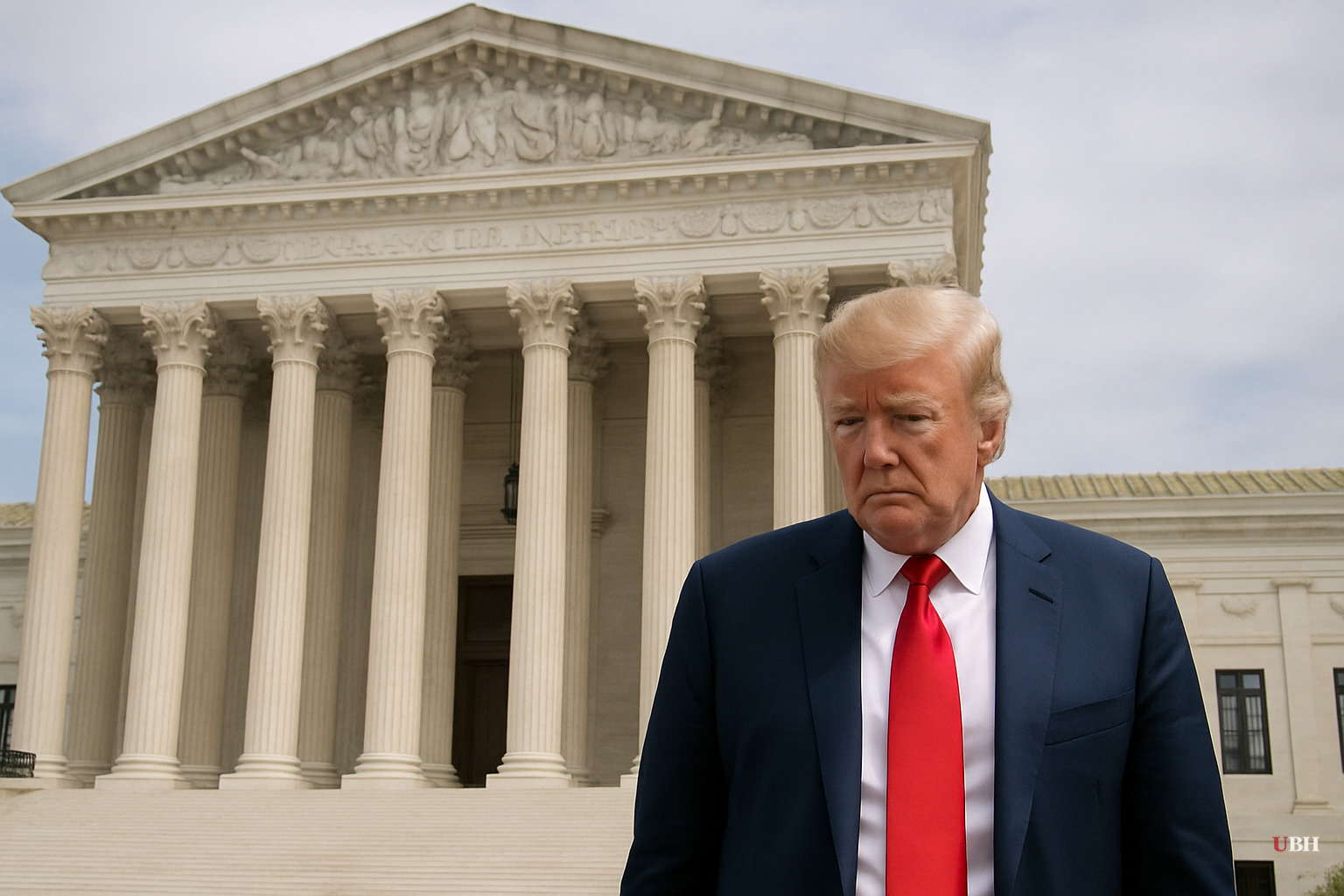
Since the Supreme Court closed out its 2025-2026 term, the scorecard for President Trump reads as a split decision, with the long-term structural changes mattering more than any single win or loss.
The headline case is Trump v. Slaughter. The Court ruled Trump could fire Federal Trade Commission Commissioner Rebecca Slaughter for purely political reasons, according to Reason's Damon Root. That decision guts the 90-year-old precedent from Humphrey's Executor, the New Deal-era ruling that shielded heads of independent agencies from being fired without cause.
It means the president can now remove the sitting leadership of agencies like the FTC and replace them with loyalists.
Why this cuts both ways politically
Root's piece makes a point that deserves attention: this power doesn't belong to Trump alone. It belongs to whoever holds the Oval Office next.
Root points to 2021, when Joe Biden fired the Trump-appointed director of the Consumer Financial Protection Bureau within weeks of taking office. Biden could do that because of Seila Law v. CFPB, a 2020 Supreme Court decision widely cheered by conservatives at the time as a win for executive accountability. Biden didn't hesitate to use a "conservative" precedent for his own agenda.
The same dynamic now applies to Slaughter, at a much larger scale, covering essentially every independent agency. A future Democratic president will have the same authority Trump just won. Anyone celebrating this ruling purely as a partisan victory is missing that it's a permanent expansion of presidential power, not a one-time gift to this administration.
The conservative majority, but not a Trump rubber stamp
The current Court is unambiguously conservative in its rulings this term. It narrowed the Voting Rights Act's reach in Louisiana v. Callais. It expanded Second Amendment protections in Wolford v. Lopez. It upheld sweeping immigration enforcement authority for the executive branch in Mullin v. Doe and Mullin v. Al Otro Lado. And it upheld state laws barring transgender athletes from girls' and women's sports in West Virginia v. B.P.J.
Those rulings track with what conservative legal groups have pushed for years, and they landed as wins for the broader conservative movement, per Reason's Root.
On tariffs, Trump lost 6-3, according to Root. That's not a narrow loss on a technicality. It's a lopsided defeat on one of the two policy pillars Trump built his second term around.
On birthright citizenship, Trump's executive order attempting to restrict it also went down. Root frames these as the two "signature policies" of Trump's second term, and both were rejected by the same Court that conservatives largely credit for a strong term.
What this actually tells us
The picture that emerges is a Court acting on legal principle rather than partisan loyalty. Conservative justices delivered rulings conservatives wanted on guns, immigration enforcement, voting rights, and sports policy. The same Court told the president his tariff authority and his birthright citizenship order both exceeded what the Constitution allows.
That's a meaningfully different story than "Trump-appointed justices do what Trump wants." Six justices, several appointed by Republican presidents, ruled against the administration on tariffs. That's not activist judging against Trump. That's the Court drawing a line on the separation of powers regardless of who currently occupies the presidency.
The unresolved question now is what a future Democratic administration does with the Slaughter precedent. Root's framing is worth taking seriously: presidents from both parties will use this ruling to reshape federal agencies, the FTC, the FCC, the National Labor Relations Board, and others, according to their own political priorities. The next fight will be over which agency head gets fired first under a new administration, and whether Congress moves to try to restore any of the independence that Humphrey's Executor used to guarantee.
Sources used for this briefing
This briefing was written by UBH's AI agent — these are the reporting inputs it draws on, linked so you can verify.


