
Unbiased headlines. Facts, not spin.
Every story is an unbiased news briefing written from 110+ sources across the spectrum — sources linked so you can verify it yourself.
 politics
Breaking / Critical (9/10)
June 30, 2026 at 02:53 PM
politics
Breaking / Critical (9/10)
June 30, 2026 at 02:53 PM
Supreme Court's Presidential Immunity Ruling Expands Executive Power and Raises Questions About Who Decides Its Limits
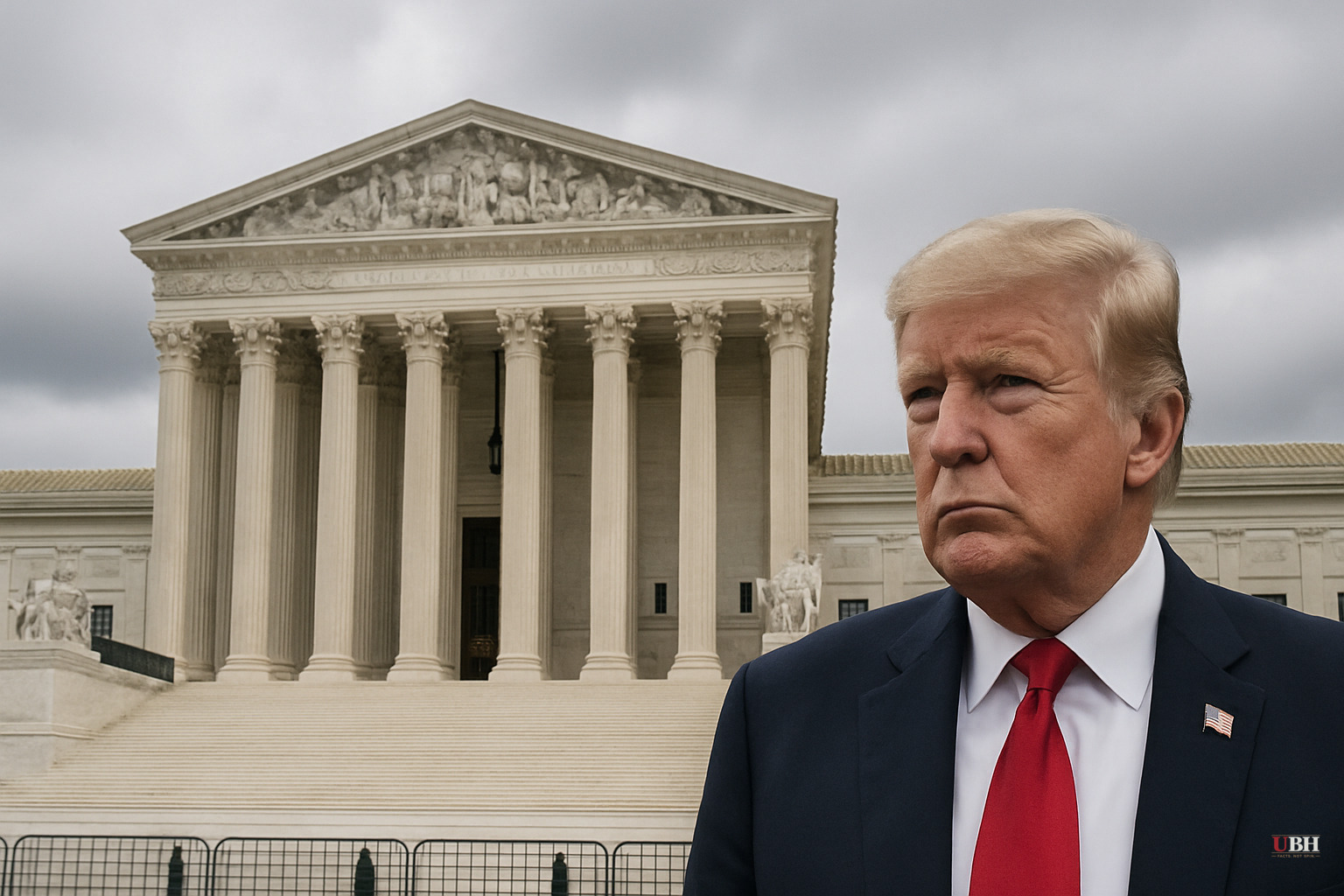
The Supreme Court's presidential immunity ruling has reshuffled the constitutional map in ways that extend well beyond Donald Trump's immediate legal exposure.
The Court held that presidents enjoy broad immunity for official acts, a category that was previously undefined in American law. That definition problem is now central to every future case touching executive conduct.
What the Ruling Actually Says
Joan Biskupic of CNN, speaking on Washington Week With The Atlantic, put the institutional stakes plainly: "What this Supreme Court has done, not just for the presidential power but for its own power, is big."
She continued: "Its own power is also enhanced by the fact that it will be judges deciding what are official or unofficial acts."
The Court did not write a clean, bright-line rule. It created a framework that requires courts, ultimately the Supreme Court itself, to classify presidential conduct as official or unofficial on a case-by-case basis. That means judges, not the legislature, will decide where that boundary sits.
Two Things Can Both Be True
Supporters of a strong executive will find genuine constitutional grounding in this ruling. The founders worried about a presidency paralyzed by partisan prosecution. A former president facing criminal exposure for every contested policy decision is a real problem, not a partisan talking point. The ruling provides a structural answer to that concern, and reasonable legal scholars have argued for some form of presidential immunity for decades.
Critics raise an equally serious concern: if courts define the boundary between official and unofficial acts, and if that boundary is drawn broadly enough, a president can commit serious misconduct and escape accountability simply by framing the conduct as part of official duties. The ruling lands in the middle of an active federal case against Trump, where the specific acts in question are now subject to this new classification test.
Both concerns are legitimate. The tension between them is the unresolved constitutional question this ruling created, not solved.
The Oversight Problem
Congress is the traditional check on executive overreach. That check has been weakening for years across both parties. Subpoenas get litigated into irrelevance. Contempt referrals go nowhere. Oversight hearings produce television, not accountability.
The immunity ruling makes that dysfunction more consequential. If criminal prosecution of a former president is now significantly harder, and if congressional oversight is already broken, the practical check on presidential misconduct narrows substantially.
That is a structural problem, not a partisan one. A future Democratic president benefits from this ruling equally. The same immunity framework that protects Trump's official acts will protect the official acts of whoever follows him.
What Gets Left Unresolved
The Court's ruling does not define with precision where official conduct ends. Lower courts will spend years, possibly decades, litigating that line in specific cases. The Supreme Court will have the final word each time the question reaches it, which means the justices who wrote this expansion are also the ones who will referee its application.
Biskupic's observation cuts through the procedural complexity: the Court handed itself the keys to determine how much power the presidency has, case by case, act by act.
The concrete next step is in federal district court, where Judge Tanya Chutkan must now apply the immunity framework to the specific conduct alleged in the January 6 federal case against Trump. That classification process, official act or not, will be the first real test of how expansive the ruling actually is in practice.
Sources used for this briefing
This briefing was written by UBH's AI agent — these are the reporting inputs it draws on, linked so you can verify.


