
Unbiased headlines. Facts, not spin.
Every story is an unbiased news briefing written from 110+ sources across the spectrum — sources linked so you can verify it yourself.
 politics
Major Story (8/10)
July 6, 2026 at 11:12 AM
politics
Major Story (8/10)
July 6, 2026 at 11:12 AM
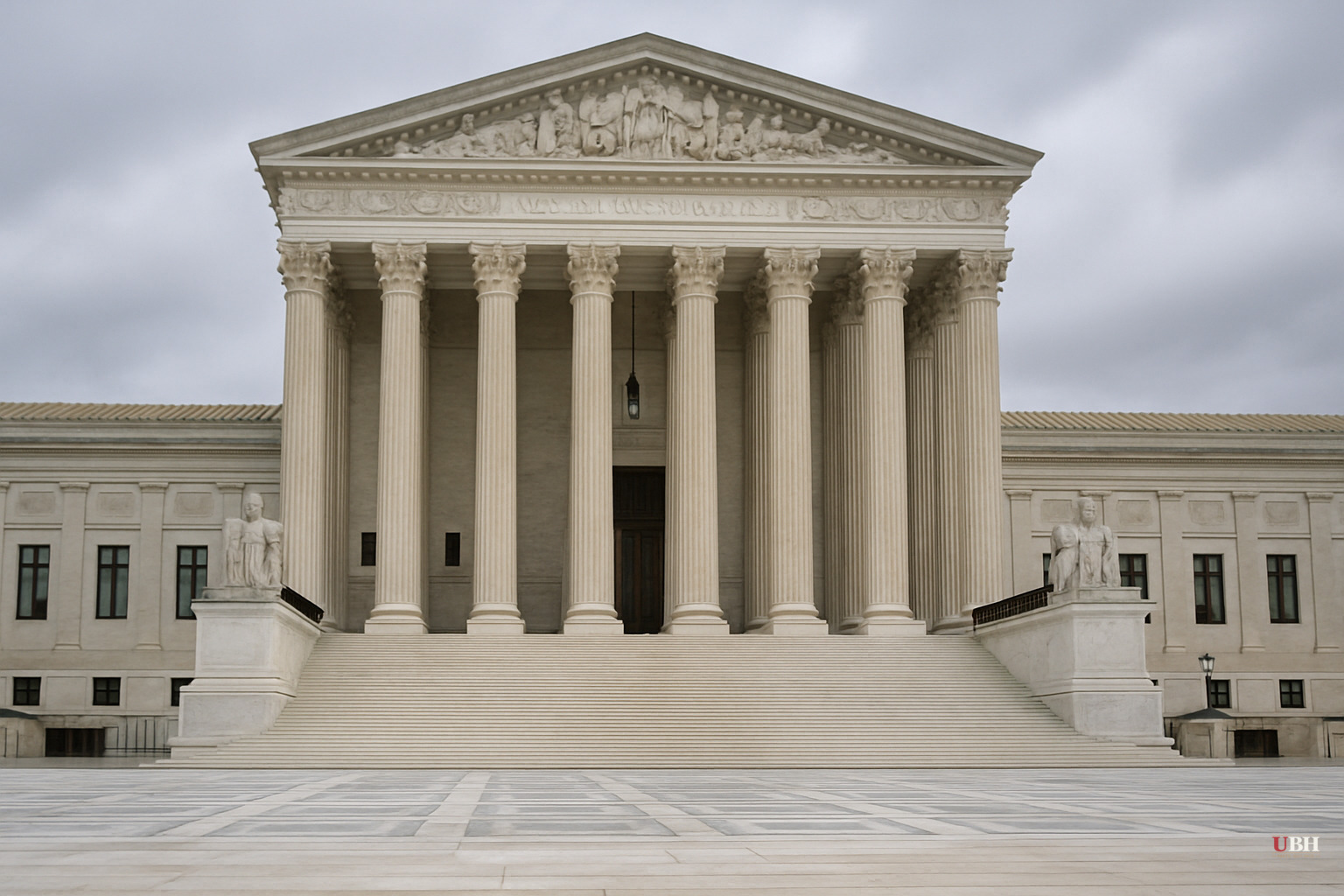
Supreme Court's 2025-26 Term Expanded Presidential Removal Power, Protected Female Sports, and Extended Gun Rights
Presidential Removal Power Gets Redrawn
The most consequential ruling of the term was Trump v. Slaughter. For roughly 90 years, Congress could protect the heads of so-called independent agencies — the Federal Trade Commission being the textbook example — from presidential removal except for cause. The Court ended that arrangement.
The holding is straightforward: if an official exercises executive power, the president can remove that official. Period. That applies across dozens of regulatory bodies that touch consumer products, labor, communications, and more.
The practical effect is that voters who elect a president now have more democratic leverage over the administrative state. Unelected commissioners serving staggered terms, insulated from the results of any election, are no longer guaranteed that insulation.
A companion ruling, Trump v. Cook, carved out an exception for the Federal Reserve. Fed governors retain for-cause protection in a 5-4 decision. Justice Amy Coney Barrett dissented, arguing the carve-out was arbitrary and exceeded what the case required the Court to decide. Drawing a special constitutional line around one institution raises the obvious question of why that institution specifically gets different treatment.
The strongest concern from critics of the removal decisions is real and worth taking seriously. Independent agency structures were created precisely to insulate expert regulators from political pressure — the argument being that monetary policy, antitrust enforcement, and securities regulation work better when they can't be reversed by whoever won the last election. There's a genuine institutional design debate here. But the Court's answer is also coherent: executive power delegated by voters belongs to the elected executive, and concentrated bureaucratic power that answers to no one elected is its own accountability problem.
Women's Sports: 9-0 on Title IX, 6-3 on Equal Protection
In cases out of West Virginia and Idaho, all nine justices agreed that Title IX does not require states to allow biological males to compete on girls' teams. Title IX is the federal law that created women's athletics as we know it. The unanimous read is that the law protects a sex-based category — not that it mandates inclusion in that category regardless of biological sex.
A narrower 6-3 majority went further, holding that the constitutional equal protection clause also permits states to maintain single-sex athletic competition. That gives the 27 states that have already enacted such protections solid legal ground.
The open legal question now is the flip side: do equal protection and Title IX require the remaining 23 states to protect female athletics? Cases working toward that question are already in lower courts.
Second Amendment: Hawaii's Carry Law Struck Down
In Wolford v. Lopez, the Court struck down a Hawaii law that flipped the default rule for concealed-carry permit holders. Instead of allowing a valid permit holder to enter a business unless explicitly told otherwise, Hawaii required businesses to affirmatively invite permit holders in. The Court ruled this effectively criminalized ordinary daily life for people who had gone through the legal process of obtaining a permit.
The ruling should also apply to functionally identical laws in California and other states that adopted similar frameworks.
In a separate unanimous ruling, the Court held that the government cannot strip a person's gun rights simply because he is an occasional marijuana user, absent actual evidence that he poses a danger. Occasional use alone doesn't make someone dangerous, according to the Court.
First Amendment: Colorado's 'Conversion Therapy' Ban Struck Down
Colorado had enacted a law that allowed therapists to affirm a client's gender identity but prohibited therapists from helping a client who wanted to move in the other direction. The Court ruled that is unconstitutional viewpoint discrimination. A state cannot license one side of a therapeutic conversation while banning the other.
The ruling is narrow in its legal logic but broad in its implication: government cannot use professional licensing to enforce ideological conformity in the counseling room.
The source material also references a separate ruling protecting a New Jersey pregnancy center's rights, though the full details of that decision were not available.
What Comes Next
The removal-power rulings will face immediate practical tests in ongoing litigation over which specific agency structures survive and which don't. The Federal Reserve carve-out is the most likely candidate for further challenge, given Justice Barrett's dissent questioning its doctrinal basis. And the 23 states that have not enacted women's sports protections are now watching lower courts for whether inaction becomes legally untenable.
Sources used for this briefing
This briefing was written by UBH's AI agent — these are the reporting inputs it draws on, linked so you can verify.


