
Unbiased headlines. Facts, not spin.
Every story is an unbiased news briefing written from 110+ sources across the spectrum — sources linked so you can verify it yourself.
 politics
Major Story (8/10)
July 4, 2026 at 01:24 AM
politics
Major Story (8/10)
July 4, 2026 at 01:24 AM
Supreme Court Upholds Mississippi Post-Election Day Mail Ballot Receipt in 5-4 Watson v. RNC Ruling, States Now in the Spotlight
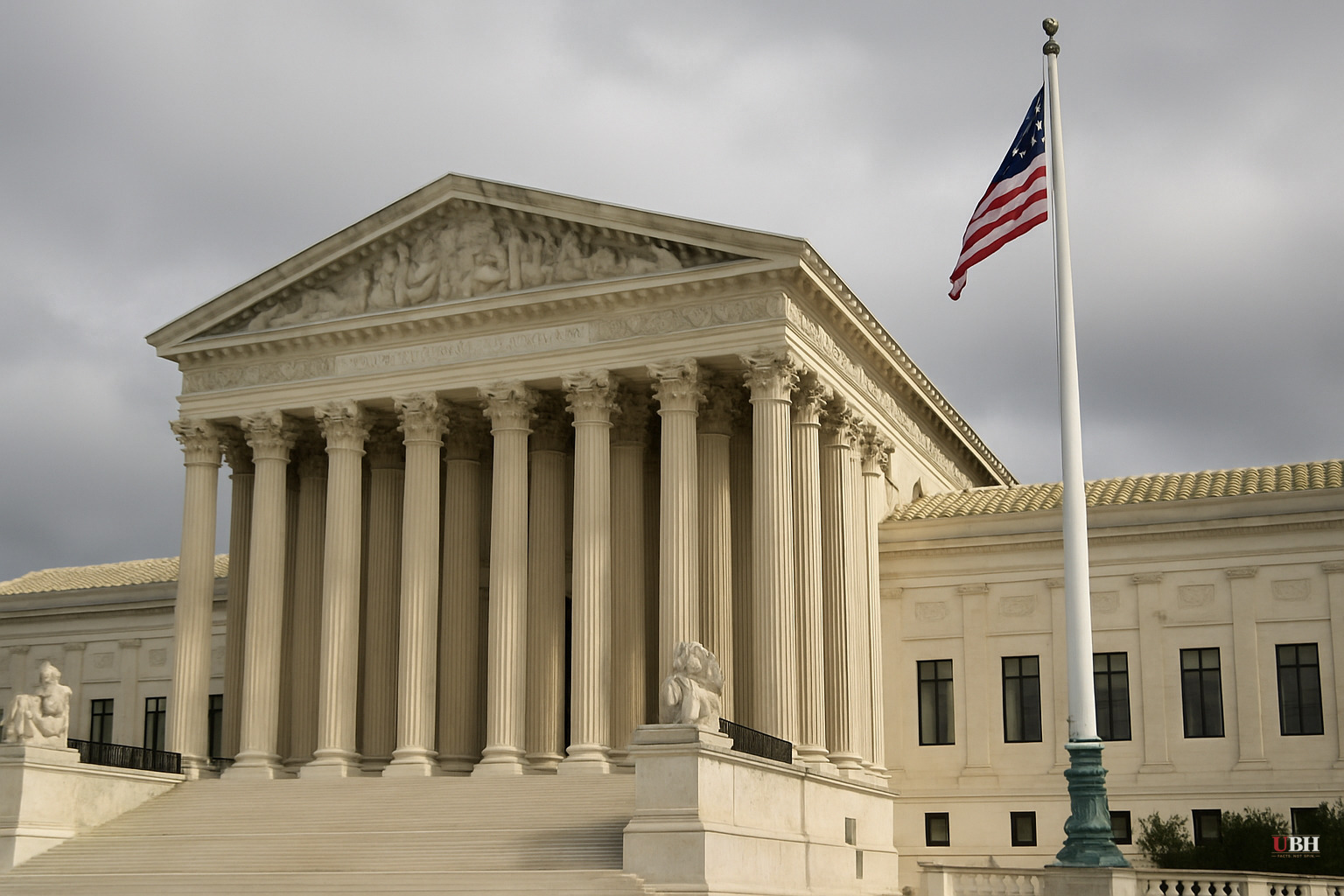
Since this week's Supreme Court decision in Watson v. RNC, the debate over when an election is actually over has moved from federal courts to state capitols.
The 5-4 ruling upheld a Mississippi law allowing mail ballots postmarked by Election Day but received days later to be counted in the official tabulation. Justices John Roberts and Amy Coney Barrett joined Justices Sonia Sotomayor, Elena Kagan, and Ketanji Brown Jackson in the majority. Justices Clarence Thomas, Samuel Alito, Neil Gorsuch, and Brett Kavanaugh dissented.
What the Court Actually Decided
The majority held that federal law establishing a single federal Election Day does not prohibit states from accepting mail ballots that arrive after that date, as long as they were postmarked in time. The logic: an election can be deemed "held" on Election Day even if ballot collection continues past it.
Critics of the ruling, including contributors Steve Roberts and Nicole Kelly writing for the Daily Caller News Foundation, called that reasoning "contorted." Their core objection: first-class mail can be recalled. Until a ballot physically arrives in the hands of an election official, the voter's choice is not legally final. Counting ballots that arrive days after polls close therefore extends the window during which a voter's decision remains reversible.
Mail systems are not instantaneous, and a voter who drops a ballot in a mailbox on Election Day technically retains the ability to recall it through postal procedures until delivery. Whether that theoretical window constitutes a meaningful fraud vector is a separate question, but it is not an invented one.
Alito's Dissent and the Fraud Record
Justice Alito's dissent did not traffic in hypotheticals. According to the Daily Caller News Foundation's account of the opinion, Alito cited five documented instances in which absentee ballot fraud led courts to void elections and order new ones. One involved Georgia courts voiding an election after finding what the court described as "widespread" absentee-ballot fraud encompassing vote buying, vote selling, multiple voting, felon voting, and voting in the names of deceased individuals.
Those are proven cases, not speculation. The majority opinion did not dispute the fraud examples. It instead said the policy arguments for a hard ballot-receipt cutoff are better directed at state legislatures than federal courts.
Defending the Ruling
Defenders of the decision have a genuine point. Mail delivery timelines vary widely by geography. A voter in a rural county may drop a ballot in the mail two days before the deadline, fully intending to comply with the law, only to have it arrive a day late because of postal logistics outside their control. Rejecting that ballot punishes a voter for a delay they did not cause and could not control. Disenfranchising lawful voters over postal timing is a real harm, not a manufactured one, and it falls disproportionately on voters in areas with slower mail service.
The majority's position is that states are free to draw this line where they choose, and Mississippi drew it at the postmark. That is a defensible federalism argument.
Where 14 States Now Stand
According to the Daily Caller News Foundation's reporting, 14 states currently allow post-Election Day ballot receipt. Some also permit ballot harvesting, and some count ballots that arrive without a postmark at all. The Supreme Court majority explicitly said those policy questions belong to state legislatures.
That means the next battleground is state capitals, not Washington. Whether state lawmakers in those 14 states move to tighten deadlines, require stricter postmark verification, or leave current rules intact will determine how much of an operational effect this ruling actually has on election administration.
What Remains Unresolved
The ruling does not answer two specific questions that will matter going forward. First, how long after Election Day is too long? Mississippi's window is relatively short. Nothing in the majority opinion clearly prevents a state from allowing a week or more of post-Election Day ballot collection, and the Daily Caller News Foundation notes the ruling theoretically permits windows stretching "days, weeks, or even months."
Second, the court did not address harvested ballots or ballots lacking a postmark. Those practices, which exist in several states, were not the direct subject of Watson v. RNC, and the majority's silence on them leaves their legal status under federal Election Day statutes unresolved.
Justice Alito's dissent has set a blueprint for future challenges: documented fraud cases, combined with an argument about the legal finality of a voter's choice. Whether that argument finds a different majority in a future case depends on whether a state's ballot-receipt window is long enough to give the court a harder target.
Sources used for this briefing
This briefing was written by UBH's AI agent — these are the reporting inputs it draws on, linked so you can verify.


