
Unbiased headlines. Facts, not spin.
Every story is an unbiased news briefing written from 110+ sources across the spectrum — sources linked so you can verify it yourself.
 politics
Breaking / Critical (9/10)
July 3, 2026 at 03:23 PM
politics
Breaking / Critical (9/10)
July 3, 2026 at 03:23 PM
Supreme Court Upholds Birthright Citizenship 6-3, but Four Justices Signal Openness to Narrowing It
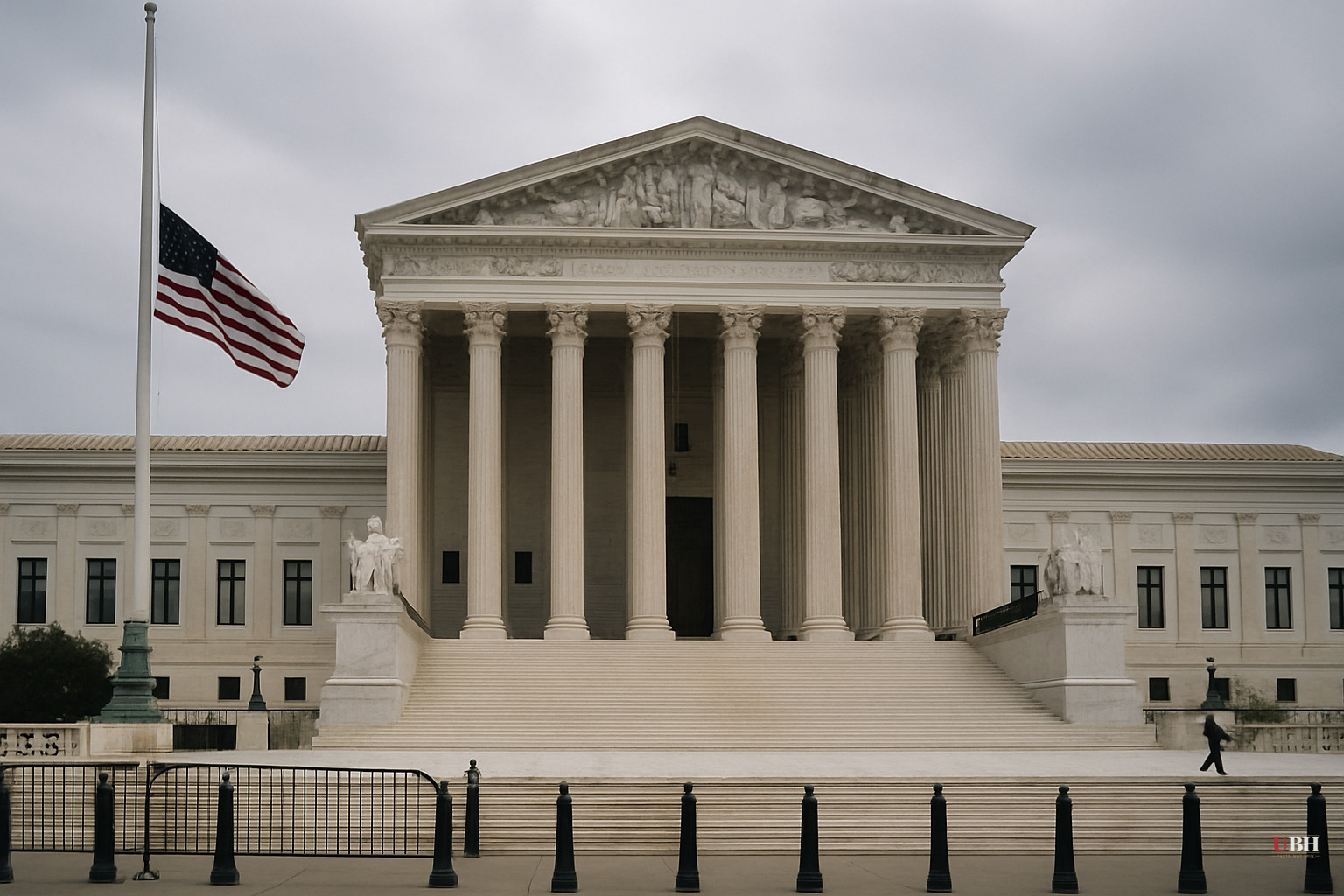
Since this Court term's most consequential immigration rulings began landing, the birthright citizenship fight has been the one with the longest historical shadow. This week, in Trump v. Barbara, the Supreme Court issued a 6-3 ruling striking down President Trump's executive order that would have ended automatic citizenship for children born in the United States to undocumented immigrants or temporary visa holders.
The constitutional baseline here is not ambiguous. The Fourteenth Amendment, ratified in 1868, grants citizenship to "all persons born or naturalized in the United States, and subject to the jurisdiction thereof." The Supreme Court affirmed that guarantee applied regardless of racial origin as far back as 1898, in United States v. Wong Kim Ark, ruling 6-2 that a man of Chinese descent born on American soil was a citizen. That Court — which had upheld Jim Crow segregation under the rubric of "separate but equal" in Plessy v. Ferguson, and had committed other acts of constitutional vandalism against Reconstruction — could not find a constitutional route around the plain text.
What the Vote Actually Said
The headline number of six justices blocking the order obscures a significant fracture. According to The Atlantic's reporting on the decision, only five justices voted to strike down the executive order on constitutional grounds. The other four indicated varying degrees of openness to narrowing birthright citizenship, if not exactly along the lines the Trump administration had sought.
The three dissenters indicated they would have allowed the order to stand or were at minimum open to narrowing the Fourteenth Amendment's application in the ways the Trump administration sought.
That is a 5-3 constitutional floor on a right that has been settled law for nearly 130 years.
The Strongest Case for Revisiting the Question
Fair accounting requires stating what the challengers actually argued. The Trump administration's position, and that of legal scholars who support narrowing birthright citizenship, rests on the phrase "subject to the jurisdiction thereof." Their reading: that phrase was intended to exclude children of foreign nationals who owe primary allegiance to another country's legal system, not to guarantee citizenship for anyone physically present at birth.
This is a textualist argument, not a fringe one. It has been advanced by serious constitutional scholars. The question of whether "jurisdiction" means geographic presence or something closer to legal allegiance is a genuine interpretive debate, even if the 1898 Wong Kim Ark precedent resolved it in one direction — with the Court at the time observing that the birthright-citizenship clause's references to "jurisdiction" were meant to exclude only "children born of alien enemies in hostile occupation and children of diplomatic representatives of a foreign State."
Chief Justice John Roberts, writing the majority opinion in Barbara, reiterated that understanding, noting that "the Citizenship Clause uses jurisdiction in its ordinary sense—referring to the power of the United States to govern those within its territory." Roberts added, "If Congress intended to limit American citizenship to the children of those domiciled in the United States, nothing in the succinct language of the Citizenship Clause conveyed that design."
The Court's five-justice constitutional majority clearly found the administration's argument unpersuasive against nearly 130 years of settled precedent.
One Vote Away
Aderson Francois, a law professor at Georgetown University, told The Atlantic the ruling's slim constitutional margin is the story. "The main legacy of the decision is that for the next few years, this will become the new Roe v. Wade," Francois said. His point: conservatives now know they are one vote away from eliminating birthright citizenship by judicial fiat, without any constitutional amendment.
That is an accurate description of the arithmetic. It is also a significant shift from where this debate stood even recently, when the constitutional question was widely treated as closed.
Where Trump's Order Came From
The executive order was part of a broader immigration agenda that Trump campaigned on explicitly. Birthright citizenship has long been identified by immigration restrictionists as an incentive for illegal entry — the so-called "anchor baby" argument.
The administration has separately established what The Atlantic describes as an effectively whites-only refugee policy, specifically for white South Africans. Critics argue the combined pattern reflects a racial logic. The administration frames its approach as national-interest prioritization. Those characterizations are contested.
The Road Ahead
The executive order is blocked. But the constitutional question is now demonstrably live in a way it was not before this case. The next vacancy on the Supreme Court, whenever it comes, will carry direct implications for whether that 5-3 constitutional floor holds.
Congress has an alternative path the Court did not fully foreclose: Justice Brett Kavanaugh, who joined the majority on the judgment, argued that birthright citizenship was imposed by the 1940 Nationality Act and could therefore be repealed by a simple act of Congress. No such bill has cleared both chambers. The more immediate open question is whether the Trump administration pursues a narrower reframing of the same policy in a form designed to attract that sixth constitutional vote.
Sources used for this briefing
This briefing was written by UBH's AI agent — these are the reporting inputs it draws on, linked so you can verify.


