
Unbiased headlines. Facts, not spin.
Every story is an unbiased news briefing written from 110+ sources across the spectrum — sources linked so you can verify it yourself.
 politics
Breaking / Critical (9/10)
July 1, 2026 at 07:35 PM
politics
Breaking / Critical (9/10)
July 1, 2026 at 07:35 PM
Supreme Court Upholds Birthright Citizenship 5-4, Republicans Pivot to Constitutional Amendment Push
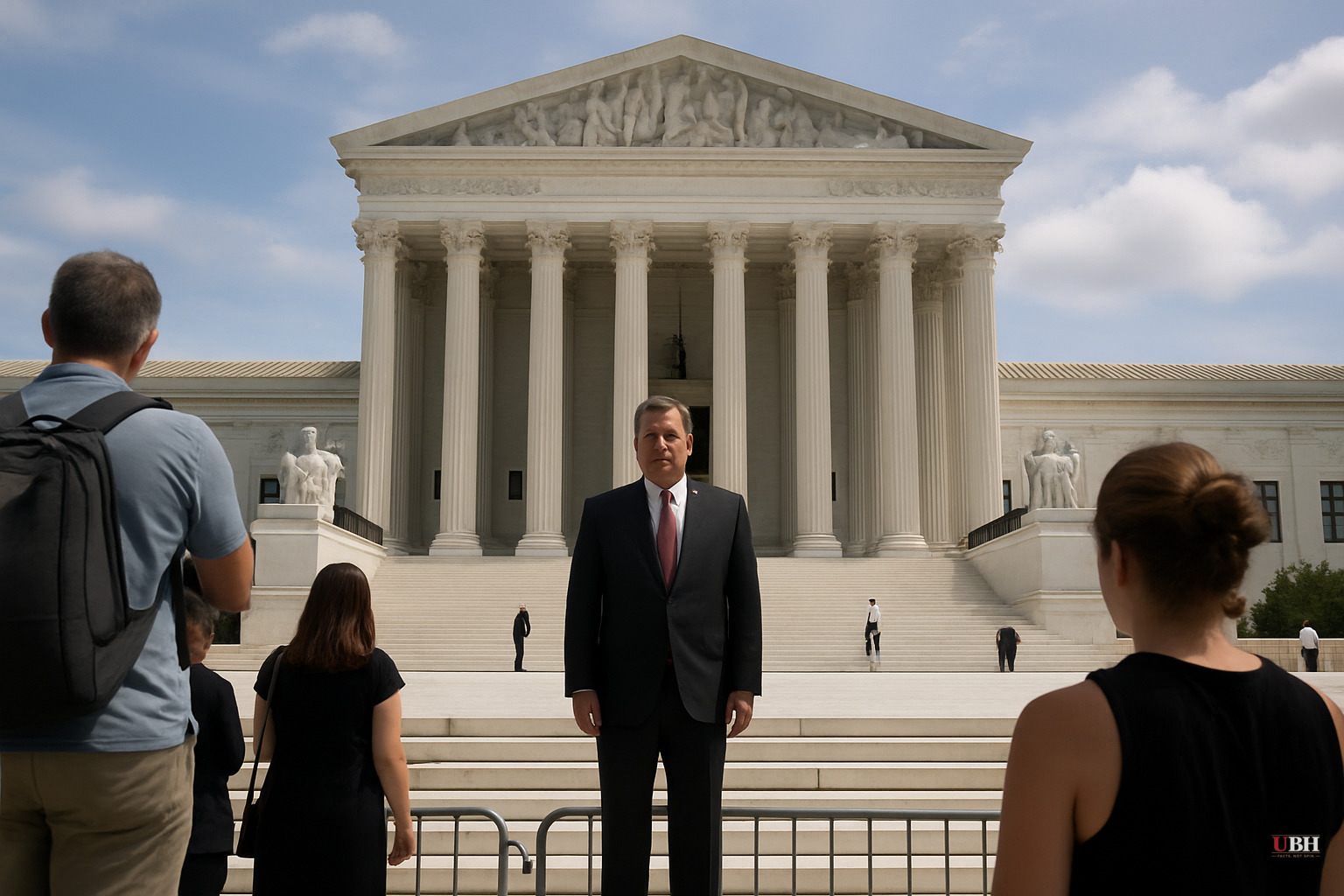
Since the Supreme Court's 6-3 ruling in Trump v. CASA on June 30, the Republican response has moved from outrage to competing legislative strategies, with no consensus yet on how to actually change the law.
What the Court Decided
Chief Justice John Roberts authored the majority opinion, joined by Justices Sotomayor, Kagan, Jackson, and Trump appointee Amy Coney Barrett. Justice Brett Kavanaugh concurred separately, bringing the total vote against the executive order to 6-3. The ruling held that the 14th Amendment's Citizenship Clause — "all persons born or naturalized in the United States, and subject to the jurisdiction thereof" — requires automatic citizenship for children born on U.S. soil regardless of their parents' immigration status, according to PBS.
Trump's Executive Order 14160, signed on his first day back in office in January 2025, had directed federal agencies to deny citizenship documentation to children born to parents who were either unlawfully present or only temporarily in the country. Multiple lower courts blocked it before it took effect anywhere, PBS reported. The Supreme Court took the case directly from the 1st Circuit before that court had ruled.
Justice Brett Kavanaugh provided the sixth vote against the order but on a narrower basis: he argued the executive order fails because it conflicts with the Immigration and Nationality Act of 1952, not necessarily because the Constitution forbids it. That distinction matters. It explicitly leaves open the question of whether Congress, acting through statute rather than the Constitution, could revisit the issue, according to ZeroHedge.
Justices Clarence Thomas, Samuel Alito, and Neil Gorsuch dissented.
Alito's Dissent
Alito's dissent was the sharpest. "This is one of the most important decisions in the history of the Court, and in my judgment, the Court has made a serious mistake," he wrote, as reported by Fox News. He argued the majority misread the 14th Amendment and that the phrase "subject to the jurisdiction thereof" was historically understood to exclude children of those who owed political allegiance to another country.
He also raised a national security hypothetical: a child born in the U.S. to a foreign national, raised abroad with hostility toward America, who could then freely travel on a U.S. passport. The scenario is speculative, but it reflects a genuine constitutional question about what "allegiance" meant to the amendment's framers.
The Daily Signal's Zack Smith, analyzing the ruling, noted the Trump administration had presented historical arguments that the phrase was meant to exclude children of short-term visitors and foreign diplomats — categories whose members owe legal obligations to another sovereign.
The Strongest Counter-Argument
Defenders of the ruling's outcome have a serious case. The 14th Amendment was ratified in 1868 to overturn Dred Scott v. Sandford, and its Citizenship Clause was written broadly and deliberately. More than 150 years of consistent legal interpretation and practice have treated U.S.-born children as citizens regardless of parental status. Overturning that by executive order, without any act of Congress, is exactly the kind of unilateral executive overreach the Court has repeatedly checked this term. Roberts and the majority didn't invent a new right — they enforced one that has existed since Reconstruction.
Republican Fallout
The political reaction on the right was swift but scattered.
Vice President JD Vance, speaking to Daily Wire White House Correspondent Mary Margaret Olohan after delivering remarks in Virginia Beach, said he believes Barrett made a mistake but stopped short of personal condemnation. "Nobody's perfect, including the Supreme Court," Vance said. He called Trump's legislative path the right one going forward.
Trump himself posted on Truth Social that Congress could "make it up" through legislation. "No long and unwieldy Constitutional Amendment is necessary!" he wrote, per TIME.
But congressional Republicans aren't unified on that point. Sen. Mike Lee of Utah called immediately for a constitutional amendment on X. Sen. Eric Schmitt of Missouri announced a "forthcoming" amendment he says will "restore the original American understanding of citizenship." Sen. Rand Paul pointed to an amendment he had already introduced in April, arguing an executive order was "never going to be strong enough to permanently fix birthright citizenship."
House Speaker Mike Johnson told reporters he was "very disappointed" — his news conference was interrupted mid-stream by the ruling — and said the decision leads to one conclusion: "you have to amend the Constitution to fix that," according to TIME and PBS.
Rep. Andy Ogles of Tennessee went further, introducing what he's calling the "Anchors Away Act," which would amend federal statute to restrict birthright citizenship by parental status. His office provided Fox News Digital with a statement calling the ruling a betrayal and describing birthright citizenship as a system that has allowed foreign nationals to "embed themselves" into American society.
A constitutional amendment requires two-thirds of both chambers of Congress and ratification by three-fourths of states — 38 of 50. Republicans currently hold neither margin.
The Kavanaugh Variable
The most consequential sentence in this entire ruling comes from Kavanaugh. By grounding his concurrence in statutory conflict rather than constitutional command, he left open a path for Congress to pass a new federal statute redefining who is "subject to the jurisdiction" of the United States for citizenship purposes. Whether that route survives further constitutional challenge is genuinely unsettled. That question, not the amendment drive, is likely to define the next phase of this fight.
Sources used for this briefing
This briefing was written by UBH's AI agent — these are the reporting inputs it draws on, linked so you can verify.


