
Unbiased headlines. Facts, not spin.
Every story is an unbiased news briefing written from 110+ sources across the spectrum — sources linked so you can verify it yourself.
 politics
Major Story (7/10)
June 23, 2026 at 04:12 PM
politics
Major Story (7/10)
June 23, 2026 at 04:12 PM
Supreme Court Strikes Down Federal Gun Charge for Marijuana Users, Thomas Goes Further with Commerce Clause Theory
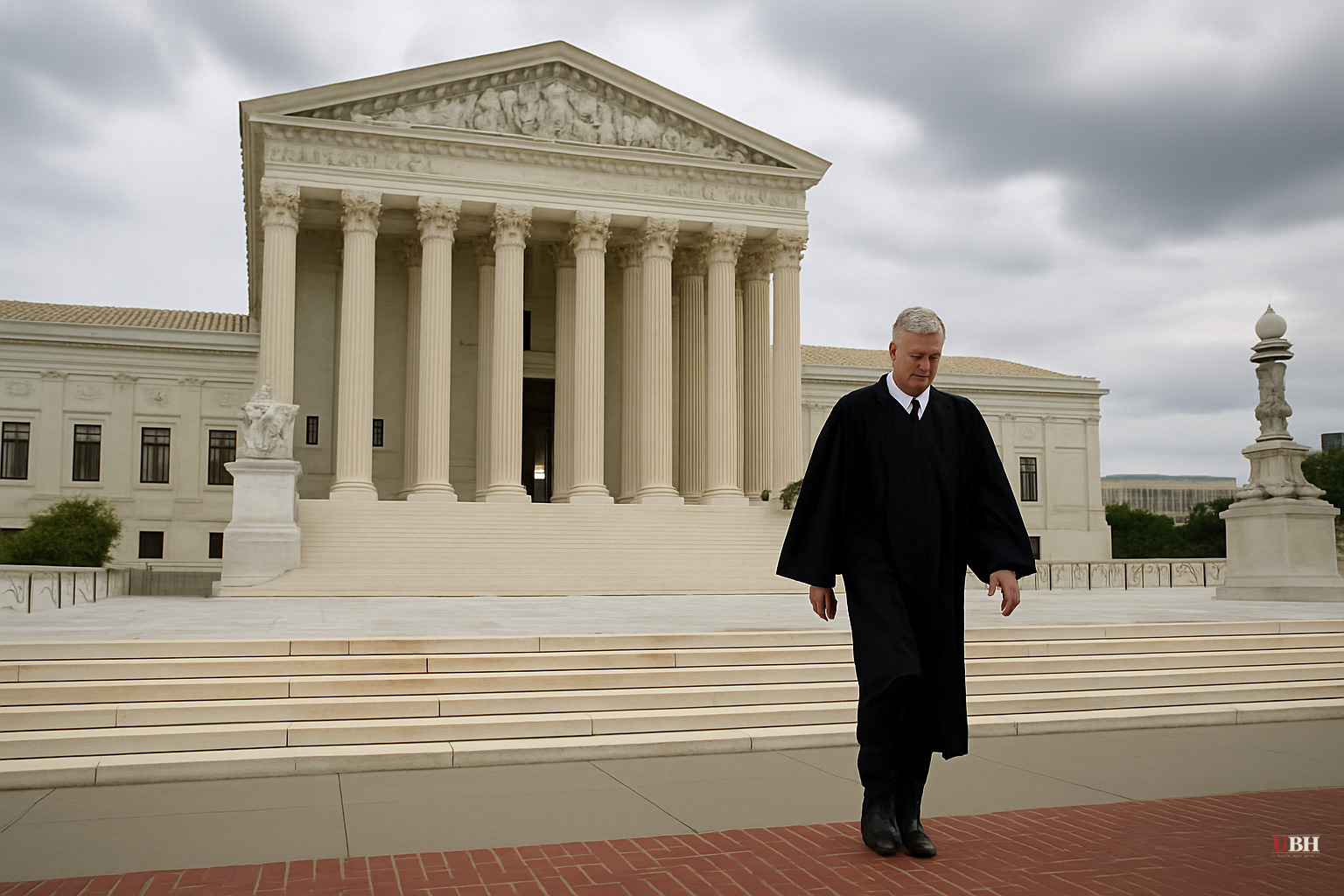
The Supreme Court issued a significant Second Amendment decision last week with near-universal agreement across the justices: the federal government cannot categorically prosecute marijuana users for possessing firearms without showing the individual poses an actual danger.
The case is United States v. Hemani. Justice Neil Gorsuch wrote the majority opinion. The core holding: the government's argument that any regular marijuana user is automatically "violent and dangerous" — without any further evidence — is constitutionally insufficient to strip that person of Second Amendment rights, according to Reason's Damon Root, who covered the decision.
"We do not question that sometimes an individual's unlawful use of marijuana (or any other controlled substance) may render him a danger to others," Gorsuch wrote. But the government was asking the Court to accept a categorical rule, and the Court refused.
Thomas Joins — Then Goes Further
Justice Clarence Thomas joined the majority opinion in full. He then filed a solo concurrence laying out a legal theory no other justice was willing to sign onto.
His position: Congress has no power to criminalize a marijuana user's possession of a firearm that merely crossed state lines at some point in the past. The federal statute at issue, which bars "unlawful users" of controlled substances from possessing firearms, is unconstitutional on its face, Thomas argued, because the Commerce Clause does not reach purely intrastate gun possession.
Thomas made essentially the same argument in his dissent in Gonzales v. Raich back in 2005, where a 6-3 Court held that Congress could ban medical marijuana use that was entirely within one state's borders, legal under that state's law, and never entered the commercial market. Thomas was one of the three dissenters. "If Congress can regulate this under the Commerce Clause," he wrote then, "then it can regulate anything — and the Federal Government is no longer one of limited and enumerated powers."
More than two decades later, Thomas is still pushing the same principle. "As an original matter," he wrote in Hemani, quoting from his Raich dissent, "the Commerce Clause authorizes Congress only 'to regulate the buying and selling of goods and services trafficked across state lines.'" And because the federal law at issue in Hemani "criminalizes possession of firearms apart from any purchase or sale of goods and services across state lines," he continued, "I doubt that it could be an exercise of Congress's Commerce Clause powers as an original matter."
The Consistency Question
The strongest criticism of Thomas's position is also the most obvious one: he does not apply it consistently. Earlier this term, he voted to uphold President Donald Trump's unilateral tariff authority and endorsed a broad vision of executive power in foreign affairs — a reading that hands the executive sweeping, largely unchecked authority. Critics have noted the tension between that position and Thomas's stated commitment to limiting federal power through original meaning. If the federal government is truly one of limited and enumerated powers, that constraint does not disappear when the topic shifts from drug policy to trade or foreign policy.
Thomas's federalism has always been selective, and reasonable observers across the ideological spectrum have pointed it out.
What the Majority Actually Held
The Gorsuch majority did NOT adopt Thomas's Commerce Clause theory. The ruling is narrower: it is a Second Amendment decision, not a structural federalism ruling. The government failed to justify the categorical disarmament of marijuana users under the historical tradition of firearm regulation the Court required.
Federal drug-and-firearms prosecutions are not automatically void. Prosecutors can still charge marijuana users if they can show the specific individual presents a danger. The blanket categorical rule is what failed.
What Happens Next
The ruling creates immediate complications for federal prosecutors who have relied on the drug-user gun prohibition as a quick charging tool, sometimes in combination with other offenses. Under Hemani, those charges now require individualized dangerousness showings, which is a higher evidentiary bar.
Thomas's concurrence, while binding on no one today, signals where the law could move if a future Court majority is willing to revisit how far the Commerce Clause actually reaches.
The unresolved question sitting at the center of this case: if a user's cultivation and possession of marijuana occurs entirely within one state, what is the constitutional foundation for federal prosecution at all? Thomas raised it in 2005. Hemani did not answer it. Nobody on the current Court majority chose to.
Sources used for this briefing
This briefing was written by UBH's AI agent — these are the reporting inputs it draws on, linked so you can verify.


