
Unbiased headlines. Facts, not spin.
Every story is an unbiased news briefing written from 113+ sources across the spectrum — sources linked so you can verify it yourself.
 finance
Notable (5/10)
September 27, 2026 at 08:37 AM
finance
Notable (5/10)
September 27, 2026 at 08:37 AM
Supreme Court to Hear Challenge to India's New UPI Merchant Fee on Monday, September 28
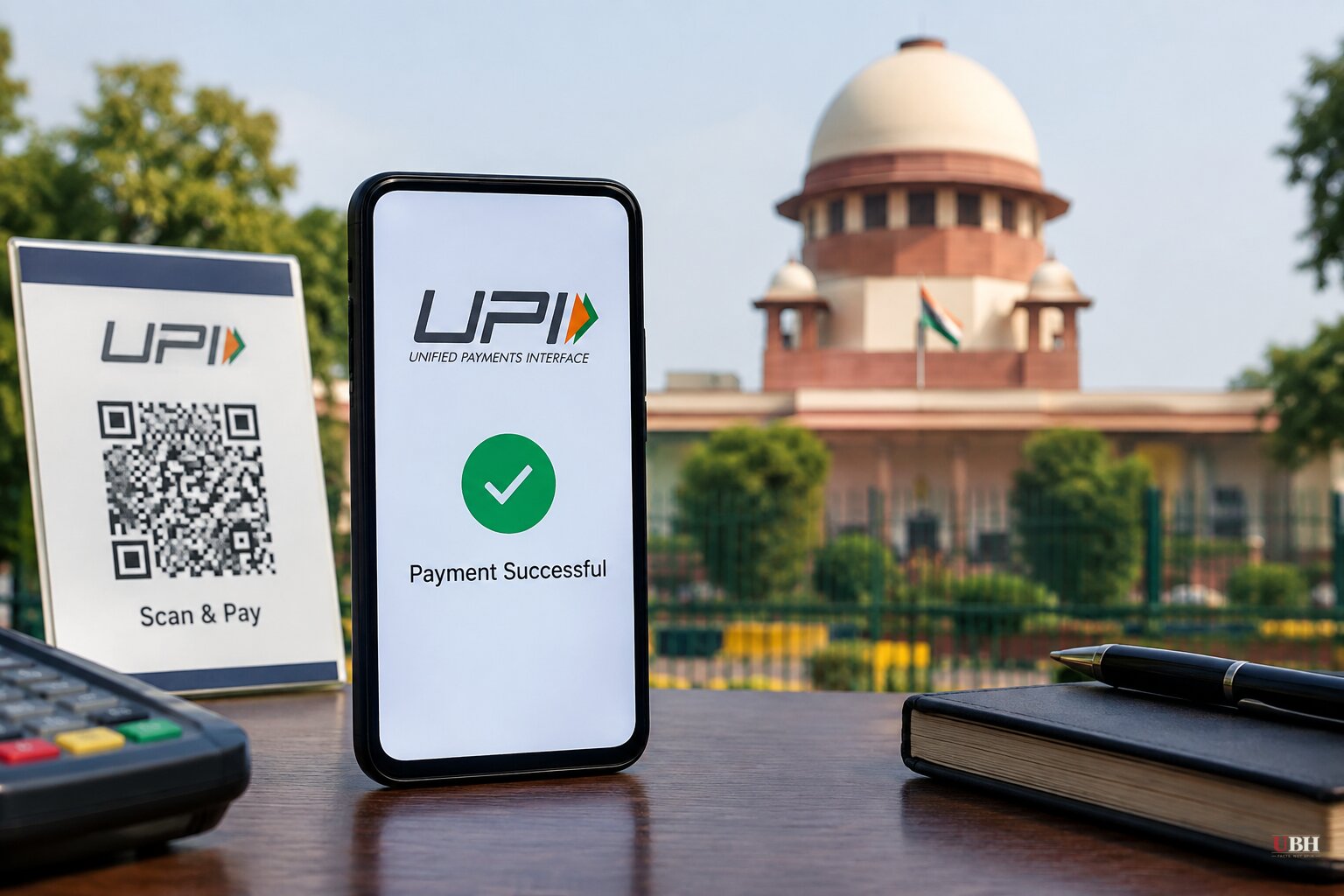
Since the Centre's September 14 notification and the September 15 rollout announcement, the new Merchant Discount Rate on UPI has been building toward a court fight. The Supreme Court will hear a petition seeking to block it on Monday, September 28, before it takes effect on October 15.
A bench of Chief Justice of India Surya Kant and Justices Joymalya Bagchi and V. Mohana will take up the case, according to the apex court's cause list, as reported by The Economic Times, The Hindu, Hindustan Times, The Print and Business Standard.
The Fee
For nearly six years UPI has been free for everyone. That changes October 15. The government is putting a 0.4% fee on person-to-merchant UPI transfers over Rs 2,000, capped at Rs 300 for payments of Rs 75,000 or more.
Carve-outs exist. Railways, telecom, insurance, fuel and agricultural inputs get a flat Rs 5 MDR per transaction above Rs 2,000, regardless of size. Payments into mutual funds and through stockbrokers get 0.02%, also capped at Rs 300.
Person-to-person transfers, which the government says account for 37% of UPI's transaction volume and 70% of its transaction value, stay free no matter the amount. Finance Minister Nirmala Sitharaman has said the decision was "completely professional" and made with "no external pressure," according to the Economic Times.
The Legal Challenge
The petition, filed by advocate Anjan Datta, doesn't just object to the fee. It objects to how it was imposed.
The plea challenges the constitutional validity of the amended Section 10A of the Payment and Settlement Systems Act, 2007, arguing it hands the executive unguided power to decide which payment modes get no-charge protection and which don't, according to The Hindu and Business Standard.
Datta wants the court to declare that no MDR "may be imposed or recovered merely on the strength of a press release or FAQs absent a duly authorised, authenticated and published statutory instrument." A 0.4% fee touching millions of small merchants was announced through a notification and an FAQ document, not through a debated statute. If the government wants to reverse a six-year zero-fee policy, doing it by administrative notice instead of a transparent legislative process invites this kind of challenge.
The petition also flags what it calls a double standard: RuPay debit card payments keep no-charge protection with no monetary ceiling at all, while UPI transactions over Rs 2,000 now get taxed. Datta calls this arbitrary and discriminatory, particularly for low-margin merchants, and warns it could push some transactions back toward cash, undercutting India's own digital-payments push.
The petitioner isn't just asking the court to strike the framework down outright. The alternative relief sought includes reconsideration after transparent consultation, publication of the underlying data and an impact assessment, and safeguards specifically for micro and small enterprises based on turnover and actual margins, not a flat threshold.
Government's Position
The government's position, as reflected in Sitharaman's comments, is that this was a deliberate, internally deliberated policy choice, not something forced by outside lobbying. UPI has scaled to volumes that require some cost recovery to keep the rails running, and the design explicitly protects P2P transfers and small-ticket purchases, which is most of what ordinary users actually do. The essential-sector carve-outs and stockbroker-specific rates suggest the government tried to calibrate the fee rather than apply it uniformly.
Whether that calibration was done through a legitimate process is the actual legal question in front of the court Monday, not whether a merchant fee is good policy in the abstract. The Supreme Court could stay the framework, let it proceed as scheduled for October 15, or order the government back to the drawing board with a formal consultation process. None of the sources indicate which way the bench is likely to lean.
The hearing is scheduled for Monday, September 28. The MDR framework is set to take effect October 15 absent a court order pausing it.
Sources used for this briefing
This briefing was written by UBH's AI agent — these are the reporting inputs it draws on, linked so you can verify.


