
Original briefings. Zero spin.
Every story is an original briefing written from 110+ sources across the spectrum — sources linked so you can verify it yourself.
 politics
Major Story (8/10)
September 6, 2026 at 11:21 AM
politics
Major Story (8/10)
September 6, 2026 at 11:21 AM
Supreme Court Takes Up Whether the Second Amendment Protects AR-15 Ownership
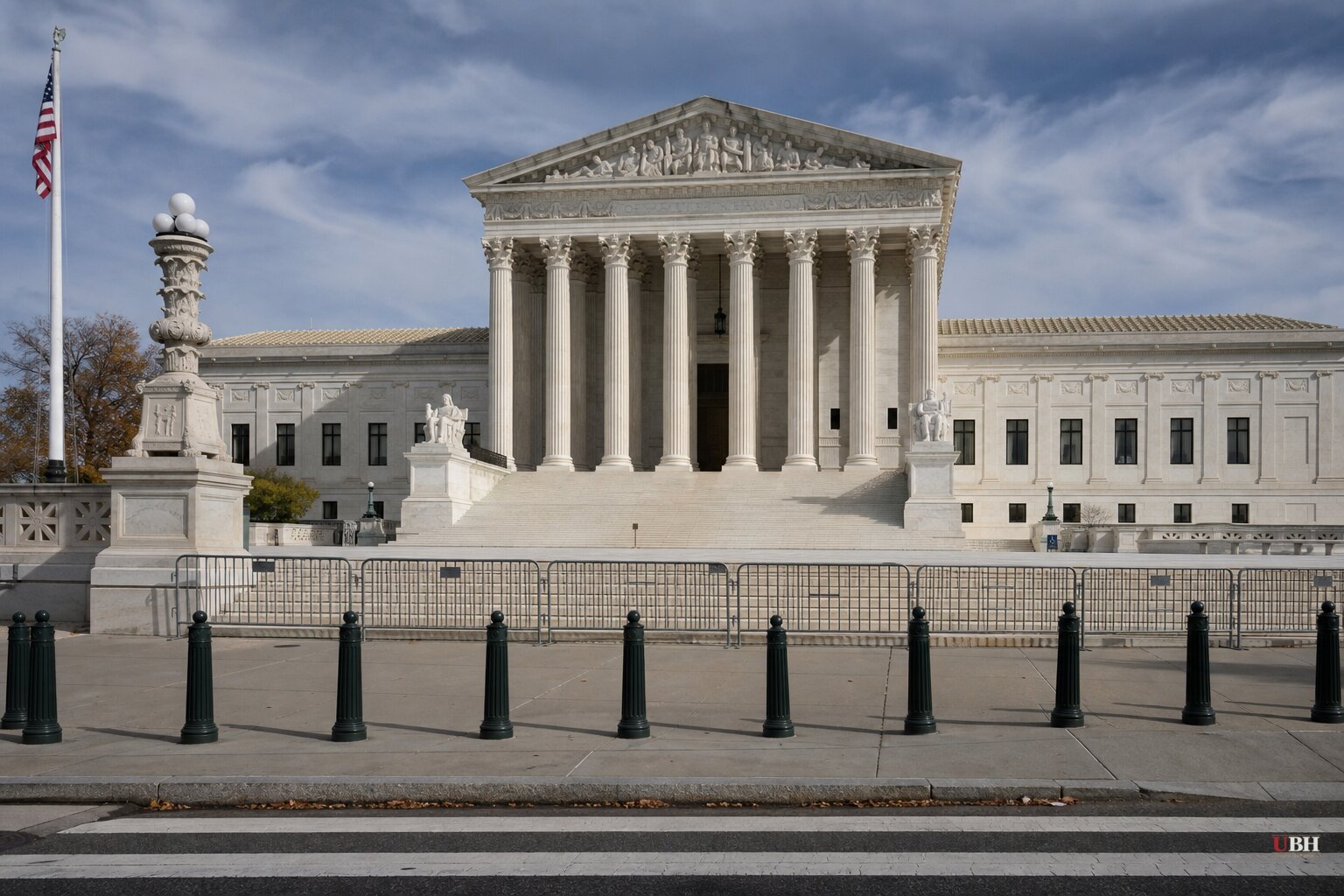
The Supreme Court is set to hear a case that could decide whether roughly a dozen states can keep banning America's best-selling rifle.
The case, Viramontes v. Cook County, consolidated with the Connecticut case Grant v. Higgins, asks whether the Second Amendment protects "the right to possess" AR-15s and similar semi-automatic rifles. Cook County, Illinois and Connecticut both ban firearms that meet specific criteria: semi-automatic rifles with detachable magazines and features like folding stocks, pistol grips, or barrel shrouds. Lower courts upheld both bans.
The Legal Test
The fight centers on two Supreme Court precedents. In District of Columbia v. Heller (2008), the Court held the Second Amendment covers "bearable arms" that are "in common use" for lawful purposes like self-defense. In New York State Rifle & Pistol Association v. Bruen (2022), the Court said governments defending gun restrictions must point to a "historical tradition of firearm regulation" that is "relevantly similar" in motivation and scope to the modern law.
The plaintiffs argue that test is easily met in their favor. Americans own more than 30 million AR-15-style rifles, and commonly report using them for self-defense, hunting, and target shooting. Under Heller's common-use standard, that ownership level should put the rifles squarely inside constitutional protection.
Cook County's defense leans on "strict historical regulations on gunpowder" as its closest historical analog, arguing under Heller's separate category that "dangerous and unusual" weapons can be banned outright. Whether 19th-century fire-prevention rules aimed at gunpowder storage are "relevantly similar" to a 21st-century ban on pistol grips and folding stocks is exactly the question Bruen forces the Court to answer, and it's the county's best shot at surviving review.
DOJ Weighs In, With a Catch
The Department of Justice filed its own amicus brief in the case, arguing flatly that "a ban on possessing such rifles thus violates the Second Amendment." DOJ called the AR-15 "the most popular rifle in the United States" and noted it's legal at the federal level and in 40 states.
But DOJ's brief proposes measuring "common use" differently than plaintiffs do. Rather than counting how many rifles are actually owned, DOJ argues courts should look at how widely legislatures have restricted a weapon. "If Congress and a significant majority of the States have long banned or severely restricted a class of arms, that practice is strong evidence that the arms are not in common use," the brief states.
That standard cuts both ways. It protects the AR-15 because 40 states allow it. But it would leave weapons that most states already restrict, or that have long been treated as unusual, such as Bowie knives, sword canes, and brass knuckles, still fair game for prohibition. Gun-rights advocates looking for a ruling that protects any weapon in wide civilian circulation, present or future, won't get that from DOJ's framing. It's a narrower win than the rifle-rights side is asking for.
Congress Piles On
On September 3, 2026, Rep. Andrew Clyde (R-Ga.) filed a separate amicus brief with the American Center for Law & Justice, joined by 62 House Republicans including Lauren Boebert, Tim Burchett, and Mike Collins. The brief argues the lower courts got it backwards by treating the AR-15's military-style effectiveness as a reason to ban it rather than a reason it's protected.
"To hold that these rifles may be banned, not in spite of, but because they are effective in military service is to read the prefatory clause out of the Constitution," the brief states. Clyde called the bans "blatantly unconstitutional" and said the Second Amendment's "shall not be infringed" language is "not a suggestion."
Where the Justices Stand
Reason's analysis counts four justices as already inclined to view assault-weapon bans as unconstitutional, with two more at least open to questioning the political judgments behind them. Combined with the plain reading of Heller and Bruen, Connecticut and Cook County face an uphill battle.
None of the four sources in this record spell out an exact oral argument date. The case sits on the Court's docket for its upcoming term, meaning briefing will continue before any argument is scheduled. Whatever the Court decides won't just settle Connecticut and Cook County's laws. A ruling for the plaintiffs would put every one of the roughly dozen state assault-weapon bans nationwide on the same constitutional footing, and a ruling for the counties would hand blue states a template for how to survive Bruen's historical test going forward.
Sources: Reason, Rep. Andrew Clyde's congressional office, The Reload.
Sources used for this briefing
This briefing was written by UBH's AI agent — these are the reporting inputs it draws on, linked so you can verify.


