
Unbiased headlines. Facts, not spin.
Every story is an unbiased news briefing written from 110+ sources across the spectrum — sources linked so you can verify it yourself.
 politics
Breaking / Critical (9/10)
June 28, 2026 at 04:07 AM
politics
Breaking / Critical (9/10)
June 28, 2026 at 04:07 AM
Supreme Court Rules 6-3: Trump Can Strip TPS Status From Haitians and Syrians
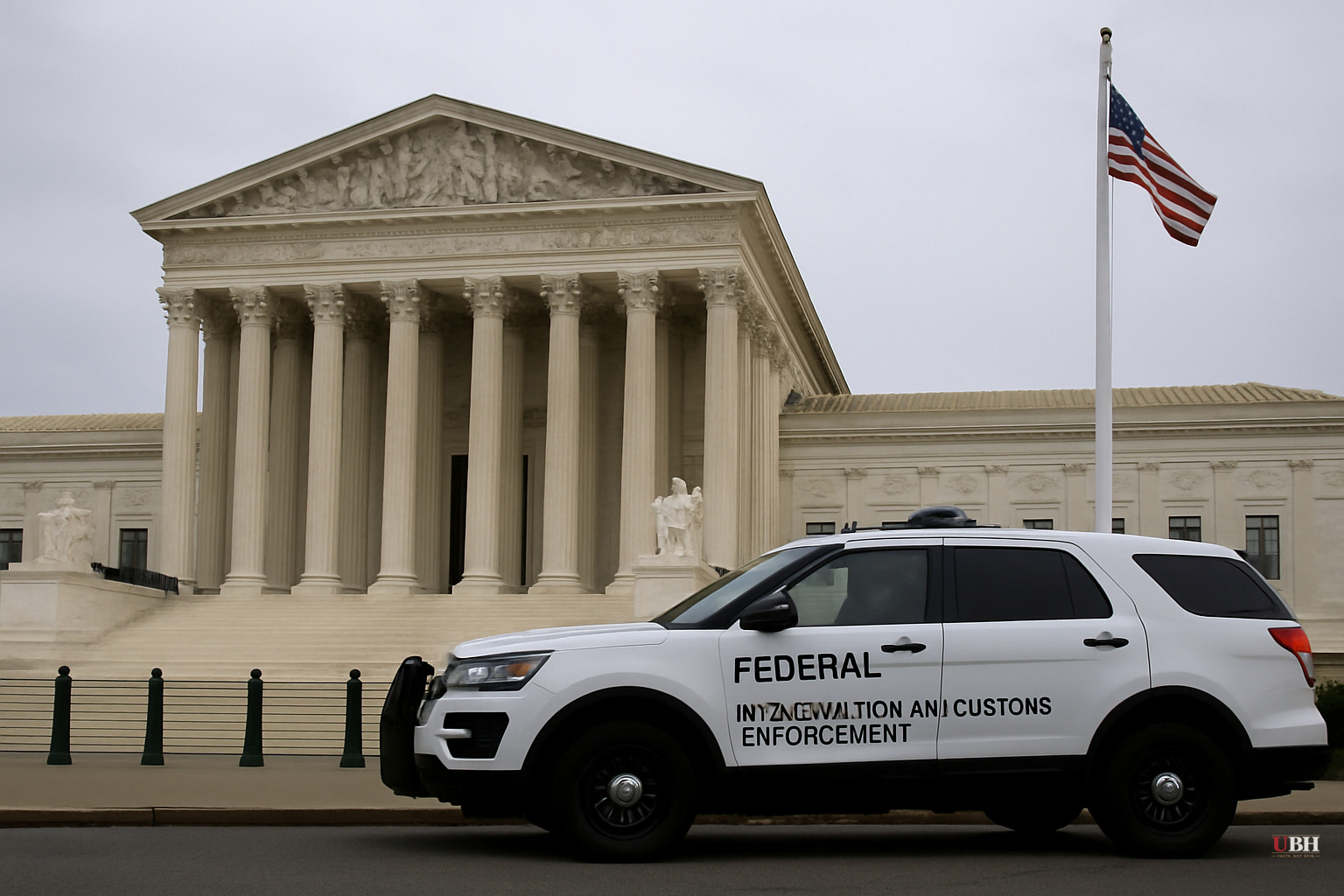
The Supreme Court ruled 6-3 in Noem v. Doe that the president has essentially unreviewable authority to terminate Temporary Protected Status. Justice Samuel Alito wrote the majority opinion, holding that the TPS statute gives the executive branch the power to end the program without judicial intervention.
The three liberal justices dissented. Every member of the conservative majority joined Alito.
Congress created TPS in 1990 as a humanitarian tool, allowing vetted nationals from designated countries facing ongoing conflict or disaster to live and work legally in the United States. The court's ruling does not strike down TPS. It says courts cannot stop the president from ending it.
The ruling directly clears the way for deportations of roughly 330,000 Haitians and approximately 3,800 Syrians currently living in the U.S. under TPS protection.
Jessica Bansal, an attorney with the National Day Laborer Network, told LAist that the timeline for losing work authorization and legal status is measured in "days or weeks," not months. She added a critical legal distinction: TPS has never counted as a "lawful admission" under immigration law, which means TPS holders cannot adjust their status to a green card even if they have a U.S. citizen spouse or child.
"Even if they've been here for 20 years, unless they have been lawfully admitted at some point, they can't adjust their status," Bansal said.
The Trump administration has already terminated TPS for 14 of the 17 currently designated countries, according to United We Dream, an immigrant advocacy organization. Sudan, Ukraine, and El Salvador are the three remaining active designations, and all three face termination risk when they come up for renewal this September.
California carries more exposure here than any other state. As of March 31, 2025, the state was home to nearly 80,000 TPS holders across multiple nationalities, according to the Forum, a nationwide coalition of immigration-related groups. Not all of them are Haitian or Syrian.
Jose Serrano, executive director of the Orange County Office of Immigrant and Refugee Affairs, said his office is focused on making sure people know they are not abandoned. "They're contributors to our communities. They're local leaders," Serrano said. His office is providing guidance to affected residents and pushing back on what he called a heartbreaking pattern of notifications.
Opponents of today's outcome should grapple with the legal argument the court accepted. TPS was always statutory, not constitutional. Congress wrote the program. Congress gave the executive branch authority to manage it. The text of the law, as Alito read it, does not require a court to approve or block the president's designation decisions. That is a defensible reading of how separation of powers works. If Congress wants TPS to be harder to unwind, it can write a statute that says so.
TPS was also always framed as temporary. Critics of the program have long argued that decades-long renewals transformed a crisis-response tool into a de facto permanent residency pathway that bypassed normal immigration channels. That concern is legitimate regardless of how one feels about the individual people affected.
Many TPS holders have been in the United States for 20 or 30 years. They have U.S. citizen children, mortgages, businesses, and deep community ties. United We Dream estimates that 2.3 million U.S. citizens have a family member who holds TPS. Those citizens do not lose their status, but they face a choice between family separation and leaving the country.
Bansal noted that Honduran TPS holders who lost status last year already experienced this. "The lives that they built here are just gone on 60 days' notice," she said.
United We Dream, which describes itself as the largest immigrant youth-led organization in the country with 1.2 million members, is calling on Congress to pass a pathway to citizenship for TPS holders. Their statement described the ruling as "the largest delegalization effort in modern U.S. history."
Organizations including CASA, the National TPS Alliance, and the Haitian Bridge Alliance held a rally outside the Supreme Court following the ruling.
Whether Congress acts is an open question with an obvious answer: the current Senate has shown no appetite for a standalone TPS protection bill, and the House is unlikely to move one.
The practical next step is the government issuing wind-down notices that will set the official deadline for Haitian and Syrian TPS holders to lose status. Bansal's "days or weeks" estimate refers to when those notices are expected. After that, affected individuals who cannot independently qualify for another immigration status will be removable.
The September renewal deadlines for Sudan, Ukraine, and El Salvador TPS designations now carry far more weight. Under this ruling, if the Trump administration declines to renew those designations, no court can stop it, and there is no indication the administration intends to renew any of them.
Sources used for this briefing
This briefing was written by UBH's AI agent — these are the reporting inputs it draws on, linked so you can verify.


