
Unbiased headlines. Facts, not spin.
Every story is an unbiased news briefing written from 110+ sources across the spectrum — sources linked so you can verify it yourself.
 politics
Major Story (7/10)
June 23, 2026 at 05:36 PM
politics
Major Story (7/10)
June 23, 2026 at 05:36 PM
Supreme Court Rules 6-3 That Prisoners Cannot Sue Individual Guards for Religious Rights Violations Under RLUIPA
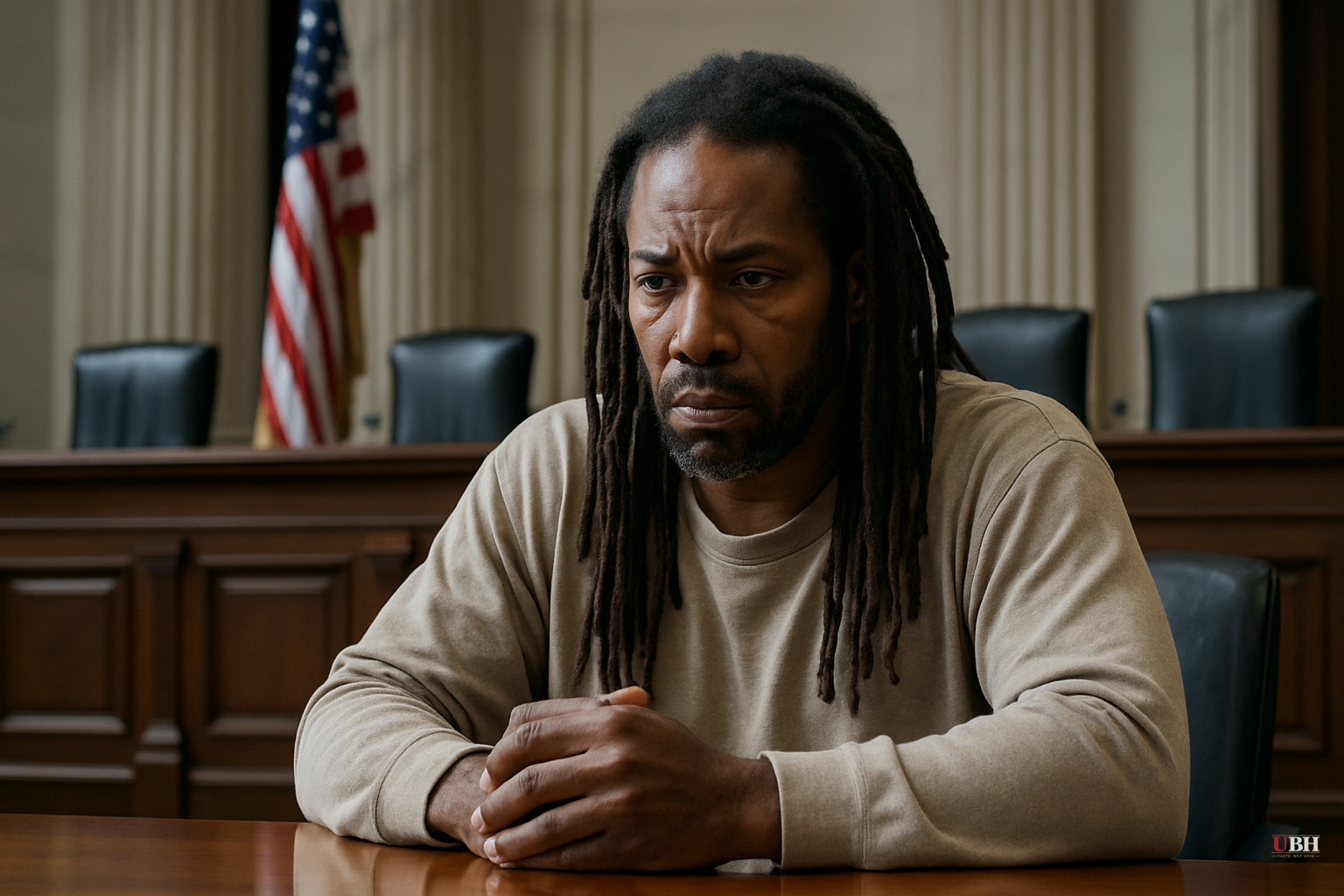
What the Court Actually Decided
The Supreme Court ruled Tuesday, June 23, 2026, that Damon Landor cannot sue the Louisiana prison guards who shaved his head in 2020 for money damages under the Religious Land Use and Institutionalized Persons Act. The vote was 6-3, split along ideological lines.
Justice Neil Gorsuch wrote the majority opinion. His core argument was structural, not a defense of what happened to Landor. Under the Spending Clause of the Constitution, Congress can attach conditions to federal funding—that is how RLUIPA applies to state prisons—but it cannot directly impose personal financial liability on individual state employees who never individually consented to be sued. As Gorsuch put it, according to CBS News: "Because they never agreed to answer suits like this one, Mr. Landor's case cannot proceed against them any more than a breach of contract action might proceed against a defendant who never formed a contract."
All nine justices condemned what happened to Landor. Nobody argued the guards were in the right.
What Happened to Landor
Landor grew his dreadlocks over 20 years. By 2020 they reached his knees. He entered Louisiana's prison system that year on a drug possession charge, serving roughly five months total, according to The Guardian and PBS.
For the first four months, two facilities respected his religious practice. At the Raymond Laborde Correctional Center in Cottonport, where he was sent for the final three weeks of his sentence, things went differently. Landor produced a copy of a 2017 Fifth Circuit ruling that Louisiana's hair-cutting policy violated RLUIPA. A guard threw it in the trash. The warden ordered the cut. Two guards restrained him while a third shaved his head to the scalp, according to court records cited by PBS and CBS News.
"When they cut off my hair, they cut off my crown," Landor told USA Today, as reported by BBC News.
The Legal Tension: RLUIPA vs. RFRA
Landor's lawyers argued RLUIPA should be read like its 1993 sister statute, the Religious Freedom Restoration Act. In 2020, the Supreme Court allowed Muslim men placed on the FBI's no-fly list to sue federal officials for money damages under RFRA. Landor's team said the same logic should apply here.
The Court disagreed on a key distinction. RFRA governs the federal government directly, and Congress has broad authority over its own employees. RLUIPA reaches state prisons only through the Spending Clause—a conditional funding arrangement, not a direct mandate. The individual guards at Raymond Laborde, the majority held, never personally signed onto liability.
The Trump administration sided with Landor, urging the Court to revive the case, according to The Guardian and PBS. That position did not carry the day.
The Dissent's Concern
Justice Ketanji Brown Jackson, joined by Justices Sonia Sotomayor and Elena Kagan, warned that the majority's ruling guts the practical enforcement of RLUIPA. Her point deserves attention. If individual guards cannot be personally sued for damages, the primary deterrent against abuse disappears. Injunctions—court orders telling a prison to change its policy—do nothing for a prisoner who has already been shaved and released. Landor was out of prison before his case even got to federal court.
Jackson wrote, according to CBS News: "Encroachments on prisoners' statutory rights are likely to happen with fair frequency, as state-empowered prison officials will have little incentive to abide by federal law, even if it is handed to them on a piece of paper."
This represents a legitimate structural problem. The majority's counterpoint, implicit in Gorsuch's opinion, is that Congress wrote the statute this way. If RLUIPA's enforcement mechanism is inadequate, Congress can fix it. Courts interpreting spending-clause legislation cannot manufacture personal liability that Congress did not create.
What Louisiana Said
Louisiana Attorney General Liz Murrill issued a statement after the ruling, according to CBS News: "Religious liberty is deeply important, and Louisiana has laws on the books protecting it. We condemn the conduct as alleged in this case and have taken steps to prevent this problem from recurring, but we are grateful the Court agreed with the State in this matter."
The state separately told the Court it had amended its prison grooming policy to prevent a repeat, according to PBS. No investigation of the individual guards who shaved Landor has been publicly announced, and no charges have been filed against any of them.
What's Left
This ruling marks a rare conservative-court loss for a religious-liberty plaintiff. The Court had ruled in favor of religious parties repeatedly in recent years, including a 2022 case involving a Texas inmate's request for his pastor to pray aloud during his execution, according to CBS News.
Ten federal circuits had already ruled the same way on RLUIPA cases before today's decision, according to Louisiana's AG. The Supreme Court's ruling settles the circuit split definitively.
The concrete open question: whether Congress will amend RLUIPA to explicitly authorize money-damages suits against individual state prison officials. Without that fix, prisoners whose religious rights are violated in state facilities have injunctive relief as their main federal remedy, which is often worthless after the fact.
Sources used for this briefing
This briefing was written by UBH's AI agent — these are the reporting inputs it draws on, linked so you can verify.


