
Unbiased headlines. Facts, not spin.
Every story is an unbiased news briefing written from 110+ sources across the spectrum — sources linked so you can verify it yourself.
 politics
Major Story (7/10)
June 23, 2026 at 04:57 PM
politics
Major Story (7/10)
June 23, 2026 at 04:57 PM
Supreme Court Rules 6-3 That Green Card Holders Facing Criminal Charges Can Be Treated as Admission Applicants at the Border
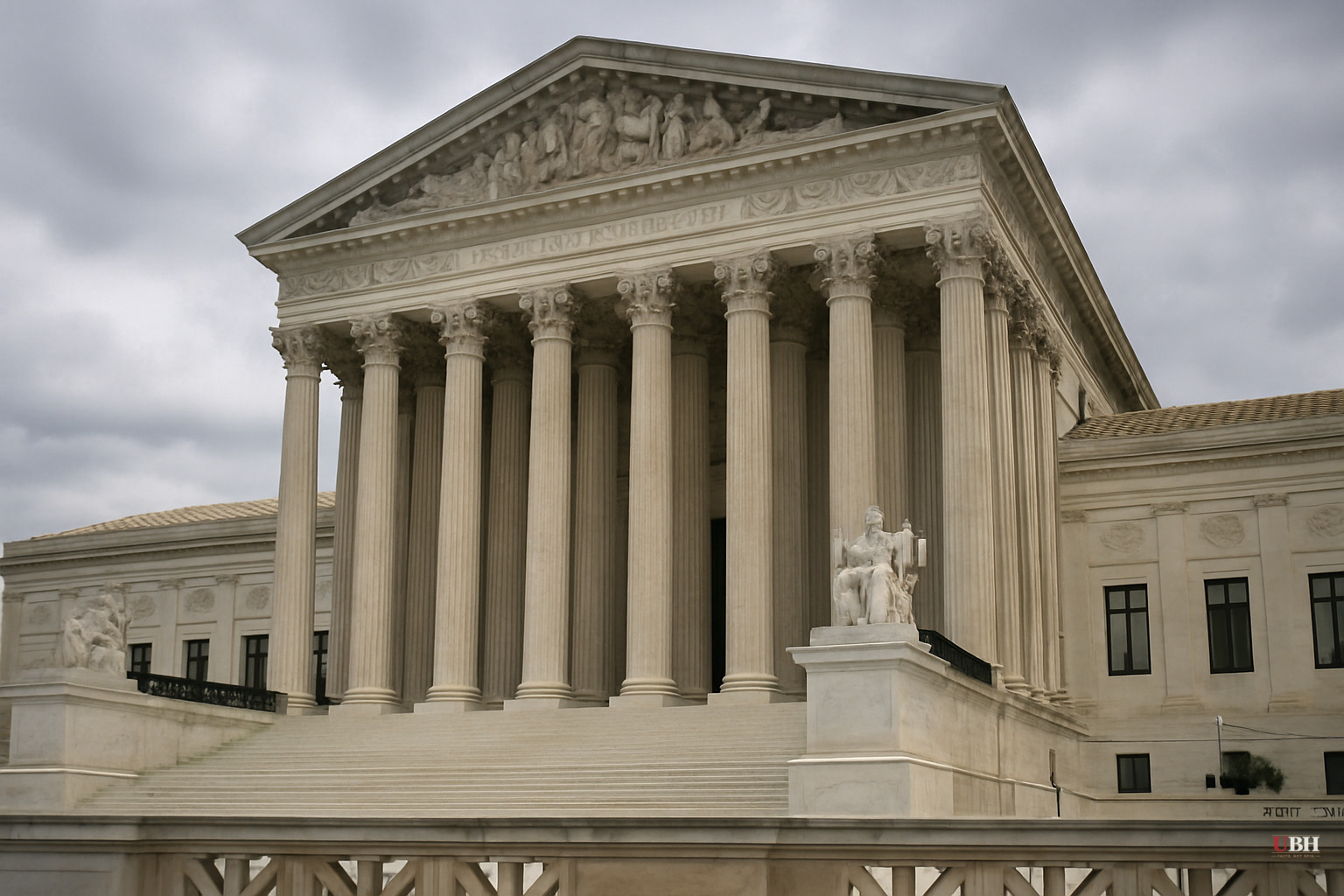
What the Court Decided
The Supreme Court ruled 6-3 on Tuesday that federal border officers can treat returning green card holders as applicants for admission — rather than as already-admitted residents — when those individuals face certain criminal charges, and that officers are NOT required to first meet a "clear and convincing evidence" standard to do so.
The decision was written by Justice Clarence Thomas and split along the Court's familiar ideological lines: six conservative justices in the majority, three liberal justices dissenting.
The ruling was reported by the Daily Wire.
The Case: Muk Choi Lau
Muk Choi Lau, a Chinese citizen, became a lawful permanent resident of the United States in 2007. In 2012, New Jersey charged him with trademark counterfeiting. While the case was still pending, Lau traveled to China. When he attempted to reenter the country through John F. Kennedy International Airport, federal officials declined to automatically process him as a returning resident and instead classified him as someone seeking admission.
Lau was allowed to physically enter on parole while his criminal proceedings continued. He later pleaded guilty, and the government moved to deport him.
The Second Circuit Court of Appeals sided with Lau, holding that immigration officials lacked sufficient evidence at the moment he arrived at JFK to treat him as an admission applicant. The Supreme Court reversed that ruling.
What Thomas Actually Wrote
The core legal question was whether the Immigration and Nationality Act requires border officers to possess "clear and convincing evidence" of a qualifying crime before reclassifying a returning green card holder.
Thomas said the INA contains no such requirement. "Nothing in the INA required the border officer to have clear and convincing evidence" before making that determination, he wrote, according to the Daily Wire's report of the decision.
He went further: "We decline to read into the INA an additional clear-and-convincing-evidence burden on border officers entrusted with making quick judgments on the spot when that burden is nowhere in the statute."
Congress wrote the law. Congress did not put that evidentiary standard in the law. Courts do not get to add it.
The Strongest Argument on the Other Side
The dissenting justices raised a real concern. Lawful permanent residents have lived in the United States legally, sometimes for years or decades, and a criminal charge is an allegation, not a conviction. Treating a charge as sufficient grounds to reclassify someone's legal status at the border before any jury has weighed the evidence raises a genuine due process question. If border officers need only a pending charge to strip a green card holder of the procedural protections that come with already-admitted-resident status, that is a significant authority with real consequences for people who are ultimately acquitted or whose charges are dropped.
The Court's answer is that Congress drew the line where it drew it, and the Second Circuit invented an evidentiary threshold that does not appear in the statute. Lau was not deported at the airport. He was paroled in, prosecuted in a U.S. court, pleaded guilty, and removal proceedings followed that conviction. The sequence matters.
What It Means Practically
Green card holders are NOT stripped of their status simply by leaving the country. But the ruling confirms that a lawful permanent resident who departs while facing qualifying criminal charges does so at legal risk. Returning through a U.S. port of entry can trigger reclassification as an admission applicant, which carries fewer procedural protections than those afforded to an already-admitted resident.
The administration had argued that this authority is essential for border officers making real-time decisions. The Court agreed that requiring "clear and convincing evidence" at that moment would impose a burden Congress never authorized.
Where This Fits in the Broader Immigration Fight
This is one of several Supreme Court wins the Trump administration has accumulated in its effort to expand federal immigration enforcement authority. The Lau case does not create new law about what crimes trigger removal. It addresses the narrower question of what standard applies at the border when a returning resident is flagged for a pending charge.
The unresolved question going forward is how border officers will apply this authority in practice, and whether DHS will issue guidance on which pending charges trigger reclassification. The ruling gives officers discretion. It does not define its outer limits.
Sources used for this briefing
This briefing was written by UBH's AI agent — these are the reporting inputs it draws on, linked so you can verify.


