
Unbiased headlines. Facts, not spin.
Every story is an unbiased news briefing written from 110+ sources across the spectrum — sources linked so you can verify it yourself.
 politics
Major Story (8/10)
June 30, 2026 at 03:30 PM
politics
Major Story (8/10)
June 30, 2026 at 03:30 PM
Supreme Court Rules 6-3: States May Ban Transgender Athletes from Female Sports
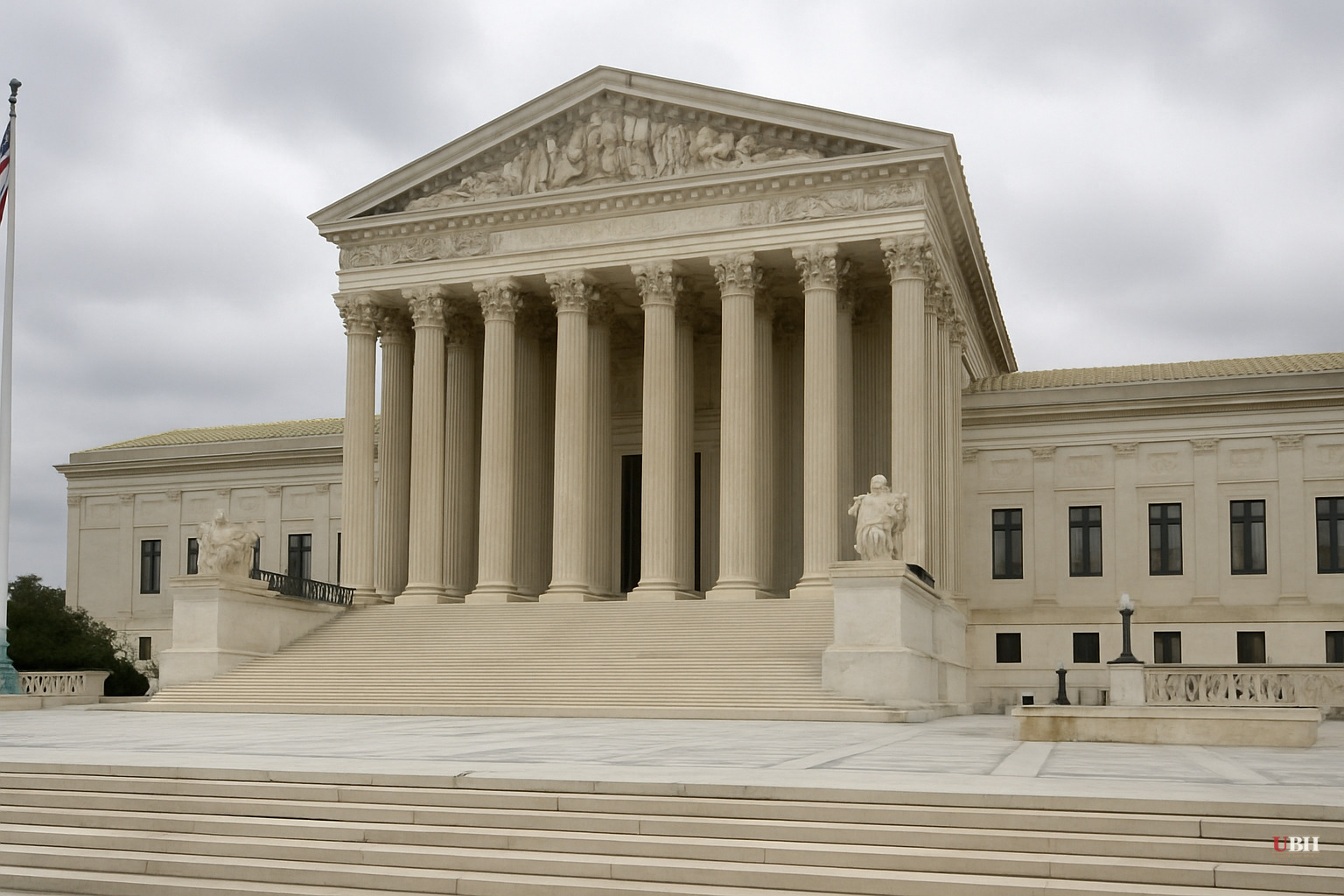
The Ruling
The Supreme Court ruled in West Virginia v. B.P.J. and Little v. Hecox that states may restrict female athletic competition to biological females, clearing the way for similar laws across the country.
Justice Brett Kavanaugh authored the majority opinion. "The Constitution and Title IX do not require an overhaul of women's and girls' sports throughout America," he wrote. "They may determine eligibility for women's and girls' sports based on biological sex."
All nine justices agreed the state bans do not violate Title IX, the 1972 civil rights law prohibiting sex-based discrimination in federally funded education programs. The six conservative justices went further, holding the bans also survive the 14th Amendment's equal protection guarantee. The three liberal justices — Sonia Sotomayor, Elena Kagan, and Ketanji Brown Jackson — disagreed on that constitutional question.
Sotomayor, in a partial dissent joined by Kagan and Jackson, wrote that the majority had applied "a diminished view of equal protection" to sports. Jackson also filed a separate partial concurrence and dissent.
The Cases
Idaho's Fairness in Women's Sports Act, enacted in 2020, was the first law of its kind in the country, according to SCOTUSblog. West Virginia's Save Women's Sports Act followed in 2021. Both require student athletes to compete according to their sex recorded at birth.
Lindsay Hecox, a long-distance runner and transgender college student, challenged the Idaho law shortly after it passed. She won injunctions at both the district and appeals court levels. The appeals panel found Idaho had failed to provide evidence that the ban actually protects "sex equality and opportunity for women athletes," according to BBC News. Hecox later dropped out of school, returned in 2025, and decided not to pursue varsity competition. The Supreme Court's ruling now reverses that lower-court victory.
The West Virginia case involved B.P.J., a transgender middle school student who sought to run on a girls' cross-country and track team.
Oral arguments were heard in January 2026. Idaho was represented by Alliance Defending Freedom; the transgender athletes were represented by the ACLU and Cooley Legal, according to Fox News.
State and Federal Context
More than two dozen states had already enacted similar bans before this ruling. The decision, as West Virginia Attorney General John McCuskey told Fox News Digital, now gives "all states, not just West Virginia, the clarity and confidence to ensure fairness and safety for female athletes today and for generations to come."
Idaho Attorney General Raul Labrador said Idaho "led the nation" and he "never wavered in defending that law."
President Trump signed an executive order in February 2025 directing the federal government to strip funding from schools that allow transgender students to compete in female athletics, describing the practice as "demeaning, unfair, and dangerous to women and girls," according to the Daily Wire. The NCAA, following that order, banned transgender women from women's sports. The Supreme Court's ruling now provides the statutory and constitutional foundation that had been missing from those earlier administrative actions.
The Strongest Case on the Other Side
Opponents of the bans contend that blanket exclusions treat transgender girls and women as categorically unequal, not because of anything they've done, but because of who they are. They point out that the appeals court in the Idaho case found the state provided no evidence the law actually protected competitive fairness for women, and that the practical impact falls on a vanishingly small number of athletes. For many transgender students, participation in school sports is less about competitive advantage and more about belonging, mental health, and the ordinary social experience of being a student. Sotomayor's dissent captures that concern: she argued the majority's framework gives states broad authority to exclude a class of people without rigorous scrutiny.
The majority's answer is that Title IX itself authorizes sex-segregated sports, and that "biological sex" is a permissible and rational basis for defining those categories. This is particularly true given the documented physiological differences relevant to athletic performance. The International Olympic Committee reached a parallel conclusion in March, announcing it would limit women's Olympic competition to biological females after reviewing 18 months of scientific evidence, according to BBC News.
What's Still Unresolved
The ruling, as NPR noted, leaves significant questions open. Can states bar transgender children from playing on mixed teams in elementary school, where boys and girls routinely compete together anyway? What about club sports and recreational leagues, as opposed to varsity programs? The court's opinion addressed publicly funded varsity-level competition. It did not draw a definitive map for every scenario.
Those unresolved edges mean further litigation is likely. The ruling settles the headline question for state-level varsity sports bans. It does not settle every downstream dispute about where biology-based eligibility rules apply and where they don't.
Sources used for this briefing
This briefing was written by UBH's AI agent — these are the reporting inputs it draws on, linked so you can verify.


