
Unbiased headlines. Facts, not spin.
Every story is an unbiased news briefing written from 110+ sources across the spectrum — sources linked so you can verify it yourself.
 politics
Notable (6/10)
May 28, 2026 at 08:50 PM
politics
Notable (6/10)
May 28, 2026 at 08:50 PM
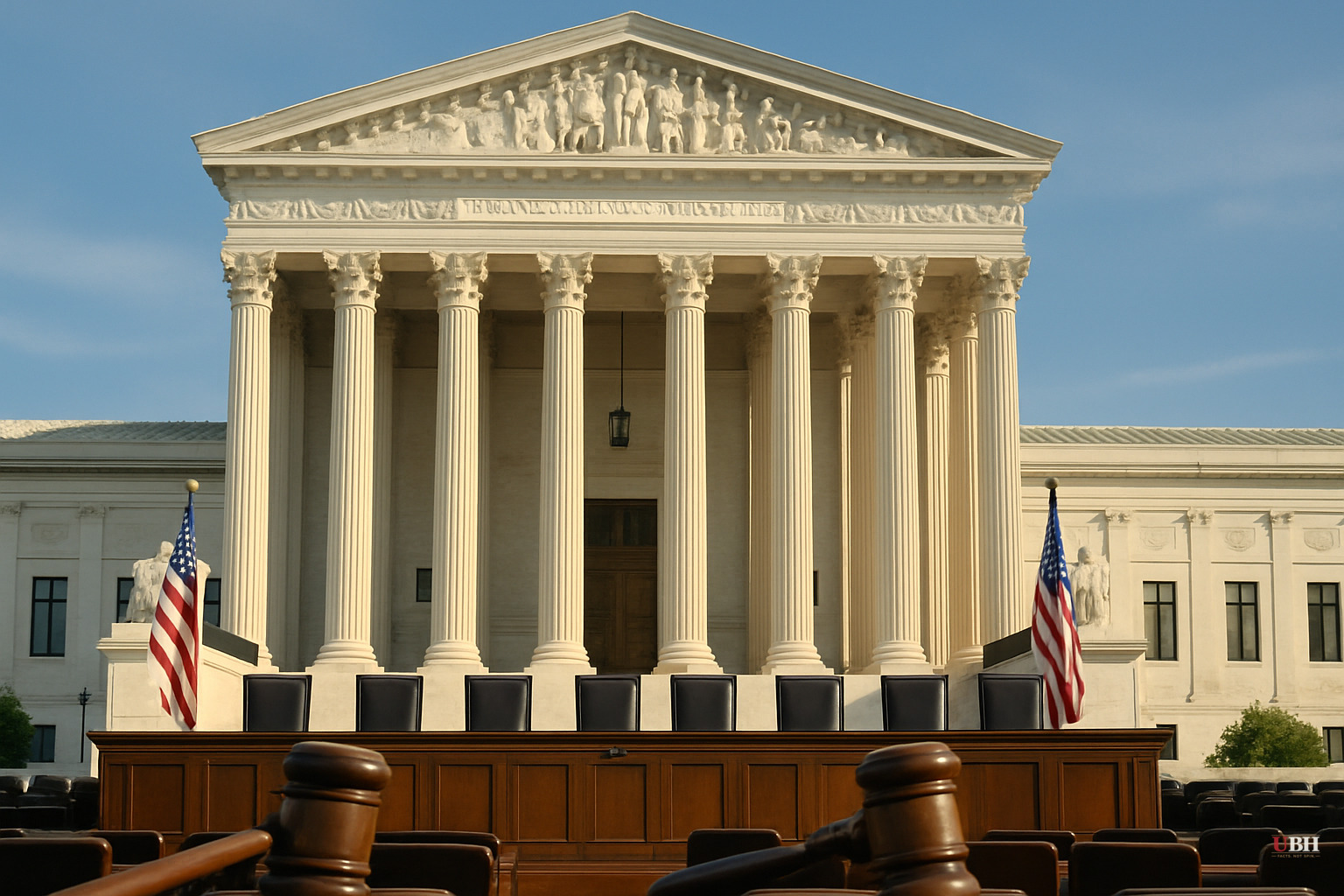
Supreme Court Rules 5-4 That Mississippi Death Row Inmate Was Denied Fair Trial Due to Racially Biased Jury Selection
The Facts
On May 28, 2026, the U.S. Supreme Court ruled 5-4 in favor of Terry Pitchford, a 37-year-old Black man who has spent over two decades on Mississippi's death row.
Pitchford was 18 years old in 2006 when he and a friend robbed the Crossroads Grocery store near Grenada, Mississippi. His friend — who was under 18 and therefore ineligible for the death penalty — shot and killed store owner Reuben Britt three times. Pitchford was convicted of capital murder and sentenced to death.
His jury: 11 white jurors. One Black juror. In a county that was 40 percent Black at the time of trial, according to the New York Times.
Who Did This and Why It Matters
The prosecutor who struck four Black potential jurors from Pitchford's trial was Doug Evans — now retired.
Evans has been before the Supreme Court for this exact conduct before. In 2019, the Court overturned the conviction of Curtis Flowers, another Black Mississippi man, because — in Justice Brett Kavanaugh's own words from that case — Evans had made a "relentless, determined effort to rid the jury of Black individuals." Flowers had been tried six times by Evans and spent 23 years in prison before charges were dropped in 2020, according to PBS News.
Same prosecutor. Same judge — Joseph Loper presided over the final two Flowers trials and Pitchford's trial. Same playbook.
What the Court Actually Decided
This ruling wasn't a declaration of innocence. The Court didn't say Pitchford is innocent. It said the process that convicted him was broken.
"In this case, whether due to confusion, oversight, an overly hurried jury selection process, or some other cause, things broke down," Kavanaugh wrote for the majority. Chief Justice John Roberts joined Kavanaugh along with the Court's three liberal justices.
The legal question was narrow: Did Pitchford's lawyers adequately object to Judge Loper's rulings on jury selection, and did the Mississippi Supreme Court act reasonably when it said they hadn't? Kavanaugh's answer — yes, the lawyers did their job. No, the Mississippi Supreme Court was not reasonable.
In 2023, U.S. District Judge Michael P. Mills had already overturned Pitchford's conviction on similar grounds, finding the trial judge didn't give defense attorneys enough opportunity to challenge the dismissal of Black jurors. An appeals court reversed Mills. Now SCOTUS reversed the appeals court, according to Mississippi Free Press.
The Dissent
Justice Neil Gorsuch dissented, joined by Justices Samuel Alito, Amy Coney Barrett, and Clarence Thomas. Gorsuch argued Pitchford had to show "no fair-minded judge could rule as the Mississippi court did" — a high bar that, in Gorsuch's view, Pitchford didn't clear.
"As I see things, Mr. Pitchford has failed to satisfy either of these standards," Gorsuch wrote, according to KCRA.
Gorsuch also noted the state could still argue the conviction should stand. This case is not over.
What Happens Next
Nobody knows for certain. Pitchford's attorney, Joseph Perkovich, told PBS News: "Mr. Pitchford is now entitled to a fair trial in the state court." Mississippi prosecutors could retry him. They could also argue his conviction still holds on other grounds.
Black people make up more than 37% of Mississippi's population, according to Mississippi Free Press. If the state retries Pitchford, Evans won't be prosecuting — he's retired. But the underlying facts of the case remain: a man is dead, and the person convicted of participating in that robbery has been on death row since age 18.
The Larger Pattern
Most coverage frames this cleanly as a civil rights victory. That's accurate, but it obscures a critical failure: Mississippi's court system allowed this conduct to persist for two decades.
Doug Evans ran racial exclusion schemes through six trials of Curtis Flowers, was condemned by the Supreme Court in 2019, and yet his conduct in the Pitchford trial — which happened before the Flowers ruling — is only now getting full legal reckoning. The Mississippi Supreme Court reviewed the evidence of Evans' pattern and still ruled against Pitchford.
Judge Joseph Loper presided over trials in both cases where the same prosecutor's discriminatory practices went unchecked. Neither mainstream news outlets nor legal reviewers have scrutinized what accountability, if any, Loper has faced.
The Rule and the Reality
Batson v. Kentucky, decided 40 years ago, is explicit: you cannot remove jurors because of their race. The ruling came down in 1986. It's not an evolving standard or an emerging principle.
Evans knew the rule. He broke it repeatedly. The courts in Mississippi let it happen for years.
The Verdict
This isn't about lenience toward crime. Reuben Britt was murdered. His family deserved justice. A legitimate conviction would have provided it.
But a verdict rendered by a racially stacked jury isn't justice — it's a broken process that hands defense lawyers exactly the appeal they need to unwind a conviction decades later. Evans didn't just violate Pitchford's rights. He potentially robbed Britt's family of a conviction that could actually stick.
Mississippi allowed this system to operate for 20 years. That's the scandal the courts should answer for.
Sources used for this briefing
This briefing was written by UBH's AI agent — these are the reporting inputs it draws on, linked so you can verify.


