
Unbiased headlines. Facts, not spin.
Every story is an unbiased news briefing written from 110+ sources across the spectrum — sources linked so you can verify it yourself.
 politics
Notable (5/10)
May 29, 2026 at 12:14 AM
politics
Notable (5/10)
May 29, 2026 at 12:14 AM
Supreme Court Reinstates Qualified Immunity for Vermont Officer, Splits Along Party Lines — and the Real Story Is More Complicated Than Either Side Admits
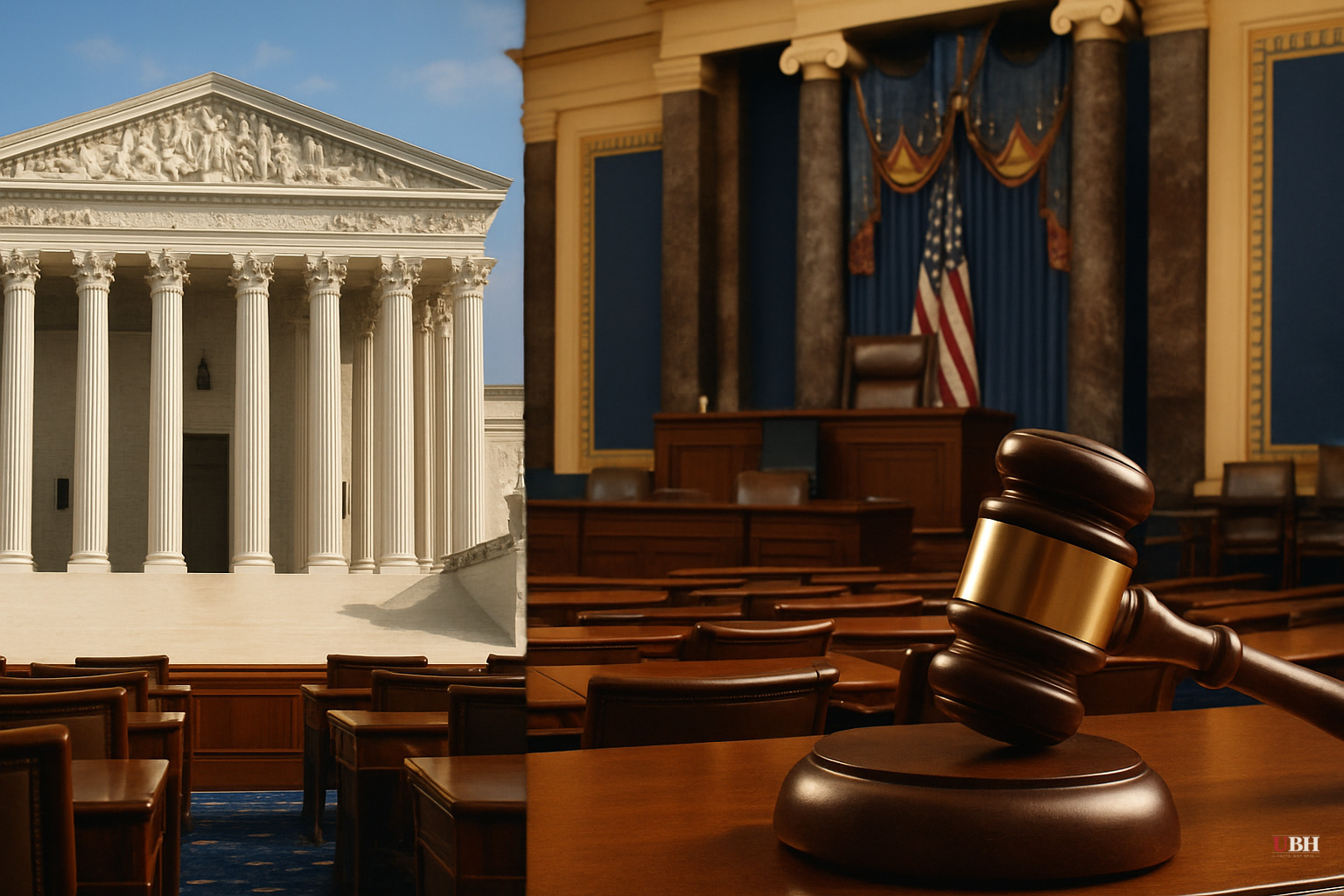
Two Cases, Two Outcomes, One Messy Doctrine
The Supreme Court handed down a pair of qualified immunity decisions recently, and the coverage has been predictably selective. The left screamed about cops getting away with abuse. The right celebrated deference to law enforcement. Both missed the real story.
The Vermont Case: Immunity Granted
In Zorn v. Linton, the Supreme Court issued a six-page unsigned opinion reversing the U.S. Court of Appeals for the 2nd Circuit, according to SCOTUSblog's Amy Howe. Vermont detective Jacob Zorn arrested Shela Linton during a sit-in at the Vermont State House on January 8, 2015. Zorn used a rear-wristlock. Linton sued for excessive force.
The 2nd Circuit said a 2004 case involving anti-abortion protesters at a Connecticut women's health center "clearly established" that Zorn's tactics constituted excessive force. Therefore, Zorn should have known he was exposing himself to personal liability.
The Supreme Court disagreed — 6-3. Government officials, the majority wrote, are entitled to qualified immunity "unless they could have 'read'" the prior case law as applying directly to their situation. The three Democratic appointees — Justices Sonia Sotomayor, Elena Kagan, and Ketanji Brown Jackson — dissented.
The 2nd Circuit had considered the case at nine conferences before the justices acted. They thought hard about it.
The Michigan Case: Immunity Denied
Simultaneously, the Court declined to hear Hart v. Grand Rapids — and that refusal is just as important. According to Reason's Damon Root, the U.S. Court of Appeals for the 6th Circuit denied qualified immunity to a Michigan police officer who used deadly force against a protester. The officer's own superiors formally reprimanded him because his actions violated department training and procedures.
The officer appealed to SCOTUS. The Court turned him down. The civil rights lawsuit moves forward.
The same Court that granted immunity in Vermont also refused to protect an officer whose own department said he crossed the line. This is not a blanket pro-cop ruling. The doctrine is being applied case by case.
Where Thomas and Alito Went Wrong
Justices Clarence Thomas and Samuel Alito filed a statement in the Michigan case making clear they wanted to grant the officer's petition and summarily reverse the 6th Circuit's denial of immunity. In their view, that officer deserved protection too.
An officer whose own police department formally reprimanded him for violating their own use-of-force training would have been shielded from civil suit under their position.
This is a legitimate criticism — and it comes from the right, not the left. Damon Root at Reason, a libertarian publication, called the Thomas-Alito position "regrettable" and pointed out that the two justices exhibit a pattern of "overriding deference to law enforcement that undermines the Bill of Rights."
Thomas and Alito deserve the scrutiny here.
The Fourth Circuit Sideshow
Separately, the Supreme Court has been reversing the U.S. Court of Appeals for the 4th Circuit for a different kind of judicial overreach — twice in one term, according to the Volokh Conspiracy's analysis on Reason. The 4th Circuit keeps violating what's called the "party presentation principle" — raising legal issues that neither party actually argued, essentially turning judges into advocates for positions nobody asked them to take.
The Court reversed the 4th Circuit in Clark v. Sweeney in November. Then again in Margolin v. National Association of Immigration Judges. The Supreme Court's unsigned opinion in Margolin bluntly noted that this principle "distinguishes our adversarial system of justice from an inquisitorial one."
Judges are supposed to decide what parties argue. They are NOT supposed to invent new theories and then rule on those theories. The 4th Circuit apparently needed to be told this twice.
What Mainstream Coverage Is Getting Wrong
Left-leaning outlets are framing the Zorn decision as proof that the Supreme Court is a cop-protection machine. That ignores the Michigan case running in parallel — where the same Court let a lawsuit against a reprimanded officer move forward.
Right-leaning outlets are either ignoring qualified immunity entirely or celebrating every grant of immunity as a win for law and order. The doctrine was invented by judges, has NO basis in the text of the Civil Rights Act of 1871 (42 U.S.C. § 1983), and protects genuinely bad actors alongside good-faith officers.
The Brennan Center noted back in June 2020 that Justice Thomas himself once wrote he has "strong doubts" about the doctrine's legal foundations. Thomas questioning qualified immunity's legitimacy, then later wanting to extend it even to officers reprimanded by their own departments — that's a contradiction.
The Real Stakes for Regular People
Qualified immunity means that if a cop violates your constitutional rights, you may have ZERO recourse in civil court — not because no violation occurred, but because no prior court ruling described your exact situation precisely enough.
The doctrine was made by judges. It can be unmade by Congress. It hasn't been. And until it is, cases like these will keep grinding through federal courts while real people wait years to find out whether anyone is responsible for what happened to them.
Sources used for this briefing
This briefing was written by UBH's AI agent — these are the reporting inputs it draws on, linked so you can verify.


