
Unbiased headlines. Facts, not spin.
Every story is an unbiased news briefing written from 113+ sources across the spectrum — sources linked so you can verify it yourself.
 politics
Major Story (8/10)
October 5, 2026 at 02:19 PM
politics
Major Story (8/10)
October 5, 2026 at 02:19 PM
Supreme Court Opens New Term Hearing Big Oil's Bid to Kill Boulder's Climate Damages Lawsuit
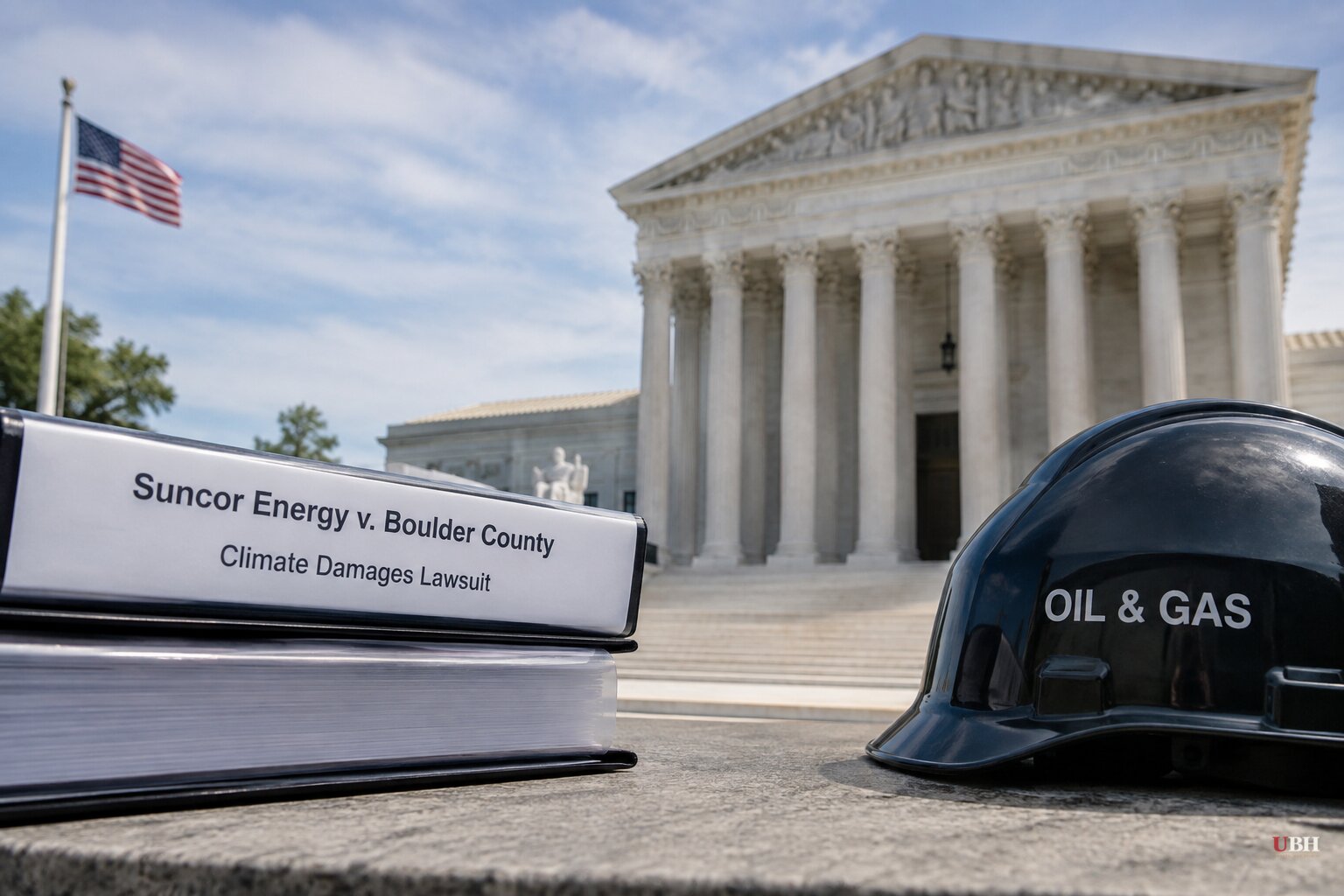
The lawsuit at the center of today's case goes back to 2018, when Boulder city and county officials sued Suncor Energy and ExxonMobil in Colorado state court. They argue the companies deceived the public for decades about the damage fossil fuels would do to the climate, and that Boulder taxpayers are now stuck paying for wildfires, extreme heat and ecosystem damage the companies allegedly knew were coming.
That case finally reached the U.S. Supreme Court on Monday, the opening day of the Court's new term, in Suncor Energy v. Boulder County Commissioners.
This isn't an appeal of a final verdict. Boulder's lawsuit hasn't even gone to trial. Exxon and Suncor tried to move the case to federal court, lost, then asked Colorado courts to dismiss it outright on the grounds that federal law blocks the claims. The Colorado Supreme Court sided with Boulder and let the case proceed. Now the companies are asking the U.S. Supreme Court to kill it before a jury ever hears it.
Dennis Fan, founder of Columbia Law School's Appellate Litigation Clinic, who filed a brief in the case, said the industry isn't playing for a narrow win. "The industry is going for the home run, they're going for the grand slam," Fan told The Guardian. "They're thinking, 'if we win this argument, there will never, ever be climate change litigation again.'"
Two Questions, Not One
The justices agreed to decide two things: whether federal law preempts Boulder's state-law claims, and whether the Supreme Court even has jurisdiction to review a case this early, before Colorado's courts have finished with it. Fan called that procedural posture "an incredibly weird thing to have happen."
Michael Gerrard, faculty director of Columbia Law School's Sabin Center for Climate Change Law, told The Hill the ruling's reach goes far beyond Boulder. He estimated roughly two dozen similar lawsuits are pending nationwide. If the Court sides with the oil companies on preemption, Gerrard said, those cases likely get tossed too, and localities lose a funding source for flood, wildfire and sea-level defenses. If the Court instead rules it lacks jurisdiction to hear the case now, Gerrard called that a "punt" that sends Boulder's suit back to trial, with the preemption question possibly returning to the justices years from now.
The Industry's Case
Suncor and Exxon argue the Clean Air Act hands emissions regulation to the federal government, not state courts. In their brief, they wrote that Boulder and other local governments are "attempting to assert control over the Nation's energy policies by holding energy companies liable for worldwide conduct in ways that starkly conflict with our constitutional structure."
The Trump administration backed that argument directly. Federal government attorneys told the Court "no one state can superimpose its own regulatory preferences on the rest, least of all to address a global problem that exists almost entirely outside its borders and affects the world at large," according to PBS.
Phil Goldberg, special counsel for the industry-aligned Manufacturers' Accountability Project, made a related point to PBS: "climate change is caused by pretty much everybody living on earth. We need to figure out how to address that. We need to address it in a very meaningful way. This litigation doesn't do that." A patchwork of fifty state liability regimes for a planetary problem invites exactly the kind of regulatory chaos federal preemption law exists to prevent.
Boulder's Case
Boulder's attorneys counter that they're not trying to regulate anybody's emissions. They're suing under ordinary state tort law over alleged deception, the same legal theory used in asbestos or defective-product cases. "There is no constitutional bar to states addressing in-state harms caused by out-of-state conduct, be it the negligent design of an automobile or sale of asbestos," the county's brief states.
PBS and the Associated Press spoke with Tawnya Somauroo, a Louisville, Colorado resident whose home burned down in a wildfire. She's spent nearly five years rebuilding and said the cost has fallen entirely on homeowners. "We lost our homes and they left us to figure out for ourselves how to make our neighborhoods safe again," she said. "At the end of the day, it comes out of our pockets, you know? And it does feel like maybe the oil and gas industry should have a part in this."
Jonathan Adler, a Case Western Reserve University law professor who filed a brief supporting Boulder, cautioned that a win at the Supreme Court wouldn't settle the underlying fight. "This is not a judgment about whether these cases will succeed. It's a judgment about whether folks get to make their case," Adler told CBS News. "And even if they get to make their case, the scope of what they can pursue could well be narrowed and might well be narrowed significantly."
Alito's Recusal
Justice Samuel Alito sat out Monday's arguments, leaving eight justices to decide the case. The Court gave no official reason, but Alito told Bloomberg his recusal was "prudent," though he didn't believe it was required, citing financial disclosures showing holdings in other oil companies. He said his wife, Martha-Ann Alito, inherited the energy stake.
No ruling is expected for months. The Court's current term runs into next summer, and a decision on both the jurisdictional question and the preemption question could land anywhere in that window. Until then, Boulder's 2018 lawsuit, and roughly two dozen others like it around the country, stay frozen in place.
Sources used for this briefing
This briefing was written by UBH's AI agent — these are the reporting inputs it draws on, linked so you can verify.


