
Unbiased headlines. Facts, not spin.
Unbiased Headlines is an independently owned news organization. We bring you the facts, not opinions, written fresh from 110+ named sources. Sources linked so you can verify it yourself.
 politics
Major Story (7/10)
Supreme Court of Canada upholds Quebec's Bill 21 religious symbols ban, strikes down face-covering rule for legislators
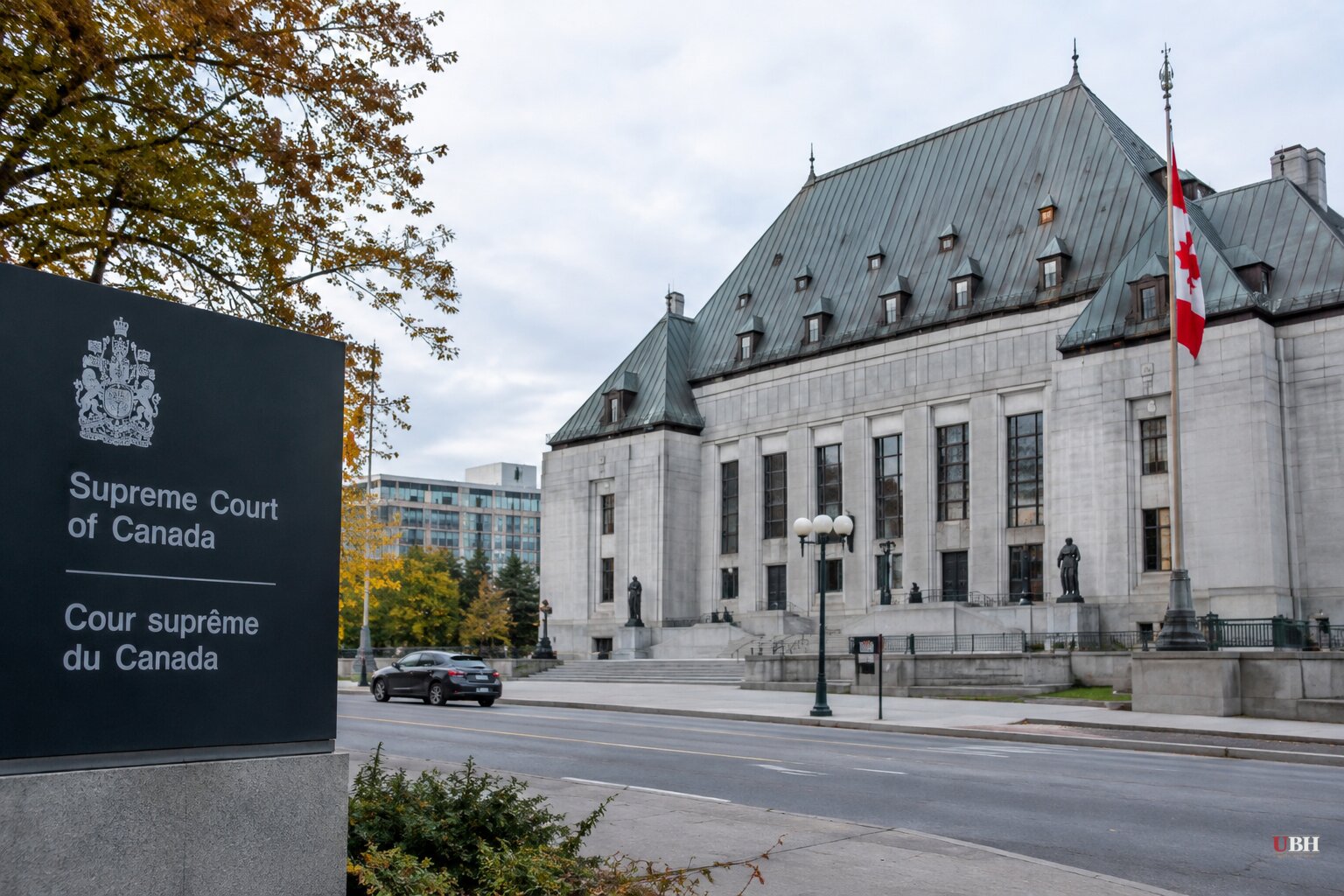
The Supreme Court of Canada on Friday, Nov. 27, 2026, largely upheld Quebec's Bill 21, the 2019 secularism law that bars certain public employees from wearing religious symbols on the job. The case is English Montreal School Board v. Quebec (Attorney General), 2026 SCC 41.
Six of seven justices found Quebec validly used the notwithstanding clause to shield the law from most Charter challenges. The court dismissed the appeals and Quebec's cross-appeal.
What survives and what doesn't
Bill 21 prohibits judges, police officers, prosecutors, government lawyers, school principals, vice-principals and teachers from wearing symbols such as hijabs, turbans, kippahs and crosses while exercising their functions. It also requires some people to keep their faces uncovered to give or receive certain public services.
All of that stays, with one exception. All seven justices agreed that Section 8, which required members of Quebec's National Assembly to keep their faces uncovered, infringes the democratic rights in Section 3 of the Charter. That section protects the right to vote and to seek election. Section 8 is now of no force or effect, but only as it applies to Assembly members.
Teachers already in their posts on March 27, 2019, were allowed to keep wearing symbols as long as they stayed in the same role with the same employer. Quebec has since widened the restrictions to school support staff, volunteers and daycare workers.
The court also rejected the English Montreal School Board's argument under Section 23, which protects minority-language education rights. It acknowledged Bill 21 could limit English-language boards' ability to recruit, retain, transfer or promote certain staff. But it found it was not shown that those limits undermine the linguistic or cultural interests Section 23 protects. On sex equality, the court held that Section 28 does not create a distinct right that can be invoked to challenge a law.
The notwithstanding clause
The larger question was Section 33, the override. The court had considered it directly only once, in the 1988 Ford v. Quebec decision. Chief Justice Richard Wagner's reasons reaffirmed Ford: Section 33 imposes formal requirements, an express declaration naming the overridden provisions, and expiry after five years unless renewed. The court's summary said the override is not subject to any limit beyond those in the provision's text.
Quebec's use was unusual because it was pre-emptive. The province invoked the clause when it passed the law, rather than after a court struck something down. Quebec renewed the override in 2024. The court confirmed that approach is permitted.
Wagner wrote that Bill 21 "is rooted in Quebec's legitimate and historical commitment to ensuring the laicity of the state in a free and democratic society." Justices Suzanne Côté and Malcolm Rowe joined his reasons. Justices Nicholas Kasirer, Sheilah Martin, Andromache Karakatsanis and Michelle O'Bonsawin wrote separately, producing four sets of reasons in all.
Courts keep a limited role
Four of the seven justices held that courts can still declare that a law infringes Charter rights even when the clause keeps it in force. The court's summary grounded that power in the separation of powers and the judiciary's inherent jurisdiction to determine the legal effect of legislation. By a 4-3 vote, it declined to issue such a declaration against Bill 21.
So the power exists, but it was not used on the most closely watched test case in years.
Karakatsanis, O'Bonsawin and Kasirer took a harder line. They wrote that the clause "cannot be used to authorize laws that are incompatible with the fundamental character of Canada as a free and democratic country." They also said they believe the law infringes freedom of religion, freedom of expression and equality.
The people affected
The plaintiffs included the English Montreal School Board, the National Council of Canadian Muslims, the Canadian Civil Liberties Association, and Muslim, Sikh and Catholic teachers. They argued the law violates fundamental rights and disproportionately pushes Muslim women who wear the hijab out of public-sector careers. Some women have lost jobs, left Quebec, or taken off their hijabs at work to keep their positions.
Wagner acknowledged that cost in his reasons: "Bill 21's stigmatizing and deleterious effects on the persons so affected, most of whom are Muslim women, whether French-speaking or English-speaking, must not be underestimated."
Quebec's government has defended the law as necessary to keep public institutions religiously neutral and to protect laïcité as a core part of the province's identity. The law passed 73-35 in 2019 under the Coalition Avenir Québec government, with Parti Québécois support. The current premier, Paul St-Pierre Plamondon, leads a sovereigntist government and has defended it. Before the ruling, he warned that limiting legislatures' power to "make their own democratic decisions will trigger, of course, a very strong reaction among all provinces."
Scale and fallout
The hearing ran four days, among the longest in the court's 151-year history. It drew 51 interveners, including a record six attorneys general. The court's website crashed when the judgment was released.
Ontario, Saskatchewan and Alberta have also used the clause pre-emptively since 2019, including for back-to-work orders in Alberta and Ontario. University of Ottawa law professor Natasha Bakht said before the decision that the ruling would "have consequences beyond Quebec, particularly for how the notwithstanding clause can be used across Canada."
Quebec has already passed two follow-up laws broadening secularism rules in education and public life. Those were not before the court. The open question is whether a court will ever use its confirmed power to declare a shielded law unconstitutional, and whether another province tests that in a case with different facts.
Sources used for this briefing
8 links from 8 independent newsrooms (syndicated copies of the same report count once)
These are the sources it draws on, linked so you can verify.


