
Unbiased headlines. Facts, not spin.
Unbiased Headlines is an independently owned news organization. We bring you the facts, not opinions, written fresh from 110+ named sources. Sources linked so you can verify it yourself.
 politics
Notable (6/10)
Montana Judge Bars Warrantless Immigration Arrests Without Flight-Risk Finding as Case Continues
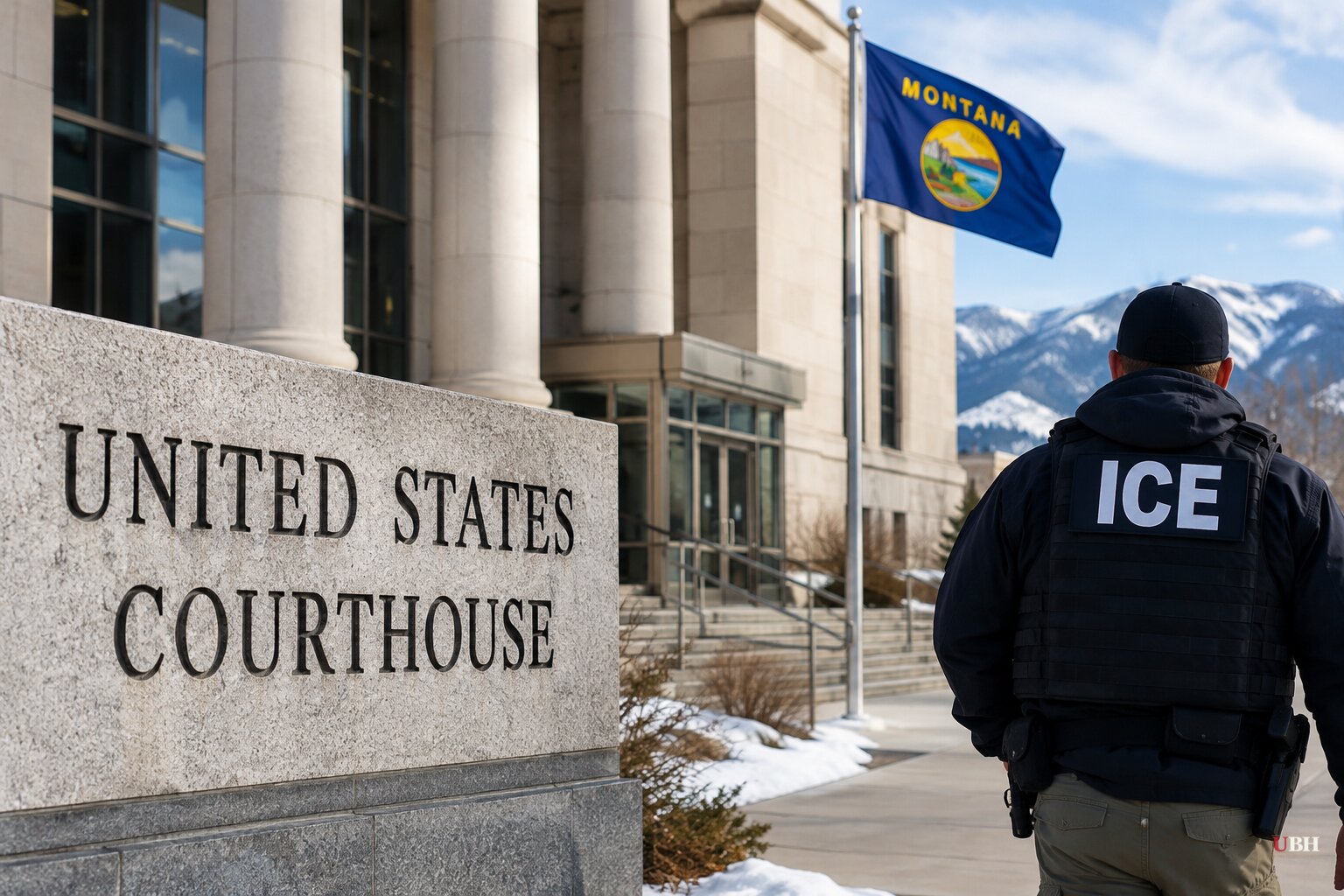
A federal judge in Montana has told immigration agents to get a warrant or show, case by case, why they could not.
Chief U.S. District Judge Brian Morris issued a preliminary injunction and temporary restraining order on Wednesday, Nov. 25. It bars the Department of Homeland Security from making warrantless civil immigration arrests in the District of Montana unless there is a "pre-arrest individualized determination" that the person is likely to escape before a warrant can be obtained.
The order is not a final judgment. The underlying case is still pending.
What the order requires
Morris found a "high likelihood" that DHS unlawfully made at least 50 warrantless arrests in Montana since July 31. He wrote that the plaintiffs "have established Defendants' use of a policy and practice of making unlawful arrests."
He also said most DHS immigration arrests in Montana since the end of July have been warrantless.
The order sets specific requirements:
- DHS must promptly distribute the ruling to its agents.
- DHS must give legal counsel documentation of any warrantless arrest within 72 hours.
- DHS may not transfer anyone arrested without a warrant outside Montana for seven days.
The ruling rests on Section 1357(a)(2) of the Immigration and Nationality Act. That law lets immigration officers arrest without a warrant if they believe a person is in the country illegally and is likely to escape before a warrant can be issued. Morris concluded that in the arrests at issue, the government did not show that second condition.
He also voiced concern that detainees are being pushed into "self-deportation" based on misinformation about the law.
Four plaintiffs brought the case, represented by Upper Seven Law. In September, Morris ordered the release of 24 migrants held in Cascade County after finding they had been detained without a warrant.
Not a one-state problem
The Montana ruling follows similar decisions by judges in Colorado, Oregon, California and New York.
The Colorado case is the furthest along on appeal. Refugio Ramirez Ovando and three other plaintiffs filed a class action on Oct. 9, 2025. They challenged warrantless arrests made without first assessing flight risk or whether the person violated immigration law, an assessment ICE's own policy requires.
Senior U.S. District Judge R. Brooke Jackson granted a preliminary injunction after two days of testimony. Ovando has since alleged the government violated it. Jackson ordered agent training and documentation of compliance. After a new notice of noncompliance in August, which the government disputed, he issued another order.
The government's argument
DHS asked the 10th Circuit to lift those orders. Daniel Mummolo, arguing for the government, said the case "begs for appellate intervention" and that "the district court placed itself at the site of every warrantless immigration arrest in Colorado."
He also said the government is not required to show compliance beyond ICE's written policy. "There isn't anything to suggest they're not following the policy," he told the panel.
Two judges pressed back, and both were appointed by Republican presidents. Judge Joel Carson, a Trump appointee, asked why the government did not simply introduce evidence countering the plaintiffs' exhibits. "At some point you have to come back with evidence that says 'yes, we are following that,'" he said.
Judge Harris Hartz, a George W. Bush appointee, asked whether agents wear body cameras. "We should have facts; we should know what's going on," he said. "If you really want to convince the court you're doing things right, then you should have body cams."
Timothy MacDonald of the ACLU, representing the immigrants, called the case "quite modest" because plaintiffs only had to show they are likely to succeed on the merits. He said the government remains free to bring witnesses to contest the plaintiffs' evidence at the merits stage.
What comes next
The 10th Circuit has not ruled. A decision there will test whether courts can require case-by-case documentation of warrantless arrests.
In Montana, the injunction stays in place while the case moves toward the merits. DHS has to produce its arrest paperwork within 72 hours, and the order's seven-day bar on moving detainees out of the state is the first deadline.
Sources used for this briefing
6 links from 5 independent newsrooms (syndicated copies of the same report count once)
These are the sources it draws on, linked so you can verify.


