
Original briefings. Zero spin.
Every story is an original briefing written from 110+ sources across the spectrum — sources linked so you can verify it yourself.
 politics
Major Story (7/10)
August 21, 2026 at 09:02 PM
politics
Major Story (7/10)
August 21, 2026 at 09:02 PM
Supreme Court Lets Trump Pause on White House Ballroom Construction Freeze
What Happened
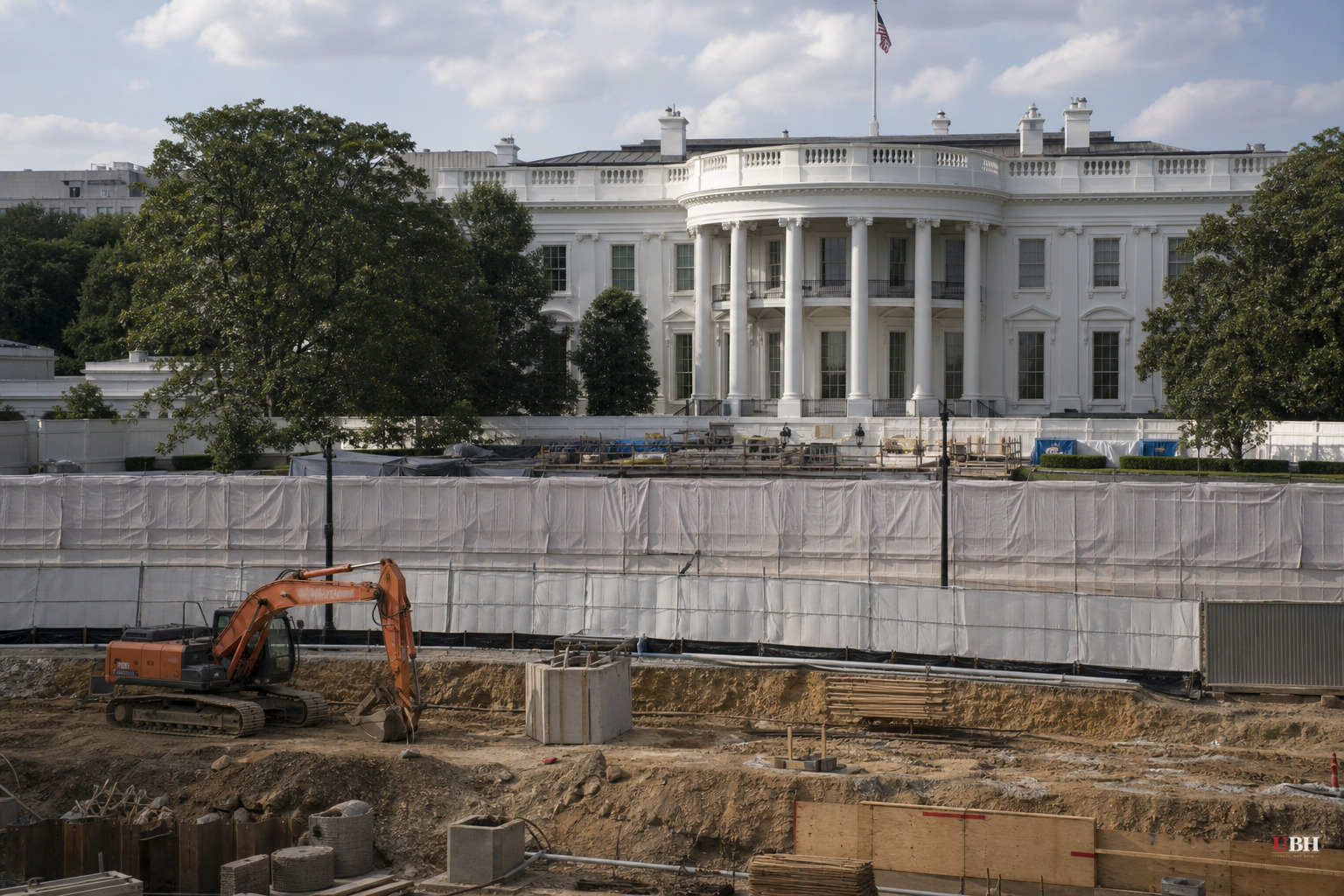
Chief Justice John Roberts issued a two-sentence administrative stay Friday afternoon, allowing construction to keep moving on President Trump's White House ballroom, according to NBC News, CBS News, and CNN. The order paused a lower court injunction that was set to take effect at midnight Friday and halt above-ground work on the project.
This is not a final ruling. Roberts acted alone, as the justice who handles emergency appeals from the D.C. Circuit, and gave no reasoning, vote count, or dissent, CNN reported. The full nine-member Supreme Court can still lift the stay at any time.
The Legal Fight So Far
Trump ordered the East Wing of the White House demolished in late October 2025 without notifying Congress, clearing space for a planned 90,000-square-foot ballroom, according to the Daily Signal and NPR. The National Trust for Historic Preservation sued, arguing the Constitution gives Congress, not the president, control over federal property, and that the administration skipped required environmental and planning reviews.
U.S. District Judge Richard Leon, a Republican appointee, ruled against Trump in March, ordering construction stopped unless it involved genuine safety and security work, per NPR. The U.S. Court of Appeals for the D.C. Circuit upheld that injunction on August 7, writing that Congress has "full constitutional control over federal property and the funding of its maintenance and development," and finding no express or implied authorization for Trump to proceed unilaterally, according to CBS News. The appeals court gave the Justice Department 14 days to seek Supreme Court relief, setting Friday's deadline.
Solicitor General D. John Sauer asked the justices to intervene, calling the injunction an unlawful block on "an integrated military complex, including a totally secure ballroom space," which he called vital to national security, CBS News reported. Underground construction, including a bunker and medical facilities, was never blocked by any court and has continued throughout the litigation.
The Numbers
According to a filing the administration submitted to the Supreme Court, the project was 65% complete as of August 14, with a 250-person crew working 20-hour days, seven days a week, NBC News and CNN both reported. Most outlets, including CBS News, ABC News, the Guardian, and the Daily Signal, put the total cost at roughly $400 million and describe it as privately funded.
NPR reported a different figure, saying the ballroom "is estimated to cost taxpayers at least $300 million despite the president saying repeatedly that taxpayers would not foot the bill." That claim conflicts directly with the administration's own characterization of the project as privately financed, and NPR did not cite a specific document or official establishing public funding. That discrepancy remains unresolved in the reporting and should be tracked as the litigation continues.
The Politics
Trump celebrated the stay on Truth Social: "We are grateful for the Decision of the United States Supreme Court. The Military/Ballroom Complex being built on the hallowed grounds of the White House, which is so vital for National Security, will be THE GREATEST OF ITS KIND!" He added that construction is "under budget and ahead of schedule."
Senate Minority Leader Chuck Schumer called the ruling "rubber stamping Trump's vanity-driven, gilded corruption," and said Democrats would keep fighting what he called "flagrant waste of taxpayer money," according to CNBC and the Guardian.
Trump has also gone further than his own legal team in public statements, at one point calling the National Trust "TREASONISTS" and alleging without evidence that the group "revealed Top Military Secrets," CBS News reported. CBS noted Trump has repeatedly conflated the separate underground bunker project, which courts have allowed to continue, with the above-ground ballroom, which two courts have blocked.
What's Actually in Dispute
The National Trust argues the administration is trying to "outrun judicial review" by racing construction to completion before the courts can rule on the merits. In a brief cited by NPR, the trust stated: "if the Court grants their stay application, this case is over." The trust's standing to sue rests partly on member Alison Hoagland, an architectural historian who says the project harms her enjoyment of the area, the Daily Signal reported.
The administration counters that the plaintiffs lack real injury to sue at all, and separately maintains that presidential authority over White House security upgrades is not subject to judicial second-guessing, per ABC News.
Both of those are contested legal claims, not settled facts. Two lower courts, including one led by a Republican-appointed judge, have already ruled Trump's approach unlawful. The Supreme Court has not yet ruled on the merits at all, and the current stay only buys time for the justices to decide whether to hear the case. Construction, meanwhile, keeps running at 20 hours a day.
Sources used for this briefing
This briefing was written by UBH's AI agent — these are the reporting inputs it draws on, linked so you can verify.


