
Unbiased headlines. Facts, not spin.
Every story is an unbiased news briefing written from 110+ sources across the spectrum — sources linked so you can verify it yourself.
 politics
Major Story (7/10)
July 6, 2026 at 09:08 PM
politics
Major Story (7/10)
July 6, 2026 at 09:08 PM
Supreme Court Lets Texas App Store Age Verification Law Stand, at Least for Now
What the Court Did
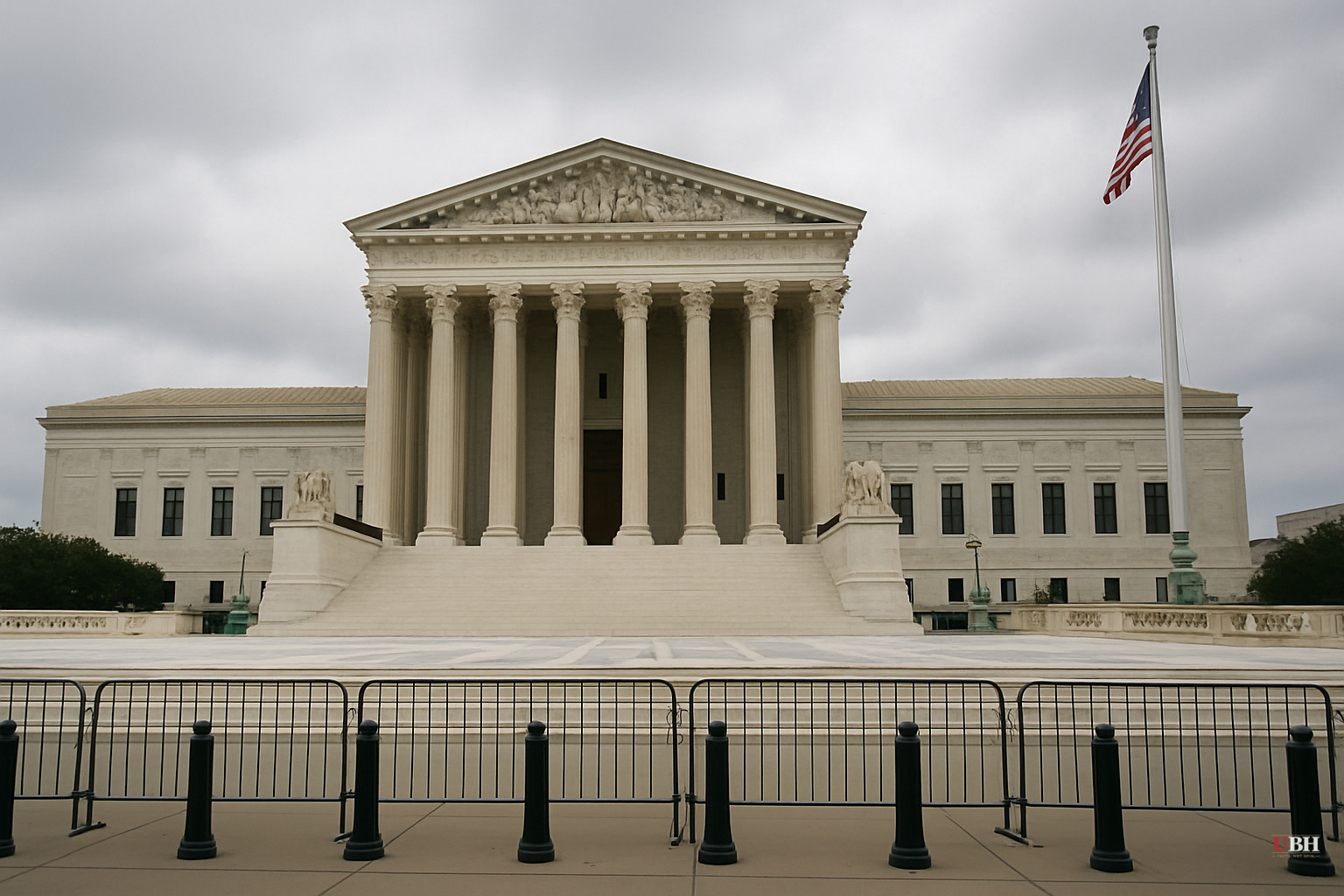
In an unsigned, unexplained order issued Monday with no noted dissents, the Supreme Court refused two emergency applications asking it to freeze Texas's App Store Accountability Act. The law stays in force while litigation continues.
The ruling came from the high court's emergency docket, which means the justices offered no reasoning and no vote count. As NPR noted, this is not a ruling that the law is constitutional. It means only that a majority was unwilling to halt enforcement in the interim.
What the Law Actually Requires
Governor Greg Abbott signed Senate Bill 2420 in 2025. Under the law, app stores must verify the age of every user before allowing downloads. Accounts belonging to anyone under 18 must be linked to a parent or guardian. That parent must approve every individual app download and every in-app purchase, and must receive disclosures about the app's age rating and contractual terms of service.
Exceptions exist for apps operated by emergency services and companies administering college entrance exams, according to NPR. Everything else — Instagram, YouTube, Spotify, news apps, library apps, Fortnite — requires parental sign-off.
Who Challenged It and Why
Two groups filed emergency applications with the Supreme Court: Students Engaged in Advancing Texas, a student civic engagement organization, and the Computer & Communications Industry Association, a tech industry lobbying group whose members include Apple and Google.
The CCIA's argument, quoted directly in filings reported by the Washington Examiner: "No State has ever required its citizens to prove their age before reading a newspaper, entering a bookstore, or even accessing the internet. Texas Senate Bill 2420 does exactly that — for every mobile app on every mobile phone."
U.S. District Judge Robert Pitman agreed when he blocked the law in December 2025, according to Al Jazeera. He compared the requirement to demanding that every bookstore check customer ages at the door and then require parental permission before a minor could buy any book. Pitman found the law likely failed strict scrutiny — the highest level of First Amendment review — because Texas could not demonstrate a compelling interest in restricting every category of speech the law covers.
The challengers also argued the law burdens adults, not just minors. Every Texan must verify age before accessing any app store, even to download a weather app or calculator.
Texas's Defense
Texas Solicitor General William Peterson argued the modern digital environment is categorically different from a bookstore. Children can access "any conceivable content" online without parents knowing, Peterson wrote, and the law is designed to restore the parental oversight that has always governed minors' access to harmful products in the physical world.
Texas further argued in its Supreme Court filings, as reported by the Washington Examiner, that when a child downloads an app the child is agreeing to contractual terms: data collection, location tracking, waiver of litigation rights. Texas's position is that parental consent before a minor agrees to those contracts is a reasonable regulation of a commercial transaction, not a speech restriction.
The Fifth Circuit's Role
After Judge Pitman's December 2025 injunction, a panel of the U.S. Court of Appeals for the Fifth Circuit lifted it, concluding Texas was likely to succeed in the underlying First Amendment suit. That decision, according to the Washington Examiner, is what triggered the emergency petitions to the Supreme Court. The justices declined to override the Fifth Circuit's call.
The Strongest Objection
Critics have a real point. Age verification systems require people to submit identifying information — and the law applies to all Texans, not just minors. A requirement that every adult prove their age to download a news organization's app or access a community forum is a tangible barrier to speech. The lower court found the law swept far too broadly, and the First Amendment's protection for minors, while narrower than for adults, is not zero. Courts have repeatedly held children retain substantial free speech rights. The challengers are not wrong that this law is unprecedented in scope.
The Fifth Circuit reviewed the same arguments and concluded Texas would likely prevail. The Supreme Court, with no noted dissents, left that conclusion undisturbed.
What Comes Next
Texas can now enforce the law while litigation continues in the lower federal courts. Utah, Louisiana, and Alabama have passed similar laws, according to NPR, meaning the legal question here could eventually affect multiple states. The core constitutional dispute — whether requiring age verification for app access fails strict scrutiny or survives under a lower commercial-speech standard — has not been resolved. That answer will come from the courts working through the merits, not from Monday's emergency order.
The Fifth Circuit is the next venue where that merits question gets litigated. Given Monday's Supreme Court order, app stores operating in Texas face the choice of complying now or risking enforcement while they wait.
Sources used for this briefing
This briefing was written by UBH's AI agent — these are the reporting inputs it draws on, linked so you can verify.


