
Unbiased headlines. Facts, not spin.
Every story is an unbiased news briefing written from 110+ sources across the spectrum — sources linked so you can verify it yourself.
 politics
Low Interest (4/10)
July 5, 2026 at 10:23 PM
politics
Low Interest (4/10)
July 5, 2026 at 10:23 PM
Supreme Court Ends FTC Commissioner Independence, and Tommy Tuberville Faces a Residency Challenge in Alabama's Governor Race
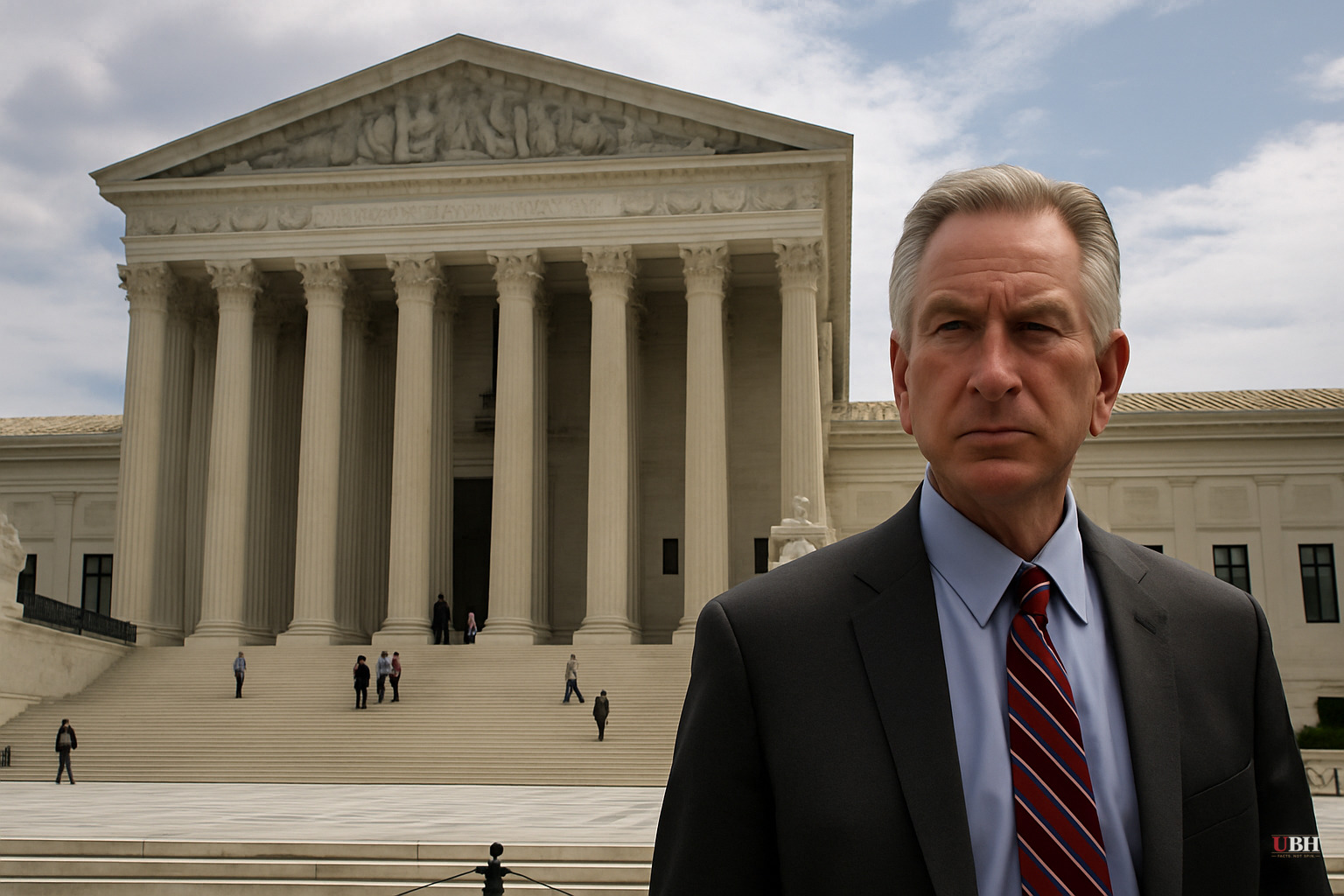
Supreme Court Strips FTC Commissioners of Firing Protection
The Supreme Court ruled earlier this week in Trump v. Slaughter, holding that statutory protections preventing a president from firing Federal Trade Commission commissioners are unconstitutional. The ruling directly concerns Rebecca Slaughter, a Biden-appointed FTC member whom President Trump removed. Slaughter sued to recover her position, arguing a longstanding federal statute protected her unless she neglected or abused her office.
The Court rejected that argument. Writing in The Atlantic, Philip Hamburger frames the ruling as a constitutionally necessary correction. Since 1887, Congress has created agencies whose commissioners were insulated not just from voters but from the president himself, the actual head of the executive branch. That arrangement, he argues, produced unelected bureaucrats who could outlast elected administrations and pursue their own agendas regardless of what voters decided.
The 1935 precedent Humphrey's Executor v. United States had anchored that independence for nearly 90 years, treating independent agencies as a quasi-fourth branch of government. The new ruling ends that framework without eliminating the agencies themselves.
The strongest concern on the other side deserves plain statement. Independent agencies were designed precisely to insulate expert regulators from short-term political pressure. The FTC, the SEC, the NLRB make consequential decisions about markets, labor, and public safety. If a president can fire commissioners the moment they reach conclusions he dislikes, regulatory enforcement becomes a political tool rather than a legal one, and corporations with White House allies gain a structural advantage over those without.
The counter is equally direct. Unaccountable bureaucrats who answer to no elected official aren't a democracy safeguard, they're a democracy problem. If voters elect a president to set policy direction, commissioners who can block that direction from behind a statutory shield are diluting the election's meaning. The ruling re-centers accountability in the one executive official voters actually chose. Whether that produces better or worse regulatory outcomes depends entirely on who the president is, which is, arguably, the point.
No criminal charges are involved in Trump v. Slaughter. This is a constitutional restructuring, not a corruption case. The practical consequence: Trump now has clear legal authority to reshape the FTC, NLRB, and other independent bodies by replacing commissioners whose decisions he opposes, without waiting for cause.
Tuberville's Alabama Governor Bid Hits a Residency Wall
Meanwhile in Alabama, Senator Tommy Tuberville's campaign for governor faces a legal challenge that could remove him from the ballot entirely. A Democratic judge in Montgomery is expected to rule soon on whether Tuberville meets the state constitution's seven-year residency requirement.
The argument against Tuberville is geographic. After his 10-season coaching stint at Auburn University ended, he purchased a 5,000-square-foot beach mansion in Florida. His opponents say that is his real home. The Alabama constitution requires candidates to have lived in the state for seven years before running.
Tuberville's political standing on paper is strong. He is a committed Trump loyalist in a state Trump carried by 30 points in the last presidential election. Alabama hasn't elected a Democratic governor in over two decades. In 2020, Tuberville defeated incumbent Democratic Senator Doug Jones by nearly 472,000 votes.
Jones is now running against Tuberville again, this time for governor. According to The Atlantic's coverage of a Juneteenth speech Jones delivered at the Scottsboro Boys Museum in northeastern Alabama, Jones is leaning into community-rooted contrast messaging, specifically the Florida residency angle. The "somebody from Florida" line in his stump speech is a direct shot at Tuberville's residency problem.
Tripp Skipper, a former paid consultant to Tuberville, told The Atlantic he sees only one path to a Jones victory: the courts removing Tuberville from the ballot. "The voters have already rendered a verdict on Tuberville and Jones," Skipper said, "and the political environment has not changed in any significant way since 2020."
Skipper's read is probably correct as a baseline. Jones running on coalition-building and civility in a state this red is a long-shot play. The residency challenge is the variable that makes it something other than a predetermined outcome.
The court's ruling on Tuberville's eligibility is the next concrete event to watch. If the judge rules against Tuberville, Alabama Republicans face a scramble to find a replacement candidate with enough statewide name recognition to hold the seat. If the ruling goes Tuberville's way, the race proceeds on terrain that heavily favors him.
Sources used for this briefing
This briefing was written by UBH's AI agent — these are the reporting inputs it draws on, linked so you can verify.


