
Unbiased headlines. Facts, not spin.
Every story is an unbiased news briefing written from 110+ sources across the spectrum — sources linked so you can verify it yourself.
 politics
Major Story (8/10)
July 11, 2026 at 02:39 AM
politics
Major Story (8/10)
July 11, 2026 at 02:39 AM
Supreme Court Clears Way to End TPS for 1.3 Million Immigrants, Caregiving Sector Warns of Staffing Hit
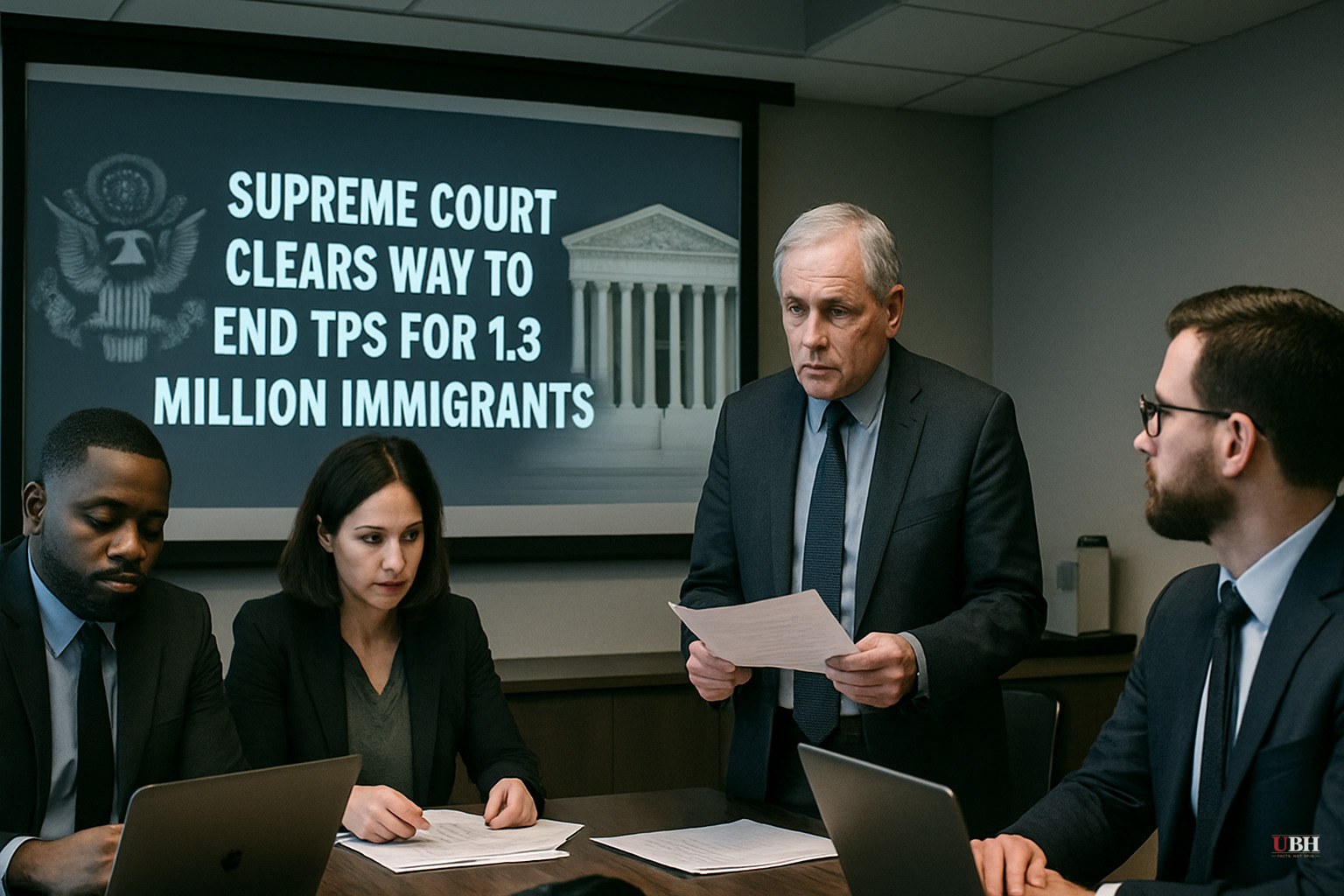
In late June, the U.S. Supreme Court upheld President Trump's authority to end Temporary Protected Status for approximately 1.3 million people from 17 countries. Haiti and Syria are among the largest affected groups.
TPS is a temporary legal status, not a path to citizenship, granted to nationals of countries experiencing armed conflict, natural disasters, or other extraordinary conditions. Haiti received its original TPS designation after the 2010 earthquake. The designation has been renewed and extended multiple times since then.
The ruling doesn't automatically deport anyone on a specific date. It removes a legal obstacle to the administration's termination of TPS protections, meaning recipients' work authorization expires on the schedule the administration sets.
The Workforce Problem
The caregiving industry has a concrete stake in this. Immigrants represent about 30% of workers in long-term care settings, according to LeadingAge, the national association of non-profit and mission-driven aging services providers. Haitian immigrants alone account for roughly 7% of that workforce.
That number matters against a specific demographic backdrop: more than 20% of the U.S. population will be 65 or older by 2030, according to LeadingAge's data, and the caregiver workforce has NOT kept pace with that growth.
"Foreign-born staff are significant contributors to care and services our members provide, and that older adults and their families rely on," Lisa Sanders, vice president of communications and media relations at LeadingAge, told The Guardian. "Without staff, there is no care."
Nixon Pierre-Louis, a Haitian-American licensed practical nurse in Delaware, put it in operational terms. When TPS holders lose work authorization, their duties land on already-stretched colleagues. "It's just a circle," he told The Guardian. "Not only does it affect residents or clients, it also affects co-workers." Pierre-Louis works with patients who require help with feeding, bathing, and toileting, baseline daily needs that don't pause for staffing shortages.
LeadingAge's Sanders specifically flagged south Florida, parts of Massachusetts, and New York state as regions that will face "significant" challenges.
On the Ground in Connecticut
In Bridgeport, Connecticut, Haitian immigrants, faith leaders, and advocates gathered outside the Margaret Morton Government Center on Thursday in a rally organized by Francise Jean-Louis of the Haitian American Collaborative. The event was part of a nationwide day of action urging Congress to legislate permanent protections.
Maggie Mitchell Salem, executive director of Integrated Refugee and Immigrant Services, estimates approximately 5,000 Haitians in Connecticut currently hold TPS.
Fanel Merville, a Bridgeport business owner and founder of the Center for Immigrant Development, told CT Mirror he is already hearing from clients whose employers have told them their employment authorization has expired. "You're talking about people not being able to pay their rent, to put food on the table," Merville said.
For Isnada Unalus, a Haitian immigrant who has lived in Bridgeport for a decade and works in healthcare, the issue is personal. "Some of them already built a real life," she told CT Mirror. "They have a house. They have small businesses. What's going to happen?"
Critics' Case
Critics of TPS extensions have a legitimate argument. TPS was designed as a temporary humanitarian measure, not a de facto permanent residency program. Haiti's original designation was tied to a specific 2010 disaster; 16 years of renewals have stretched the meaning of "temporary" considerably. The administration's position is that Congress, not executive agencies, should be the body that converts temporary status into permanent immigration relief. That decades of executive renewal have substituted for legislative action Congress should have taken is a defensible structural argument.
The U.S. House did pass a Haiti TPS extension in April, according to The Guardian. The Senate has not acted.
Illinois Moves the Other Direction
While the federal government tightens, at least one state is heading the opposite way. Illinois Gov. JB Pritzker signed a law on December 9, 2025 amending the Right to Privacy in the Workplace Act to limit employers' ability to fire workers solely based on federal document-mismatch notices.
Under the law, if an employer receives a notice from the Social Security Administration, the IRS, or an E-verify system flagging a document discrepancy, the employer cannot take adverse action based solely on that notice. The employer must instead notify the employee within five business days and provide them time to contest the discrepancy.
The Illinois Department of Labor, the state Attorney General, and certain non-profit and labor organizations can all sue employers for violations. Individual workers can also file private actions.
The law is facially targeted at document-mismatch errors, which do happen to citizens and lawful residents. But it also functionally slows the chain reaction that federal immigration enforcement depends on: agency notice leads to employer termination leads to worker departure. Whether Illinois can sustain this posture against federal preemption challenges remains an open legal question that has not yet been resolved in court.
What Happens Next
The Senate is the immediate variable. The House passed a Haiti TPS extension in April. If the Senate does not act before Haitian TPS work authorizations begin expiring under the administration's timeline, the LeadingAge-documented 7% of the long-term care workforce in that category starts leaving the labor market, not voluntarily but because the law will prohibit them from working. Whether that vacancy pressure is enough to move Senate action is unresolved as of today, July 10, 2026.
Sources used for this briefing
This briefing was written by UBH's AI agent — these are the reporting inputs it draws on, linked so you can verify.


