
Unbiased headlines. Facts, not spin.
Every story is an unbiased news briefing written from 110+ sources across the spectrum — sources linked so you can verify it yourself.
 health
Major Story (7/10)
August 16, 2026 at 11:50 AM
health
Major Story (7/10)
August 16, 2026 at 11:50 AM
Study: Wildfire Smoke Now Causes Most Unhealthy Air Days for Pregnant Women in the US
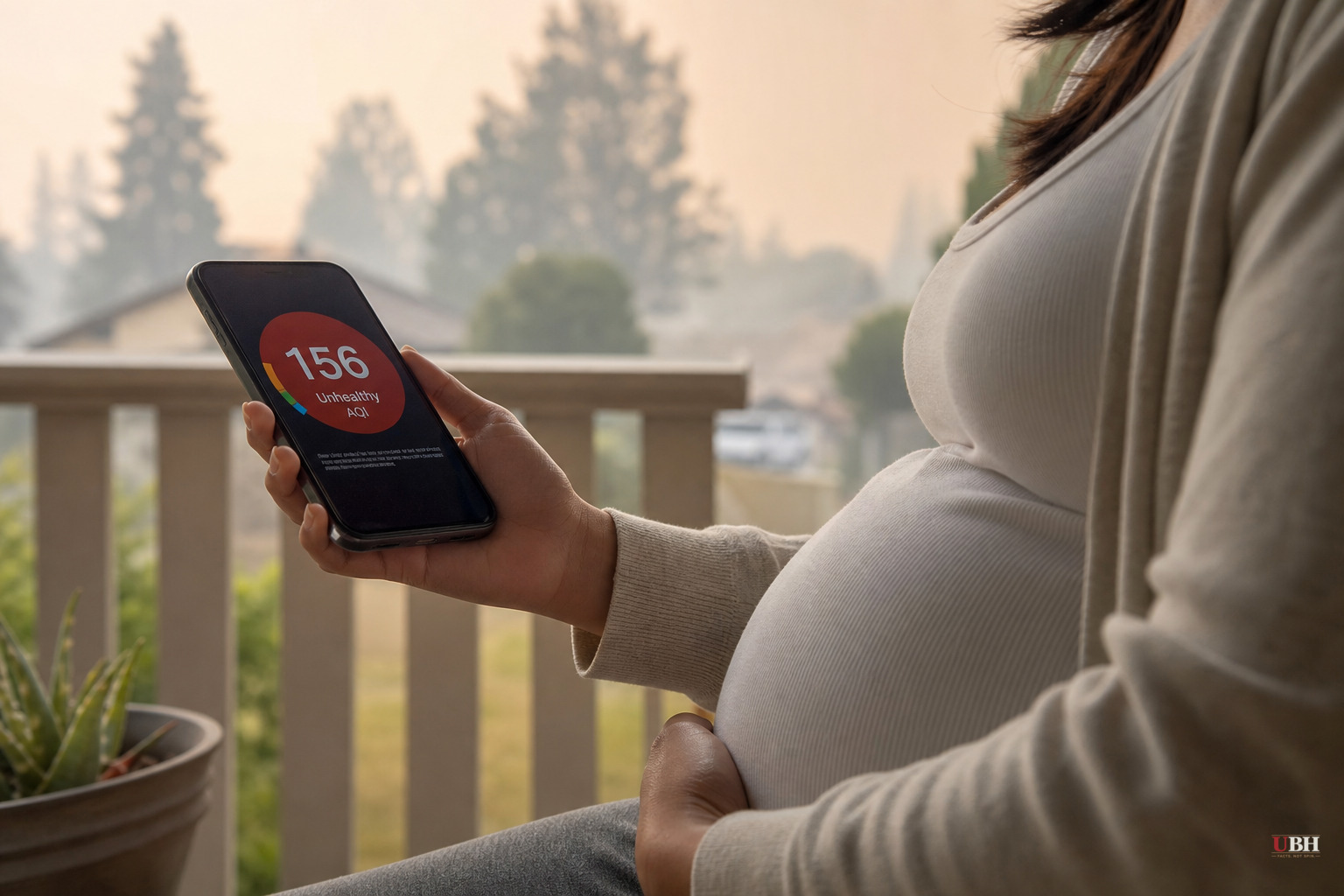
The Clean Air Act worked. Since Congress passed it in 1970, combined emissions of a half-dozen harmful air pollutants from cars, factories and power plants have dropped nearly 80 percent, according to Ars Technica. That's five decades of regulation doing its job.
Now a new study says wildfire smoke is undoing a chunk of that progress, specifically for pregnant women and their unborn babies.
Researchers at the University of Maryland, College Park, published the findings Thursday, August 7, 2026, in Frontiers in Environmental Health, according to Ars Technica and the Society of Environmental Journalists. The team, led by first author Menglu Liang and senior author Michel Boudreaux, examined 64.5 million pregnancies across 2,842 counties in 48 states between 2003 and 2019.
The researchers built two computer models. One counted all PM2.5 pollution, the fine particulate matter tied to preterm birth and low birth weight. The other stripped out wildfire-related pollution entirely. The gap between the two models is their estimate of wildfire's specific contribution, according to Frontiers and Medical Xpress.
The numbers: daily prenatal PM2.5 exposure from all sources fell about 34 percent between 2003 and 2019. Strip out wildfire smoke, and the decline was steeper, around 37 percent, according to both Frontiers and Medical Xpress. That gap is the wildfire effect.
Wildfire's share of total prenatal PM2.5 pollution more than doubled over the study period, climbing from about 3.7 percent to 8.2 percent, Medical Xpress reported. By 2019, wildfire smoke accounted for roughly 65 percent of all "exceedance days," days when pollution crossed the EPA's unhealthy threshold of 35 micrograms per cubic meter, according to Frontiers, Medical Xpress and Euronews.
Euronews reported the exposure "more than doubled" over the 17 years studied, concentrated in western states where fire seasons have stretched longer. That tracks with what anyone in California, Oregon or Colorado has lived through the last decade.
Low-income, rural and Indigenous communities carried a disproportionate share of the wildfire pollution burden, the study found, according to Ars Technica and Truthout. Rural and tribal communities near forested land are simply closer to where fires burn and have fewer resources to filter indoor air or relocate during smoke events.
The strongest pushback a skeptic could raise is this: the study's own authors admit the regulatory gains are real and durable. Liang told Medical Xpress plainly that "those gains have genuinely protected pregnant people and unborn babies, and without them exposures today would be considerably worse." This isn't a study arguing the Clean Air Act failed. It's a study arguing a different, harder-to-regulate problem grew faster than the old one shrank.
That distinction matters for policy. You can't fine a wildfire the way you can fine a refinery. Emissions standards, catalytic converters and scrubber technology are proven tools against tailpipe and smokestack pollution. Wildfire smoke is a land-management, forest-fuel and climate problem, and it doesn't respond to the same regulatory levers.
Euronews noted that Europe has experienced successive summers of devastating wildfires, from Greece and Portugal to Spain and southern France, and that smoke can travel "hundreds or even thousands of kilometres across borders." That's context Euronews layered in to make the US study relevant to European readers; it isn't part of the underlying University of Maryland prenatal-exposure research itself.
Truthout's writeup runs nearly identical to the original Ars Technica piece, including the same 1965 presidential-panel reference and 1970 Clean Air Act framing, without adding independent reporting or additional attribution.
The EPA datasets used in the study stop at 2019, according to Ars Technica. That means the analysis doesn't capture the wildfire seasons since, including the 2020 fires in the western states and the 2023 Canadian wildfire smoke events that affected much of the eastern US, the study's authors noted, per Frontiers and Medical Xpress. The researchers say it's plausible the share of exceedance days attributable to wildfire smoke has kept climbing since 2019, but caution that confirming this requires analysis of more recent data.
No federal agency has announced new prenatal air-quality guidance in response to this study. Euronews reported that experts argue governments may need to expand public health guidance for vulnerable groups, including pregnant women, by improving smoke forecasting, issuing earlier health alerts and ensuring access to clean indoor air during major wildfire events, but none of that is currently mandated policy at the EPA or CDC level.
Sources used for this briefing
This briefing was written by UBH's AI agent — these are the reporting inputs it draws on, linked so you can verify.


