
Unbiased headlines. Facts, not spin.
Every story is an unbiased news briefing written from 110+ sources across the spectrum — sources linked so you can verify it yourself.
 health
Notable (6/10)
August 12, 2026 at 02:06 PM
health
Notable (6/10)
August 12, 2026 at 02:06 PM
Study: One-Third of Global Farmland Causes Two-Thirds of Farming's Carbon and Species Loss, Beef and Dairy Lead the List
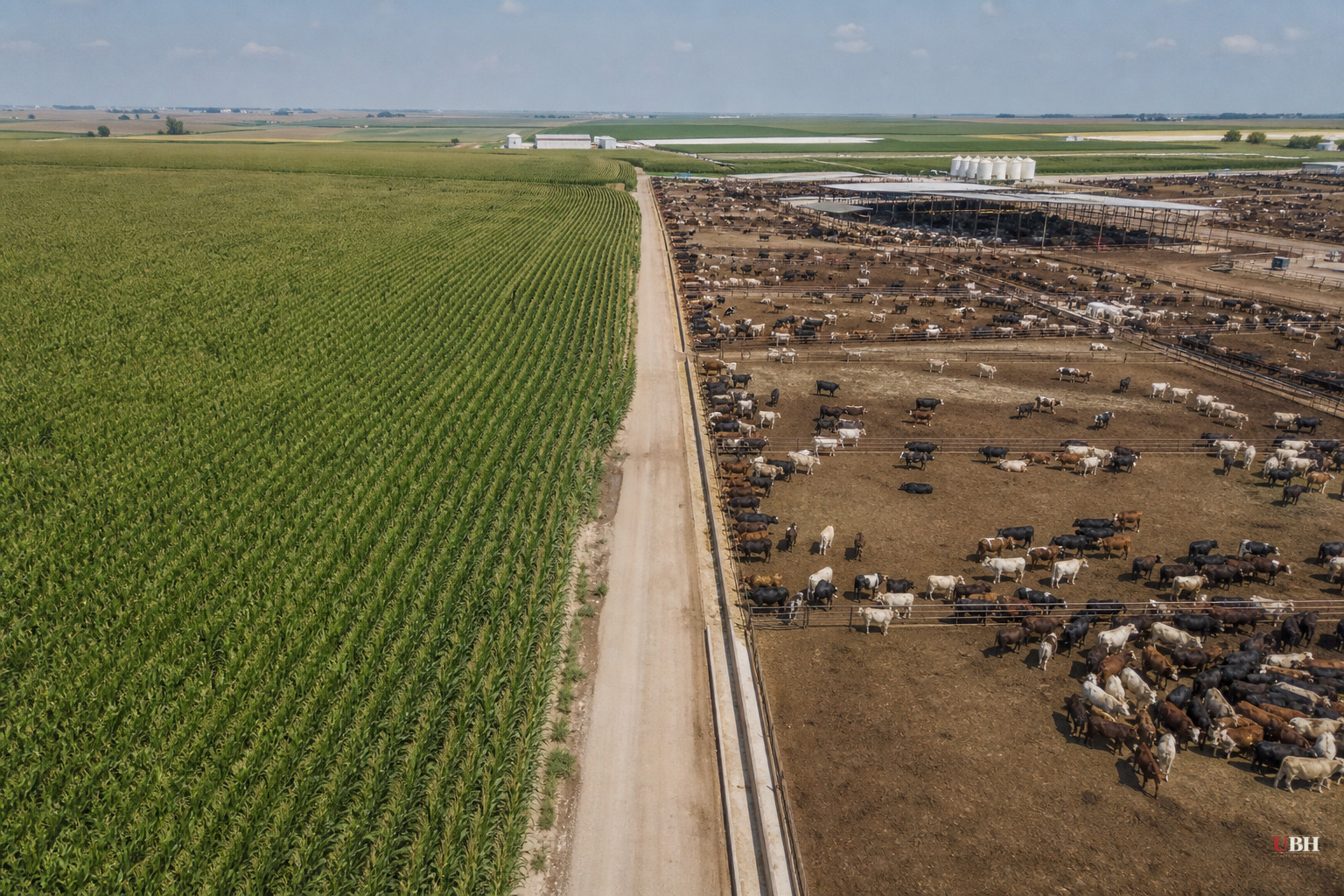
A global mapping study published in Nature Food found that one-third of the world's farmland accounts for roughly two-thirds of agriculture-linked biodiversity loss and lost natural carbon storage. The research was led by Baoxiao Liu at Leiden University's Institute of Environmental Sciences, working with Paul Behrens of the Oxford Martin School at the University of Oxford, along with Zhongxiao Sun and Laura Scherer, plus researchers from China Agricultural University.
The numbers are stark. Agriculture now covers more than 40% of the Earth's habitable land, according to Times of India's reporting on the study. Converting natural habitat into farmland has permanently wiped out an estimated 300 billion tonnes of stored carbon, equal to roughly 140 years of current agricultural emissions. Land conversion has also pushed about 14% of the world's species toward extinction risk.
The damage isn't spread evenly. It's concentrated. Half of all agricultural carbon loss comes from just 12% of farmland, according to Times of India. The worst hotspots show up in Mexico and Central America, parts of Brazil, sub-Saharan Africa, India, China, and Southeast Asia, per ecoticias.com's reporting on the study's mapping data, which divided the planet into cells roughly 3.5 miles wide at the equator.
Why there? Liu explained it plainly: these are places where farming is either extremely intensive or overlaps with ecosystems that already store massive amounts of carbon and support dense biodiversity, like tropical forests. Clear those forests for cropland or pasture, and you lose both the carbon bank and the habitat in one move.
Beef and dairy carry the heaviest footprint
The study didn't stop at mapping location. It traced environmental pressure through the entire food supply chain, and animal products came out on top by a wide margin.
According to dairyreporter.com's coverage, animal-sourced foods were linked to eight times more carbon loss and 14 times more biodiversity loss per calorie than plant-based foods. Beef and dairy alone accounted for 29% of total carbon loss and 41% of biodiversity loss tied to food production, despite representing a much smaller share of the calories humans actually eat.
Ecoticias.com added more granularity: food consumption overall accounted for 83% of the mapped environmental losses, and within that, animal-sourced foods were responsible for 59% of carbon storage loss and 71% of biodiversity loss. Liu called the impact of animal-based foods, especially cattle, "disproportionately large."
The reason is straightforward. Cattle need land, both for grazing and for growing feed crops. That land-use math drives the outsized numbers.
A defense of the industry's side of this
None of this means beef and dairy farming is reckless or that producers are doing something wrong by feeding people. Cattle ranching has operated on marginal land in places like the American West and parts of Latin America for generations, often on terrain poorly suited to row crops. Ranchers and dairy farmers would reasonably point out that global demand for protein isn't going away, and that blanket restrictions on livestock farming would hit food security and rural livelihoods hard, particularly in developing countries where cattle represent both income and food stability.
The study itself doesn't call for banning beef or shutting down dairy operations. It identifies where the damage concentrates rather than prescribing policy mandates.
What the data suggests instead of blanket rules
The researchers modeled what would happen if the 30% of farmland with the highest combined carbon and biodiversity losses were returned to natural habitat. According to dairyreporter.com, that could save around 170 billion tonnes of carbon, equivalent to roughly 15 years of global fossil fuel emissions, while cutting about 60% of the extinction risk currently tied to agricultural land.
Behrens framed the finding as a chance to stop treating climate and nature as separate problems needing separate solutions. "Our findings show they're often the same problem on the same piece of land," he said, adding there's "a huge opportunity to target the specific places and foods."
This approach targets specific places and foods based on data rather than imposing sweeping mandates on all farmers everywhere. It leaves room for landowners, governments, and conservation groups to prioritize the highest-impact acres rather than punishing every farm equally regardless of actual environmental cost.
What's missing from the picture
Ecoticias.com was upfront that the study has real limits. It measures land-related carbon storage and biodiversity loss only. It does not account for methane emissions from cattle, water consumption, transportation, food processing, or other forms of pollution tied to agriculture. Anyone using this study to make sweeping claims about beef's "total" environmental impact is going beyond what the data actually shows.
The open question now is whether governments or conservation groups in the identified hotspot countries, several of which have weak land-use enforcement and strong economic incentives to keep converting land, will act on this targeting opportunity, or whether the study becomes another academic paper that gets cited without changing a single acre of land use.
Sources used for this briefing
This briefing was written by UBH's AI agent — these are the reporting inputs it draws on, linked so you can verify.


