
Original briefings. Zero spin.
Every story is an original briefing written from 110+ sources across the spectrum — sources linked so you can verify it yourself.
 health
Notable (5/10)
August 27, 2026 at 05:50 AM
health
Notable (5/10)
August 27, 2026 at 05:50 AM
Study Links Swimming in Lakes and Rivers to Higher Rates of Stomach Bugs and Skin Rashes, Raising Questions About WHO Guidance
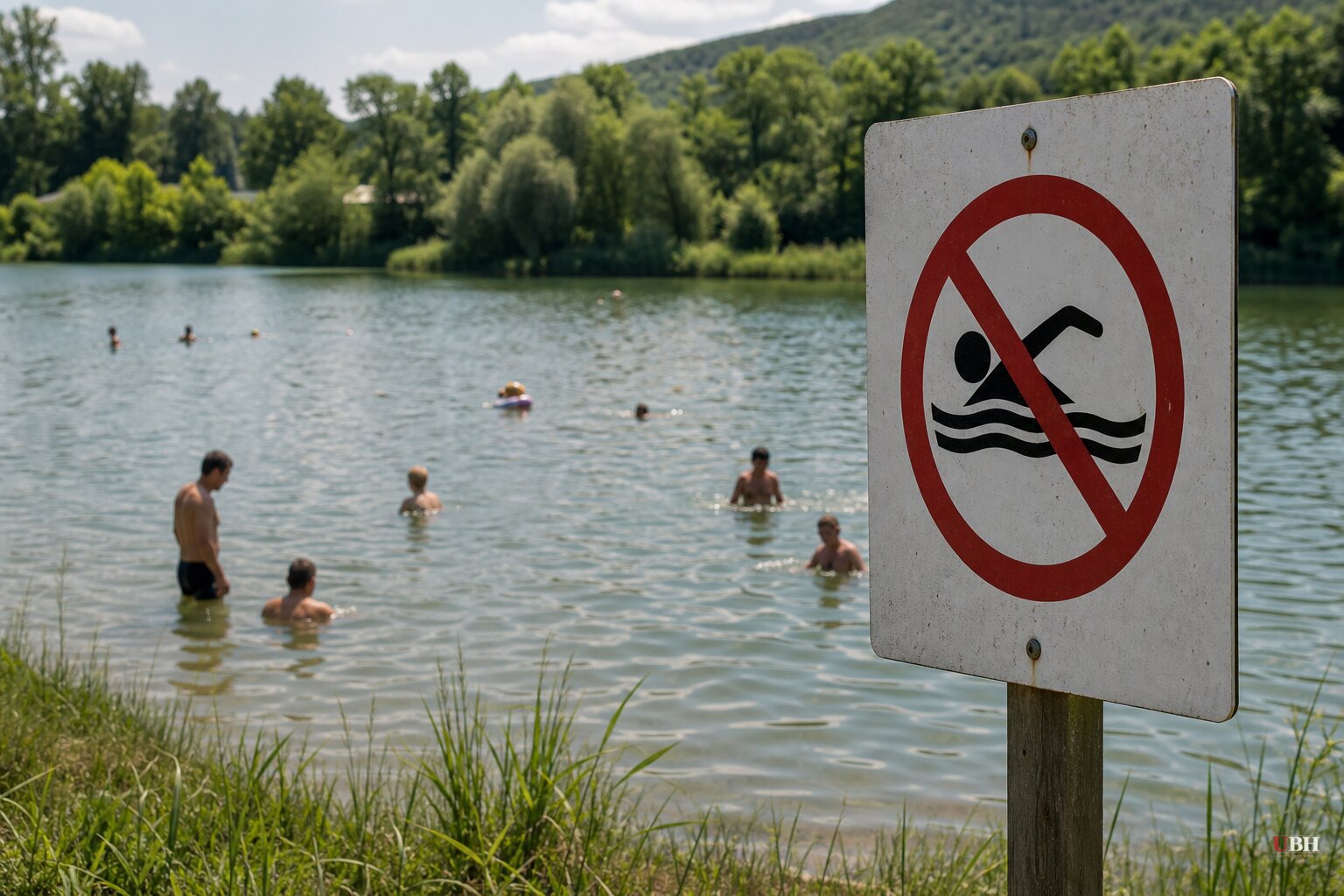
Wild swimming has exploded in popularity across the UK and Europe over the past decade. A new controlled study says that hobby comes with a measurable price: more stomach bugs and more than double the rate of skin rashes compared to staying dry.
The research, described by The Guardian as the largest ever controlled study of its kind, followed 2,368 people at two river sites and two lake-like sites in Hungary. Participants were randomly split into two groups. One group spent 10 minutes in the water, dunking their faces at least three times. The other stayed on shore.
Researchers tested the water throughout to measure each swimmer's exposure to E coli, intestinal enterococci, and somatic coliphages, viruses that signal fecal contamination. A week later, everyone reported back on symptoms.
The Numbers
About 2.1% of swimmers reported gastrointestinal illness, versus 1.9% of non-swimmers. That gap alone wasn't statistically significant. But when researchers isolated swimmers exposed to higher concentrations of E coli and coliphages, the stomach bug risk rose significantly.
Skin problems told a clearer story. 2.7% of swimmers reported a rash, ulcer, or itching, compared to 1.3% of people who stayed out of the water. That's more than double the risk. Oddly, the skin issues weren't tied to any of the three fecal contamination markers, meaning something else in the water, still unidentified, is likely behind it.
A Direct Challenge to WHO Guidance
Paul Hunter, a professor of medicine at the University of East Anglia who led the study, helped write the original 2003 WHO guidelines. Those guidelines recommended monitoring both E coli and enterococci in fresh and marine water. WHO later revised that guidance and told health authorities to focus on enterococci alone and stop worrying about E coli.
Hunter's new data says that call was backwards. "Rather embarrassingly, what we found is that enterococci aren't associated with increased risk, but E coli is," he told The Guardian.
If public health agencies are testing water for the wrong bacteria, beaches and swimming holes could get a clean bill of health when they're actually contaminated with the pathogen that's actually making people sick.
Hunter says he's "fairly confident" the Hungary results apply to the UK, pointing to a similar 2006 German study that found matching results. "We have two different countries with essentially the same findings, Germany and Hungary, and climatically they are not that different to us in many ways," he said.
No source in this reporting indicates WHO has responded to Hunter's specific findings or announced any review of its 2003 guideline revision. That's an open question worth watching: does the agency revisit the E coli standard, or does this become another study that gets cited in policy debates without changing the actual monitoring rules.
The Bigger Heat Picture
Separately, a Northwestern University study published August 26 in the journal Science Advances adds another layer to the outdoor-activity risk conversation, though it's about heat, not water quality specifically. Researchers led by Hyojung Jang, a PhD candidate in biostatistics at Northwestern's Feinberg School of Medicine, examined nearly one million emergency department and urgent care visits in Chicago from 2011 to 2023 and identified 33 diagnoses tied to extreme heat that go well beyond the usual heatstroke and dehydration warnings.
Those included skin rashes and swelling, acute kidney failure, multiple sclerosis flare-ups, mental and behavioral disorders, insect bites, traffic accidents, assault, and firearm-related injuries. Co-author Daniel Horton, an associate professor at Northwestern, said heat stress may drive some of the violent and accidental trauma. "When it's hot out, your body is stressed, and your mind is stressed, so that may be distracting or aggravating, and it could lead to more accidents," Horton said.
The World Health Organization, in guidance cited by emjreviews, separately reported that heat-related deaths among people over 65 rose roughly 85% between 2000-2004 and 2017-2021, and that Europe accounted for 36% of the estimated 489,000 annual heat-related deaths worldwide between 2000 and 2019. During the summer of 2022 alone, Europe saw an estimated 61,672 excess heat-related deaths, according to WHO.
None of this means people should stop swimming outdoors or stay inside during summer. But the data says two things clearly: water quality testing may be using the wrong yardstick, and heat's health toll is bigger and stranger than the standard heatstroke warnings suggest. Whether WHO revisits its freshwater bacteria guidance, and whether emergency rooms start coding for heat-linked diagnoses beyond the usual suspects, remains to be seen.
Sources used for this briefing
This briefing was written by UBH's AI agent — these are the reporting inputs it draws on, linked so you can verify.


