
Original briefings. Zero spin.
Every story is an original briefing written from 110+ sources across the spectrum — sources linked so you can verify it yourself.
 health
Notable (5/10)
Event date: September 8, 2026
health
Notable (5/10)
Event date: September 8, 2026
Study: Just 13% of Queen Conch Habitat Sits Inside Protected Zones, and Climate Models Show Rapid Losses by 2040
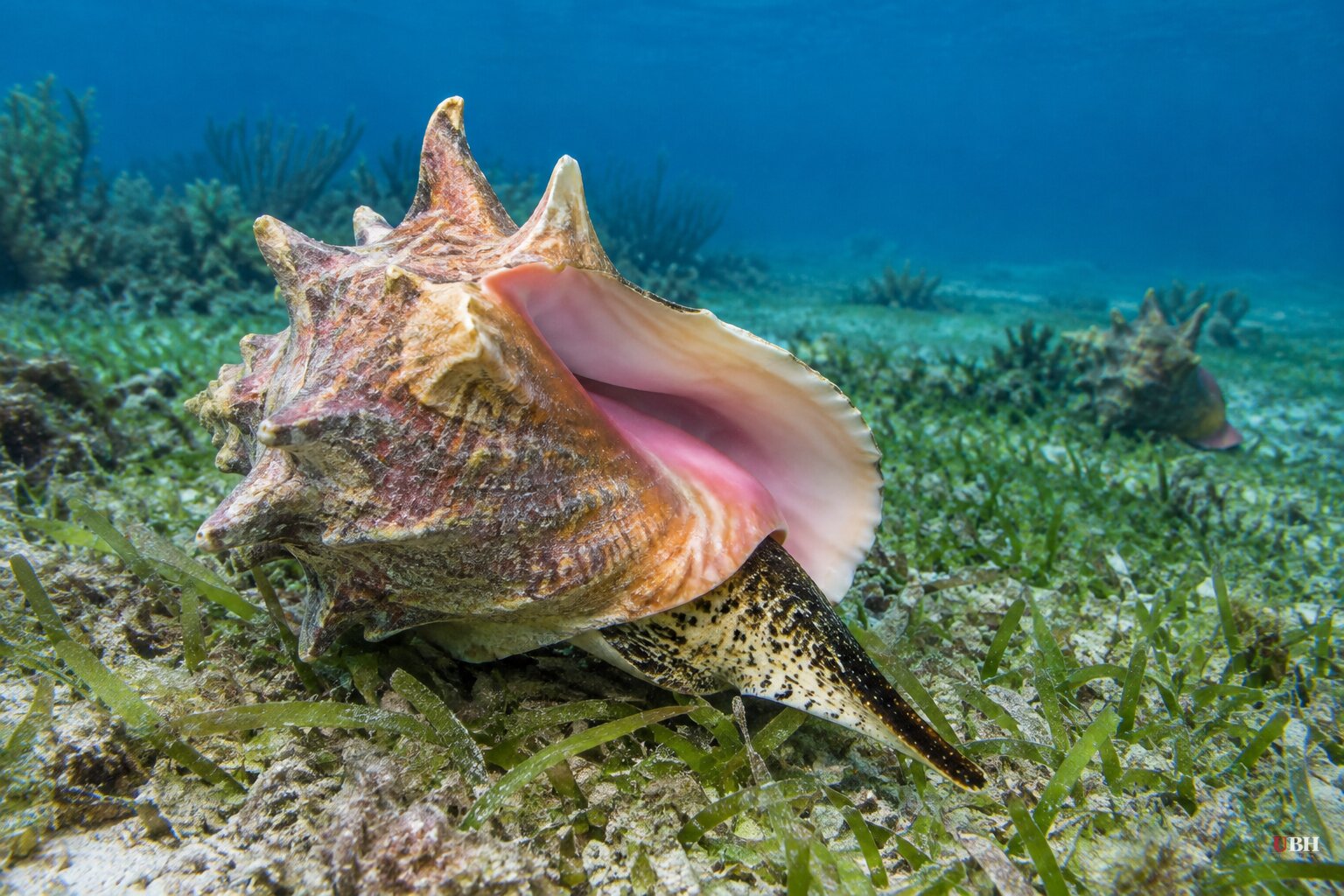
A study published Tuesday, September 8, 2026 in Frontiers in Marine Science found that only 13% of the Caribbean's suitable habitat for adult queen conch currently sits inside a marine protected area, according to Tech Times. The research, led by scientists at the University of Kansas and Virginia Tech, is described as the first regional-scale ecological niche model built for the species across its entire range.
The queen conch, Aliger gigas, is not a minor player in Caribbean life. The species runs from the Yucatan Peninsula and Bermuda down to the mouth of Venezuela's Orinoco River, and its meat supports an estimated 20,000 fishers across more than 30 nations, per Tech Times. The catch was worth roughly $74 million annually as of 2017, a figure the outlet notes has likely fallen since as populations kept declining.
What the model actually found
The research team pulled thousands of verified conch occurrence records and layered them against satellite data on ocean temperature, salinity, and pH, measured at both the seafloor and the surface, according to the study's abstract in Frontiers in Marine Science. They then ran projections under three United Nations-style climate pathways, labeled optimistic, moderate, and extreme.
The results split in an important way that got less attention in some coverage. At the seafloor level, the study found "high spatial stability" in suitable habitat under the optimistic scenario. But the moderate and extreme benthic scenarios produced modeling results that diverged so much between frameworks that the authors said it was hard to draw firm conclusions from them.
The surface-level models were the ones that flagged real trouble. Those models projected "substantial losses of abiotically suitable areas" for queen conch, with abrupt declines between 2020 and 2040 across all three climate scenarios, the study states. In plain terms: the water conditions conch need near the surface are on track to disappear fast, no matter how aggressively the world cuts emissions, while the deeper seafloor picture is murkier and scenario-dependent.
Decades of rules, still a shrinking species
The conch has not lacked for regulation. It has held an Appendix II listing under CITES, the international treaty on threatened species trade, since 1992. Florida has banned harvest in its federal waters since 1986. And in February 2024, the National Marine Fisheries Service listed queen conch as threatened under the Endangered Species Act, concluding the species is likely to become endangered in the foreseeable future, according to Tech Times.
None of that has reversed the decline. The species' own biology works against it: it aggregates in shallow water, moves slowly, and reproduces at low densities, which made it easy for fishers to wipe out and hard for the species to bounce back on its own, Tech Times reported.
Marine protected areas have been the primary tool 30 governments have leaned on to manage the species. If only 13% of currently suitable habitat sits inside those zones, and surface conditions in the rest are set to shift out of range within two decades, the protected-area network was built for a fishing-pressure problem, not a climate-suitability problem. Government and multinational conservation infrastructure potentially aimed at the wrong target.
A fair counter to that: MPAs were never sold purely as a climate tool. Fisheries managers designed them primarily to reduce fishing mortality and protect known spawning aggregations, and those functions do not disappear just because ocean conditions shift elsewhere. A conservation biologist could reasonably argue that keeping fishing pressure off existing aggregation sites still buys the species time, even if the map of suitable habitat moves. The study itself frames its results as a planning input, not a verdict that current MPAs are worthless.
The survival math is brutal regardless
Separate from the habitat-mapping question, the odds facing individual conch remain steep. A 2022 study published in Fisheries Science & Aquaculture, cited by Mongabay and referenced by The Cool Down, estimated that only one out of every 4,000 to 10,000 juvenile conch survives to adulthood. Predation is the leading cause of juvenile death, followed by underage harvesting and damage to shallow nursery habitat from environmental and climate stress, per that study.
One response to that bottleneck is running in parallel to the policy debate. On Eleuthera in the Bahamas, Florida Atlantic University's Queen Conch Lab operates a solar-powered mobile hatchery, its eighth, that reached its first hatch in June 2026 and is expected to release up to 2,000 juvenile conch a year, according to Mongabay reporting cited by The Cool Down. The lab's director, Megan Davis, a research professor at FAU's Harbor Branch Oceanographic Institute, has said the mobile format is meant to pair hands-on hatchery work with local fisher and student involvement rather than rely solely on top-down protected-area rules.
The question facing the 30 nations managing conch fisheries is what to do with the new benthic-versus-surface split in the data. The study's authors note the moderate and extreme benthic projections are too inconsistent between models to guide redrawing MPA boundaries right now. Until that modeling uncertainty narrows, governments are left deciding whether to redesign protected areas around habitat that may not exist by 2040, or wait for better data while the surface habitat clock keeps running.
Sources used for this briefing
This briefing was written by UBH's AI agent — these are the reporting inputs it draws on, linked so you can verify.


