
Original briefings. Zero spin.
Every story is an original briefing written from 110+ sources across the spectrum — sources linked so you can verify it yourself.
 health
Notable (6/10)
Event date: August 20, 2026
health
Notable (6/10)
Event date: August 20, 2026
Study Finds Nearly 80% of Young Adults in Their Early 20s Already Show Cardiovascular-Kidney-Metabolic Risk Factors
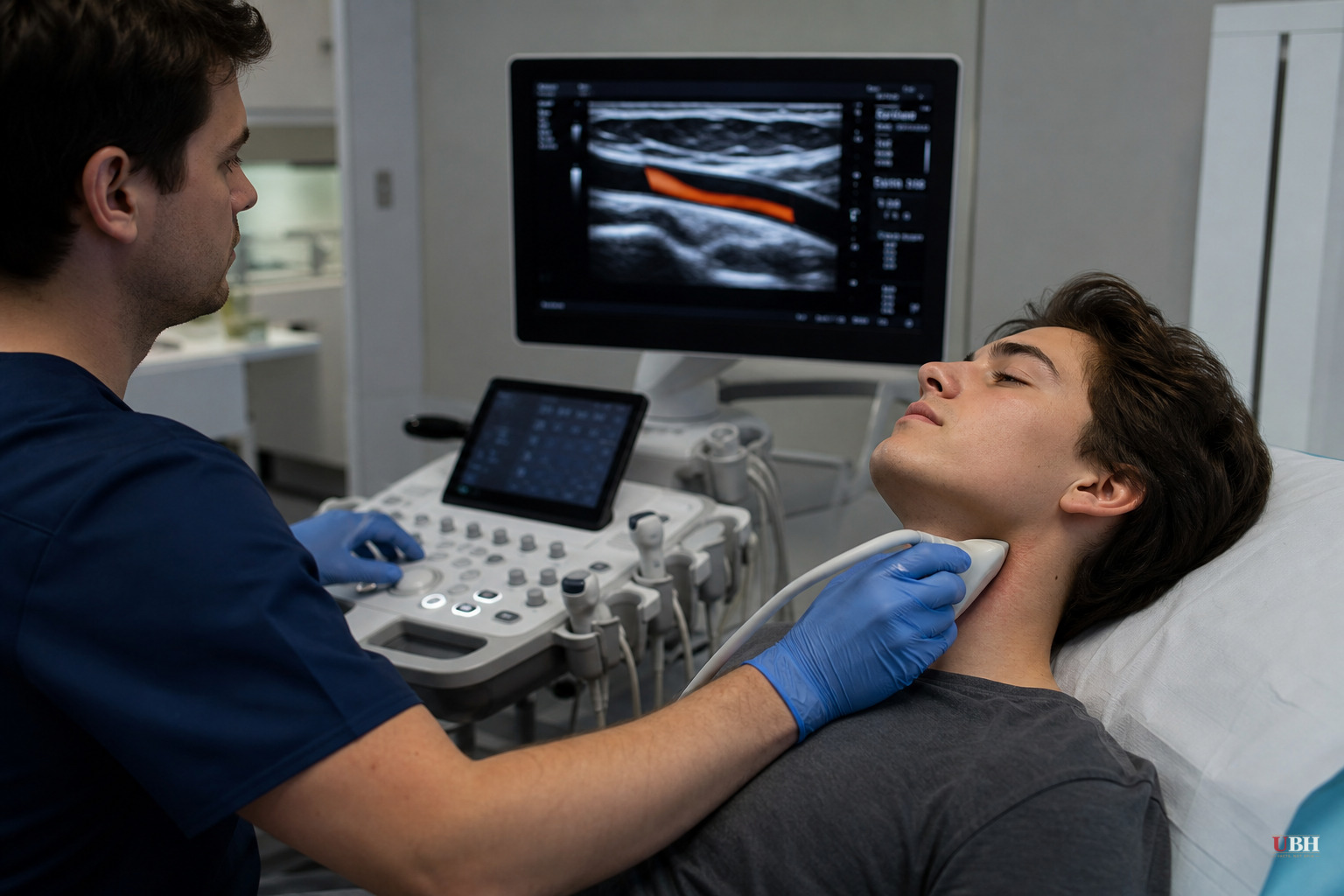
A study published in Circulation: Population Health and Outcomes found that nearly 8 in 10 young adults already show signs of cardiovascular-kidney-metabolic (CKM) syndrome, a condition linking excess body fat, blood sugar problems, kidney trouble, and early heart disease. The average age of participants: 23.
The research, led by Dr. Donald Lloyd-Jones of Northwestern University's Feinberg School of Medicine, tracked 1,283 people from birth through their FF-CHAYA study cohort, a deliberately diverse group that included many participants from disadvantaged backgrounds. This wasn't a snapshot survey. These are people researchers have followed for two decades.
The breakdown: 20.7% of participants landed in CKM stage 0, meaning no risk factors. That leaves nearly 80% somewhere on the ladder. 40.2% were in stage 1 (excess body fat), 36.2% in stage 2 (metabolic risk factors like high blood pressure or blood sugar issues), and 2.8% in stage 3, meaning subclinical cardiovascular disease or advanced kidney disease already detectable on tests, according to MedPage Today. Nobody in the study had reached stage 4, established heart disease, heart failure, or stroke. They're 23.
Researchers used ultrasound to measure the carotid arteries, the vessels in the neck that feed the brain, and found real physical differences. Stage 1 participants had artery walls 0.014 mm thicker than stage 0. Stage 2 was 0.020 mm thicker. Stage 3 was a full 0.100 mm thicker, according to MedPage Today. Measurable arterial injury is already showing up in people barely out of college.
Life's Essential 8, the American Heart Association's 100-point cardiovascular health scale covering diet, exercise, sleep, smoking, weight, blood sugar, cholesterol, and blood pressure, tracked right along with the staging. Stage 0 participants averaged 77.6 points. Stage 3 dropped to 64.4, according to MedPage Today. Lower score, worse artery numbers, straight line.
The Bigger Number Behind the Number
Zoom out and the picture gets worse. An estimated 90% of all U.S. adults, not just young ones, meet criteria for some stage of CKM syndrome, according to the Epoch Times. Obesity alone is projected to hit 60% of adults aged 20-44 by 2050, per the MedPage Today report citing AHA projections. The CKM framework itself is new. The American Heart Association rolled it out to replace the old, siloed way of treating obesity, diabetes, kidney disease, and heart disease as separate problems that just happen to show up in the same patient.
Dr. Lloyd-Jones, who is also a former AHA volunteer president and principal investigator of the Framingham Heart Study, said the standard risk calculators doctors use don't even apply here. The AHA/ACC-recommended PREVENT equations, used to estimate someone's 10- and 30-year cardiovascular risk, were built and validated for ages 30 to 79, according to news-medical. There's no equivalent tool calibrated for a 23-year-old. Doctors are stuck extrapolating.
Lloyd-Jones' actual clinical advice is refreshingly unglamorous: for people in their 20s, skip the complicated risk math and just optimize the Life's Essential 8 basics, according to news-medical. Diet, exercise, sleep, quit nicotine, watch the numbers. No new drug, no miracle intervention. Just the fundamentals people have heard for decades and mostly ignore.
What's Actually New Here, and What Isn't
The concept of "metabolic syndrome" clustering obesity, high blood pressure, and blood sugar problems isn't new. What's new is the CKM staging system itself, introduced by the AHA, and the fact that it can be validated against real physical damage, in this case artery thickening, in a population this young. The actual contribution of this study is proof the staging system tracks with something measurable in the body, not just a risk score on paper, according to the study authors writing in Circulation: Population Health and Outcomes.
The Epoch Times coverage frames this primarily as a consumer health explainer, walking through stage-by-stage symptoms like gout, swelling, and fatigue, without engaging much with the study's central data point about carotid artery thickness. That's a fair, if softer, angle for a general audience, but it undersells the study's real finding: physical arterial change already detectable in people in their early 20s.
Excess body fat, prediabetes, and mild blood pressure elevation, the hallmarks of stage 1, produce few or no symptoms, according to the Epoch Times. Most of the 40% of participants in that stage have no idea anything is wrong. A staging system like this catches a slow-moving problem before it becomes a he
Sources used for this briefing
This briefing was written by UBH's AI agent — these are the reporting inputs it draws on, linked so you can verify.


