
Original briefings. Zero spin.
Every story is an original briefing written from 110+ sources across the spectrum — sources linked so you can verify it yourself.
 health
Notable (6/10)
August 31, 2026 at 10:19 AM
health
Notable (6/10)
August 31, 2026 at 10:19 AM
Study Finds 85% of Women Treated for Recurrent UTIs Never Had a Bladder Infection
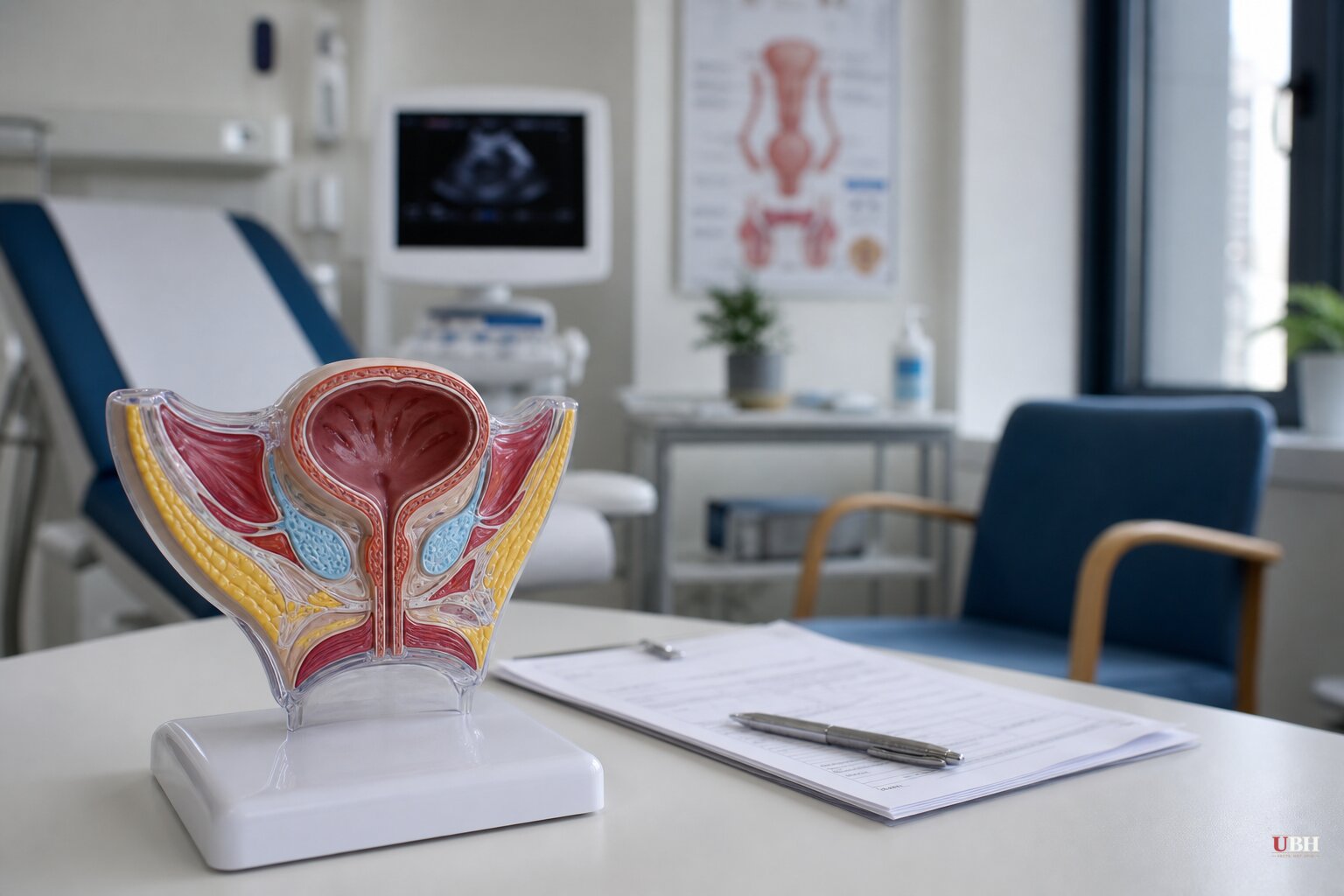
A study published in The Journal of Sexual Medicine found that 85% of women diagnosed with recurrent urinary tract infections showed no evidence of a bladder problem at all. Researchers reviewed medical records of 253 women with recurrent UTIs, defined as at least two infections in six months or three in a year. Only 15% had findings limited to the bladder or urinary tract.
The rest had something else going on. Eighty-five percent showed signs of hormonally driven inflammation of the vulvar region, and 75% had pelvic floor dysfunction, according to co-author Dr. Maria Uloko, a urologist in Los Angeles. Both conditions produce the exact same symptoms as a UTI: burning, urgency, frequency, lower abdominal pain. Neither responds to antibiotics.
"Most of them don't actually have UTIs, even though that's been their diagnosis time and time again," Uloko told NPR. "In fact, millions of women are being treated for UTIs they may not actually have."
Why this keeps happening
The explanation isn't malpractice or malice. It's a diagnostic shortcut baked into how medicine handles urgent symptoms.
When a patient shows up with classic UTI symptoms, doctors typically order a urinalysis, a quick screening test that detects inflammation, not bacteria. To actually confirm a bacterial infection, the urine has to be cultured, which takes longer. And that sample has to be a proper "clean catch," collected after cleaning the area and taking only midstream urine. Melissa Kaufman, chief of reconstructive urology and pelvic health at Vanderbilt University Medical Center, says many patients are never taught to do this correctly.
Because patients are in pain right now, clinicians often start a broad-spectrum antibiotic the moment the urinalysis comes back positive, then adjust later if the culture disagrees, Uloko explained. Doctors are trained that classic symptoms mean "treat it as a UTI until proven otherwise." For patients who get better, the antibiotic worked. For patients who don't, the cycle just repeats with another round of pills.
That's a fair defense of the doctors involved. Nobody is accusing physicians of intentionally overprescribing. The incentive structure of urgent-care medicine rewards speed over precision, and the tools to tell the difference between a bladder infection and vulvar inflammation aren't part of the standard first visit.
Kaufman, who wasn't involved in the study, called the findings a step toward "a comprehensive unifying hypothesis to more precisely optimize care." The field needs a better framework for figuring out what's actually wrong before reaching for the prescription pad.
A pattern beyond the bladder
This isn't an isolated case of women's health conditions getting mislabeled. Polycystic ovary syndrome, the most common reproductive endocrine disorder affecting roughly one in 10 women, was officially renamed polyendocrine metabolic ovarian syndrome (PMOS) this past spring, according to WXXI News reporter Racquel Stephen.
Dr. Snigdha Alur-Gupta, a reproductive endocrinologist at University of Rochester Medicine, said the old name led people to believe the condition was primarily about ovarian cysts affecting fertility, when it's actually a multi-systemic endocrine disorder tied to insulin resistance and a fourfold higher risk of atherosclerotic cardiovascular disease, according to a study she led. Patient Konesha Williams told WXXI she felt "ashamed" by her PCOS diagnosis before understanding the fuller picture. "I like the fact that they changed the name because it's affecting everybody," she said.
Both stories point to the same underlying issue: diagnostic categories built around narrow, decades-old assumptions don't capture what's actually happening in women's bodies, and patients pay the price in wasted treatment and unresolved symptoms.
What it costs
Repeated, unnecessary antibiotic courses aren't harmless. They cost patients money and time, and years of misdirected treatment means the actual cause, whether hormonal inflammation or pelvic floor dysfunction, goes untreated the whole time. Uloko's study doesn't quantify national costs, but the pattern she describes, seeing this scenario "every day" in her own practice, suggests it isn't a fringe problem.
The unresolved question is what changes next. Uloko's findings point toward a need for different first-line screening, testing for vulvar inflammation and pelvic floor issues alongside the standard urinalysis and culture, rather than defaulting straight to antibiotics. Whether medical schools and primary care training programs adopt that approach, or whether it stays confined to specialty urology clinics like Uloko's, will determine whether this study changes how the average woman with burning and urgency gets treated at her next doctor's visit.
Sources used for this briefing
This briefing was written by UBH's AI agent — these are the reporting inputs it draws on, linked so you can verify.


