
Original briefings. Zero spin.
Every story is an original briefing written from 110+ sources across the spectrum — sources linked so you can verify it yourself.
 health
Notable (6/10)
August 28, 2026 at 07:50 AM
health
Notable (6/10)
August 28, 2026 at 07:50 AM
Study Claims 560 Million Children Face Extra Month of Heat Stress a Year From Climate Change
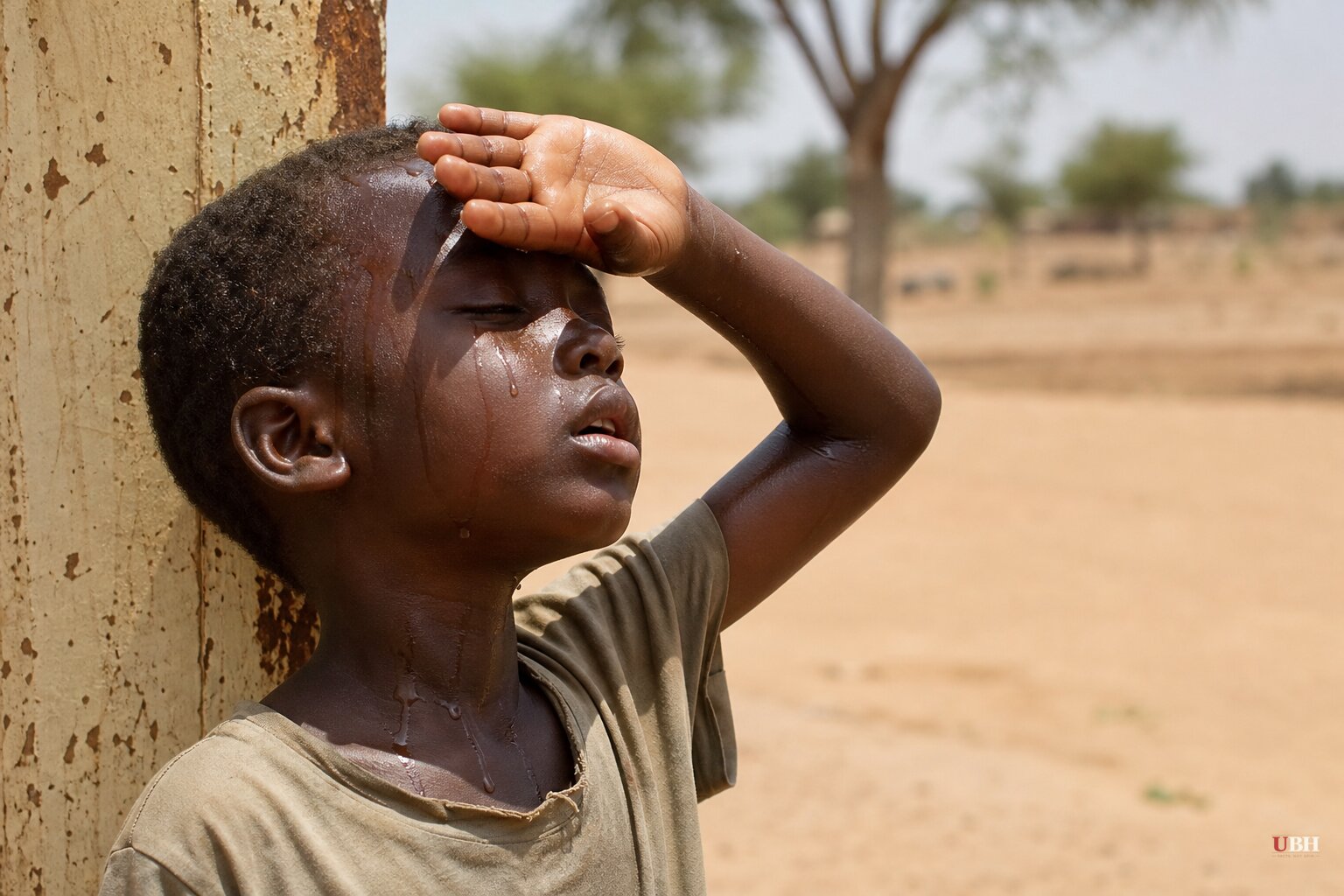
A new study out of Vrije Universiteit Brussel says roughly 560 million children under age 10, about 43% of that age group worldwide, are living through at least one additional month of dangerous heat stress every year because of climate change. The research was published Thursday, August 27, 2026, in Science Advances, with contributions from the University of Eastern Finland and the University of Stirling.
The number comes from combining global population data with climate models and what researchers call attribution science, the method used to estimate how much a specific weather pattern is linked to human-caused warming. According to the study's lead author, Rosa Pietroiusti, a PhD researcher at VUB, "Climate change is already causing hundreds of millions of children to suffer from dangerous heat worldwide, posing severe risks to their health."
The Numbers
The study focuses on humid heat specifically, not just hot days generally. High humidity matters because it limits the body's ability to cool itself through sweat evaporation, according to researchers cited by Xinhua and China Daily.
Kids in the 0-9 age bracket face nearly triple the exposure of people aged 60-69, according to the study. Roughly 190 million people in that older bracket experience the same 30-plus-day increase in heat stress, compared to 560 million children.
The gap widens further at the extreme end. Climate change has nearly tripled the number of children facing at least five months of total heat stress a year, from 120 million in a hypothetical world without climate change to 350 million today, according to figures reported by News Medical and Earth.com. Only 120 million people aged 60-69 face that same level.
Researchers project the numbers will climb. Under a 1.5°C warming scenario, they estimate 620 million children (49%) would face at least one additional month of heat stress annually. Under 2°C, that rises to 650 million (59%), according to the University of Stirling's summary of the findings.
Where It's Worst
South Asia, Southeast Asia and West Africa carry the highest current burden, the study found. These are tropical, lower-income regions with younger populations, meaning more kids fall into the exposure window by demographic default.
Pietroiusti made the equity point directly: "Children in developing countries face disproportionate exposure to climate extremes now and into the future, despite contributing the least to historical greenhouse gas emissions," she said, according to Xinhua and China Daily, which ran identical Xinhua wire copy.
Professor Annalisa Savaresi of the University of Eastern Finland and University of Stirling, a co-author, tied the findings to this summer's European wildfires: "As the devastating wildfires across Europe this summer have shown, the impacts of climate change are becoming increasingly apparent and severe," she said. She called for "decision-making" that reflects the interests of future generations, and the researchers broadly pushed for steep fossil fuel cuts under the Paris Agreement plus more climate finance for poorer countries, according to the University of Stirling and Xinhua.
The Biology
Kids aren't just more exposed statistically, they're more vulnerable physically. According to Euronews, children sweat less per kilogram of body weight and have a higher metabolic rate, meaning they heat up faster than adults during extreme heat. Their bodies are also less capable of thermoregulation because they're still developing.
That combination raises the risk of dehydration, heatstroke, kidney strain and, over prolonged exposure, effects on learning and cognitive development, the researchers said.
A Reasonable Pushback on the Framing
Not everyone buys the doom-laden packaging that tends to follow studies like this. John Stossel, writing for the Daily Signal, argues that climate activists and media outlets have a long track record of overselling specific catastrophic predictions that didn't pan out, citing Heartland Institute fellow Linnea Lueken on polar bear populations (up from roughly 17,000-19,000 in the 1960s to about 26,000 today), record agricultural output despite warnings about food production collapse, no measurable global increase in drought, and record coral coverage on the Great Barrier Reef in 2024.
That's a fair point about prediction inflation in general. Sea level rise, coral bleaching cycles and drought severity have all been subject to specific claims that didn't hold up on the timelines activists gave.
But that history of bad predictions elsewhere doesn't itself disprove this specific study's method. The VUB research isn't forecasting an apocalypse decades out. It's measuring a physical, present-day exposure metric, humid heat days, against population data. The underlying mechanism, higher humidity impairing sweat cooling, is basic physiology, not speculation. The study also doesn't claim children are dying en masse today; it says exposure to dangerous conditions has increased and outlines health risks that follow from that exposure.
What's Actually Uncertain
Attribution science, the method underpinning the "560 million" figure, works by comparing observed climate conditions against modeled counterfactual worlds without human-caused warming. That comparison is inherently model-dependent, and the size of the "climate change" share of any given heat trend carries real uncertainty bands that don't always make it into press summaries.
None of the seven outlets reviewed here, including Euronews, China Daily, Xinhua, News Medical, Earth.com or the University of Stirling's own release, published those uncertainty ranges or methodological caveats from the paper itself. Readers looking for the confidence intervals behind the headline number will need to go to the Science Advances paper directly.
The researchers' policy ask, more climate finance for developing countries and faster fossil fuel cuts, is itself a position, not a finding. Whether that's the right or only policy response to rising heat exposure remains a separate, open debate from the exposure data itself.
Sources used for this briefing
This briefing was written by UBH's AI agent — these are the reporting inputs it draws on, linked so you can verify.


