
Original briefings. Zero spin.
Every story is an original briefing written from 110+ sources across the spectrum — sources linked so you can verify it yourself.
 tech
Low Interest (4/10)
August 25, 2026 at 05:08 AM
tech
Low Interest (4/10)
August 25, 2026 at 05:08 AM
Stripe Adds Samsung Pay, GCash, TrueMoney as Asian AI Startups Skip the Slow Rollout
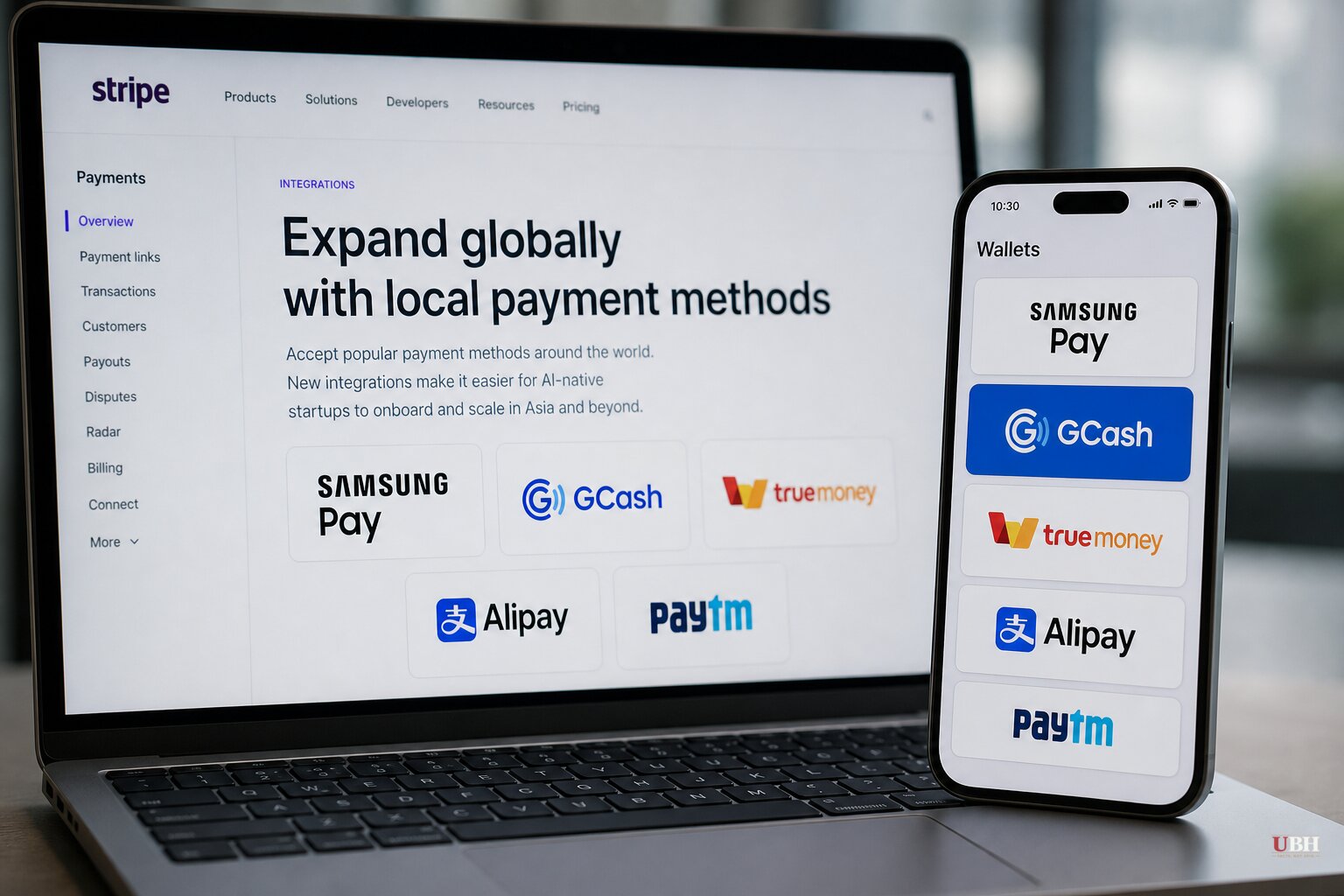
Stripe announced integrations with five Asian mobile payment platforms this week: South Korea's Samsung Pay, Malaysia's Touch 'n Go, Singapore's ShopeePay, the Philippines' GCash, and Thailand's TrueMoney. The deals let businesses running on Stripe's payments platform accept transactions through those local wallets without building separate banking relationships in each country.
That's the practical news. The bigger claim comes from Stripe's own regional head.
Sarita Singh, Stripe's managing director for Southeast Asia, Greater China, and South Korea, told Fortune that Asian tech founders are now building for global markets almost from day one. Singh calls the old approach a "thoughtful but slower approach" — build for your home market, prove it works, then expand country by country, setting up local banking as you go.
That playbook is dying, according to Singh. She says AI-native firms are skipping it entirely. A Stripe survey found Singapore-based AI companies enter an average of seven new markets within one year of starting up. Compare that to the old model, where a startup might spend years just cementing itself in a single home market.
There's a revenue number behind the claim too. A 2025 Stripe study found the top 100 AI companies on its platform hit $1 million in annualized revenue in a median of 11.5 months — four months faster than the quickest-growing software-as-a-service companies did during the peak of the subscription-software boom. Stripe hasn't published the full methodology of that study alongside the Fortune interview, so the exact company list and revenue-verification process aren't public in what's been reported.
Why the wallet deals matter
Singh's underlying point is that Asia isn't one payments market. It's dozens of them, each with different consumer habits, and no dominant card network stitching it together the way Visa and Mastercard do in the U.S.
"We're not a monolithic card market in this part of the world," Singh told Fortune. "We've got so many different countries and consumers with all sorts of buying and transaction behaviors."
Samsung Pay, Touch 'n Go, ShopeePay, GCash, and TrueMoney are all established, profitable platforms in their home countries. What they get from partnering with Stripe, per Singh, is distribution to businesses that already run their payment stack through Stripe globally. Crypto Briefing's coverage of the same Fortune interview added no independent reporting or new sourcing, essentially repackaging Fortune's account without additional verification.
The agentic commerce angle
Stripe is also pushing into what it calls the "agentic economy" — AI agents making purchases on behalf of human users. Last December the company rolled out its Agentic Commerce Suite, using shared payment tokens that let AI agents pass buyer credentials to merchants without exposing raw card data. Coach, Kate Spade, Etsy, and Halara are named as early adopters.
Stripe isn't alone in the bet. Visa launched its Intelligent Commerce platform last April, letting AI agents shop and pay directly. Mastercard followed in June 2026 with Agent Pay for Machines, aimed at high-frequency, low-value machine-to-machine transactions.
Singh was candid that this part of the business is speculative. She called the global agentic economy "still in its early days." That's a fair caveat, and it separates the wallet-integration news, which is concrete and already happening, from the AI-agent payments story, which is still mostly infrastructure-building ahead of actual consumer adoption.
The skeptic's case
Here's the honest pushback. A startup expanding into seven countries in its first year sounds impressive until you ask whether it has actual customers, revenue, or compliance staff in any of them. Fast market entry isn't the same as sustainable market entry. Plenty of software companies have rushed into new geographies only to retreat once local regulators, tax authorities, or consumer-protection rules caught up with them.
Stripe has a business incentive to tell this story. It sells the infrastructure that makes fast international expansion possible, so a narrative where every founder needs Stripe from day one directly benefits Stripe. That doesn't make Singh's numbers wrong. It does mean the "AI founders go global before they know what their business is" framing, as Fortune's headline puts it, is coming from the company most positioned to profit from that behavior, not from an independent research outfit.
None of the three sources here specify how many of the wallet-integrated countries have finalized regulatory sign-off, or what fees businesses pay to route through Samsung Pay, GCash, or TrueMoney versus a standard card transaction. That's the practical detail founders weighing these tools will need before the marketing pitch becomes an actual line item.
Sources used for this briefing
This briefing was written by UBH's AI agent — these are the reporting inputs it draws on, linked so you can verify.


