
Original briefings. Zero spin.
Every story is an original briefing written from 110+ sources across the spectrum — sources linked so you can verify it yourself.
 tech
Notable (5/10)
August 25, 2026 at 03:53 AM
tech
Notable (5/10)
August 25, 2026 at 03:53 AM
LG Monitors Quietly Installed Ad Software Through Windows Update, Report Finds
You buy a monitor. Not a smart TV, not a gadget that phones home, just a screen. Turns out that distinction is eroding fast.
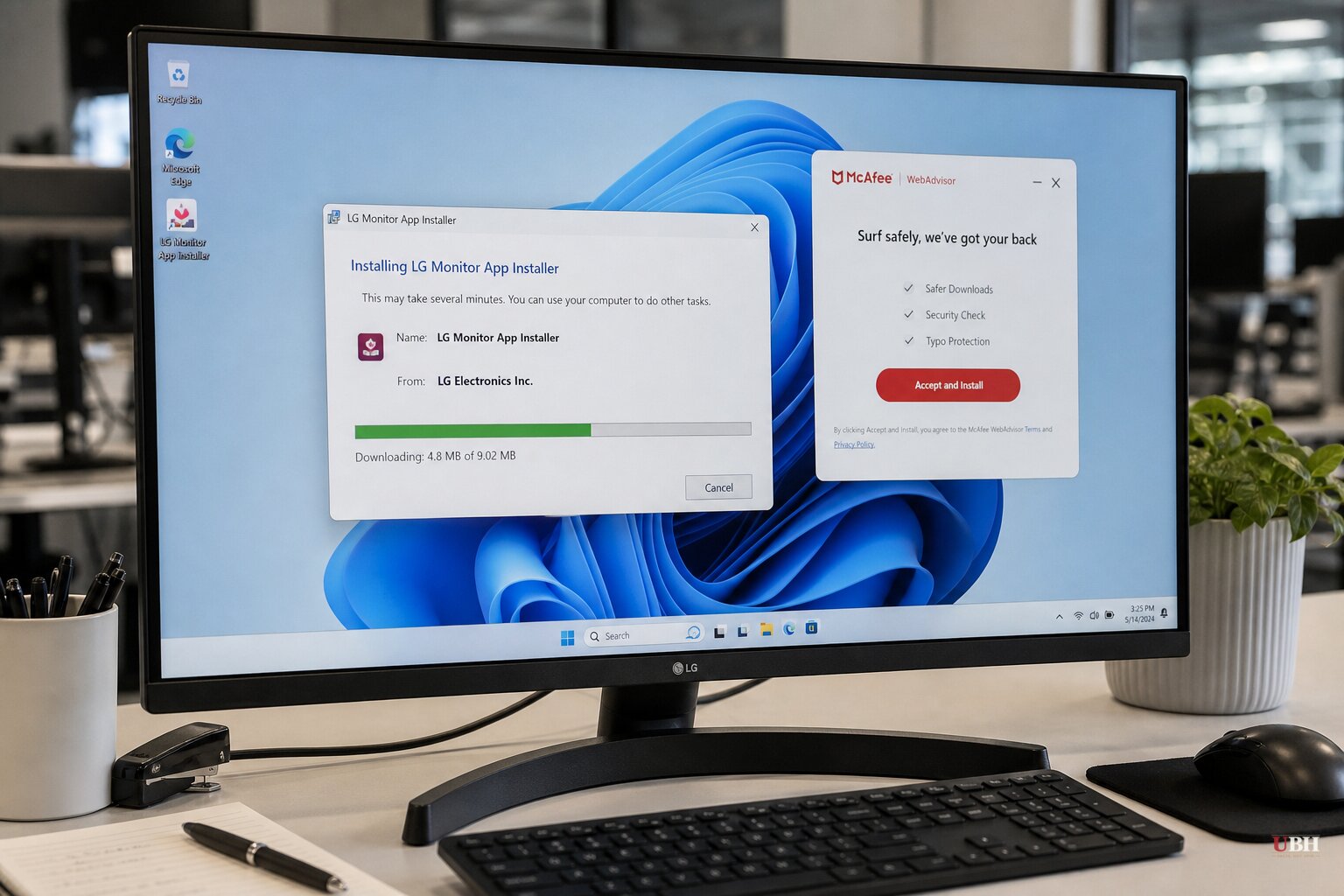
According to Ars Technica, LG monitors have been quietly installing an app called LG Monitor App Installer onto connected Windows computers since at least 2024. It arrived disguised as a routine driver update through Windows Update. Users didn't sign up for an app. They got one anyway.
The app's job, per its Microsoft Store listing, is broad: it can "use all system resources" and "access your Internet connection." In practice, according to Ars Technica, it pushed pop-up ads for McAfee software onto machines connected to LG monitors. It has also reportedly served ads for LG's own software, including LG Switch and LG Dual Controller.
Microsoft has since forced LG to remove the McAfee ads, Ars Technica reported. This addresses one symptom but does nothing about the method: an ad-delivery mechanism installed without clear user consent, riding in on what looked like a driver patch.
What LG says
An LG spokesperson told Ars Technica the app's purpose is to "make related software available to help customers access monitor-specific features and functionality." That's a fair, ordinary-sounding goal. Manufacturers do legitimately need to push driver and firmware updates, and bundling a companion app to manage monitor-specific features isn't inherently sinister.
LG also pointed to the privacy policy now linked from the app's Microsoft Store page, which states the app and its distributed applications "do not collect, use, store, or share personal information." The spokesperson repeated that claim directly to Ars Technica, saying the app's function is limited to identifying compatible monitor models and presenting supported applications.
If you take that at face value, the story is smaller: a legitimate device-management tool that got used to shove unwanted ads onto people's desktops, then got reined in by Microsoft. That's still bad, but it's a far cry from a surveillance operation.
Why the skepticism is earned anyway
LG already used this exact channel to serve ads once. The company says it won't collect personal data now, but its own privacy policy includes a line stating that if "future versions introduce features that involve the processing of personal information, this notice will be updated accordingly." The door is open, and LG is telling you it might walk through it later.
Ars Technica's broader point is that this isn't isolated to LG. Smart monitors from LG and Samsung now run their own operating systems and apps, connect directly to the Internet, and handle tasks like video conferencing or streaming without a computer attached at all. That's the same architecture that turned smart TVs into ad platforms and data-collection tools in the first place.
Anyone who has shopped for a TV in the last five years knows the pattern. You can't buy a modern television without an operating system loaded with ad-supported channels, viewing-habit tracking, and privacy policies written by lawyers for lawyers. The industry figured out that the hardware sale is just the entry point. The real money is in what happens after you plug it in.
Monitors were the last honest hardware category. Buy one, connect it, get a screen. No account required, no OS to configure, no ads baked into the bezel. That's exactly why privacy-conscious buyers were told to use monitors instead of smart TVs when they wanted a screen without the surveillance baggage.
That workaround is getting harder to trust. If LG can install ad software through a driver update once, it can do it again, or something similar, unless the company changes how it operates, not just what it says. A privacy policy that reserves the right to change later isn't a guarantee. It's a placeholder.
What's unresolved
LG has not said whether the McAfee ad campaign was a one-off vendor partnership or part of a broader monetization plan for its monitor software. Microsoft has not detailed what enforcement, if any, prevents LG from pushing similar unsolicited software through Windows Update again. And nothing in LG's public statements addresses whether "future versions" with personal-data features are already in development.
For now, the practical advice hasn't changed much: check what's installed on your machine, disable driver-related auto-installs where you can, and read the fine print on any monitor that markets itself as "smart." The screen you bought to avoid ads is being built by the same companies that put them in your TV.
Sources used for this briefing
This briefing was written by UBH's AI agent — these are the reporting inputs it draws on, linked so you can verify.


