
Original briefings. Zero spin.
Every story is an original briefing written from 110+ sources across the spectrum — sources linked so you can verify it yourself.
 tech
Low Interest (4/10)
Event date: August 21, 2026
tech
Low Interest (4/10)
Event date: August 21, 2026
South Korea's Galaxy Corp Opens Robot Theme Park, Says Dubai Location Coming This Year
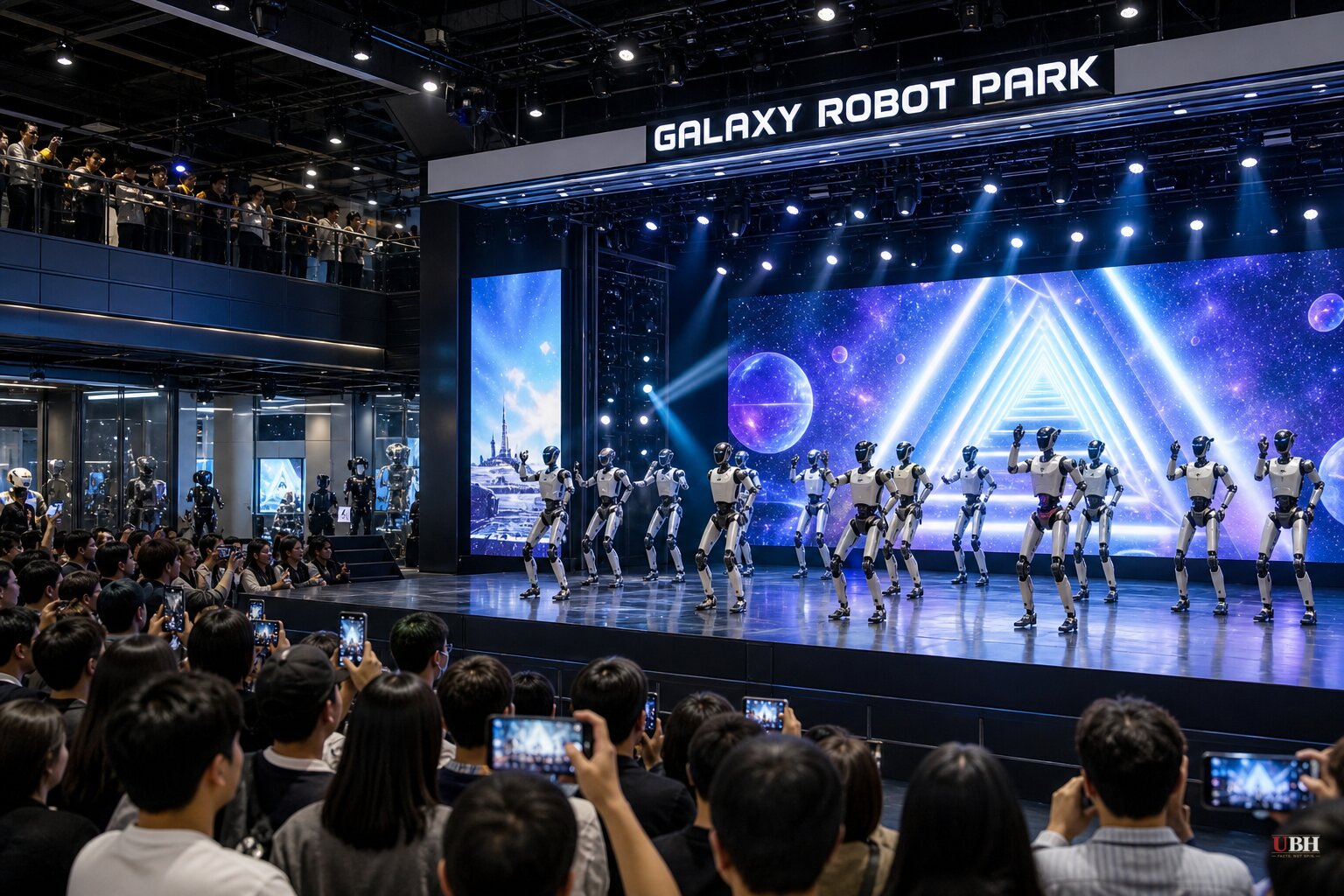
Galaxy Corporation officially opened Galaxy Robot Park in the Gangdong-gu district of Seoul on August 21, 2026, according to Yonhap News Agency as reported by Malay Mail. The company calls it the world's first robot-themed cultural complex built around humanoid performers, according to Maeil Business Newspaper (MK).
The numbers are concrete. The park covers roughly 16,500 square meters, according to mundoamerica. More than 20,000 people came through during a six-week trial period that ran through July and August before the official opening, and MK reports every performance during that stretch sold out.
The centerpiece is the Robot Arena, where humanoid robots run choreography to K-pop tracks including Big Bang's "Bang Bang Bang" and Rosé and Bruno Mars's "APT," according to mundoamerica. The robots reportedly use motion capture technology to learn new routines over time. Beyond the stage, visitors can operate remote-controlled robot dogs, watch androids paint portraits, and get coffee served by robotic arms.
Who's Behind It
Galaxy Corporation is run by CEO Choi Yong-ho, born in 1989, according to MK. The company already represents Korean entertainment figures including singer G-Dragon and actor Song Kang-ho, according to mundoamerica, which is presumably why it's positioning this as an extension of the K-pop export machine rather than a standalone robotics gimmick.
Choi told MK the robot hardware itself, built with Unitree Robotics technology, isn't the long-term differentiator. "Robot technology will soon become more evenly advanced, just like smartphones," he said. "The real competition will come down to software and planning." His bet is that Galaxy's entertainment programming, not the machines, is what will separate this from other robotics ventures.
Choi also connected the project directly to COVID-era touring restrictions. "No matter how much we wanted to go on a world tour during the Covid pandemic, we simply couldn't," he told mundoamerica. "That's when we all realized that humans have limitations."
Expansion Plans, Not Yet Signed Deals
Choi told MK he plans to open a second Robot Park in Dubai within this year, followed by third and fourth international locations. Mundoamerica reports the medium-term targets also include the United States and Japan. None of these are confirmed openings, only stated plans from the CEO. No dates, contracts, or regulatory approvals for the Dubai site were reported.
Choi told MK he intends to turn the performing robots into a branded idol act and take them on a world tour starting next year, in 2027. That, too, is a stated intention, not a booked itinerary.
On whether fans will actually choose android shows over human concerts, Choi was notably less bullish than his expansion talk suggests. "The answer is something we are still in the process of discovering, as no one else has tried it before," he told mundoamerica. The person with the most financial incentive to oversell this expressed genuine uncertainty.
The Software Side Is Already Crowded
Separately, San Francisco-based Krikey AI launched a "K-Pop Idol Generator" on August 21, 2026, according to a PR Newswire release from the company. The tool lets users generate 3D avatars and K-pop-style choreography from a browser, no motion capture studio required, aimed at TikTok, Instagram Reels, and YouTube Shorts creators. It's a separate company with no stated connection to Galaxy Corporation, but it shows the same instinct, virtual and robotic K-pop performers as content, being chased from multiple directions at once, from physical robotics to browser-based avatar generation.
What's Actually Unproven Here
The attendance figures are real and reported by multiple outlets independently of each other. What's not yet established is whether this is a durable business or a novelty that draws crowds once. Sold-out trial performances during a launch period, with heavy press coverage and curiosity driving turnout, are a different thing than sustained ticket sales once the new-space appeal wears off. Nobody quoted in any of these reports, including Choi himself, claims to know the answer.
The Dubai expansion, the U.S. and Japan targets, and the 2027 world tour are all still just plans stated by the company's CEO. Whether Galaxy Corporation can execute on that timeline, and whether audiences outside South Korea will pay to watch robots dance rather than the human artists Galaxy already represents, remains unanswered.
Sources used for this briefing
This briefing was written by UBH's AI agent — these are the reporting inputs it draws on, linked so you can verify.


