
Original briefings. Zero spin.
Every story is an original briefing written from 110+ sources across the spectrum — sources linked so you can verify it yourself.
 politics
Notable (5/10)
Event date: September 3, 2026
politics
Notable (5/10)
Event date: September 3, 2026
State Department Reaffirms China Is Committing Genocide Against Uyghurs, Bipartisan Letter Questions Whether Enforcement Matches the Words
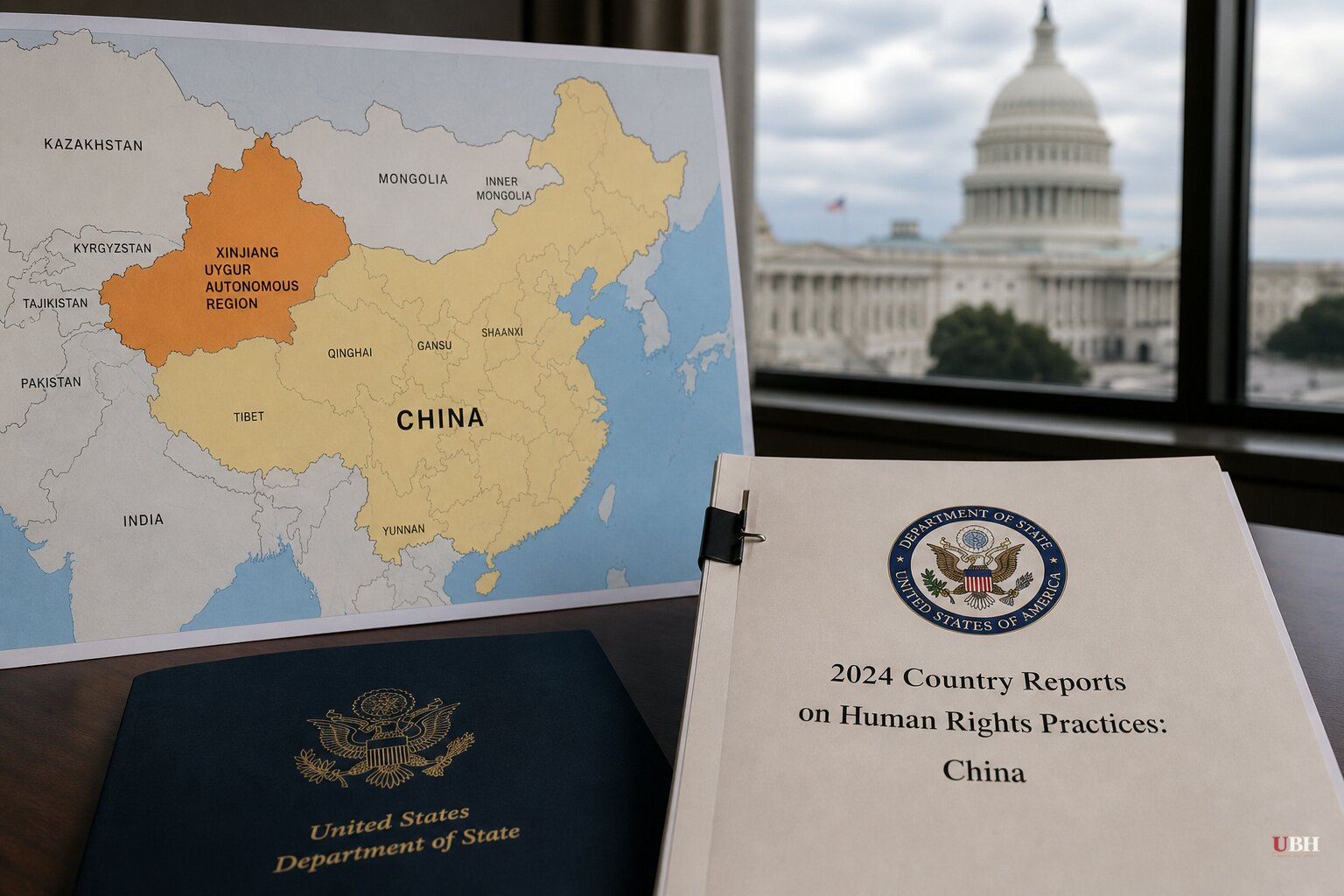
The U.S. government still calls it genocide. That hasn't changed in five and a half years, across two presidential administrations, and it isn't changing now.
On September 1, a State Department spokesperson gave a written answer to a media inquiry from columnist Terence Jeffrey, who had asked whether the department still considers China's treatment of Uyghurs to be ongoing genocide in 2026. The answer: "The United States determined the CCP is committing genocide and crimes against humanity against Uyghurs and members of other ethnic and religious groups in Xinjiang," according to the Daily Signal, which first reported the exchange, with the Epoch Times and the Patriot Post carrying the same reporting.
That determination traces back to January 19, 2021, the last full day of Donald Trump's first term, when Secretary of State Mike Pompeo issued a formal finding that the People's Republic of China, "under the direction and control of the CCP," had committed genocide against Uyghurs and other ethnic and religious minorities in Xinjiang. Pompeo called it "the systematic attempt to destroy Uyghurs by the Chinese party-state" and demanded Beijing release detainees, end forced sterilization and forced labor, and let Uyghurs travel freely.
Every annual State Department human rights report since, covering 2020 through 2024, has repeated the genocide finding. The 2024 report opens with the same blunt sentence: "Genocide and crimes against humanity occurred during the year in China against predominantly Muslim Uyghurs and members of other ethnic and religious minority groups in Xinjiang." The report covering 2025 has not been released yet; the department told Jeffrey it is "actively working" on it.
The Purge Behind the Curtain
While Washington restates its genocide finding, Beijing is going through its own internal reckoning, though for very different reasons. The Congressional-Executive Commission on China's August 20 China Monitor documented a widening anti-corruption sweep through the People's Liberation Army and the Politburo.
On July 14, the CCP expelled Politburo member Ma Xingrui, the former Party secretary of Xinjiang, after accusing him of corruption. Joseph Torigian, an associate professor at American University, told the commission that Ma is the first civilian Politburo member purged since the 1976 crackdown on the Gang of Four, and that Xi Jinping is signaling "even Politburo members, no matter who you are, can be touched by this kind of crackdown."
On June 26, the Standing Committee of China's National People's Congress removed 13 legislature members, including six PLA officers. The South China Morning Post reported that 26 generals have been investigated since 2023, with 12 disappearing from public view or missing meetings, according to the CECC monitor. This reflects Xi consolidating control and rooting out rivals rather than any change in Xinjiang policy.
The same commission report noted a pastor identified only as Jin was released from detention, but said suppression of unofficial "house church" Christian worship continues, and that American academics have been detained amid what the commission called a broader suppression of academic freedom in China.
A Bipartisan Question About Enforcement
The genocide finding matters for U.S. law because Congress passed the Uyghur Forced Labor Prevention Act specifically to keep goods made with Xinjiang forced labor out of American stores. On September 3, six lawmakers from both parties sent a letter to Department of Homeland Security Secretary Kristi Noem asking for a briefing on how that law is actually being enforced.
The letter was signed by Select Committee on the CCP Ranking Member Ro Khanna (D-CA) and Chairman John Moolenaar (R-MI), CECC Co-Chair Chris Smith (R-NJ), CECC Ranking Members Jeff Merkley (D-OR) and Jim McGovern (D-MA), and Homeland Security Committee Ranking Member Bennie Thompson (D-MS), along with Select Committee members Young Kim (R-CA) and Carlos Gimenez (R-FL), according to the House Homeland Security Committee.
Their concern: "Reports of substantially declining detention activity in key high-risk sectors, combined with continued imports from known transshipment hubs and PRC-linked supply chains," the lawmakers wrote, make it necessary for Congress to understand how DHS is prioritizing enforcement. They flagged seafood, textiles, polysilicon, silicon-carbon materials, and critical minerals as sectors of concern, and asked for a briefing within 30 days on CBP's Forced Labor Enforcement Task Force priorities and the status of expanding the UFLPA Entity List.
If the U.S. government's own official position is that China is committing genocide through forced labor in Xinjiang, then customs enforcement against goods tied to that forced labor shouldn't be an afterthought, regardless of which administration is running DHS. Whether the drop in detention activity the lawmakers cite reflects real enforcement gaps, better compliance by importers, or something else entirely is exactly what a DHS briefing should clarify. No briefing has occurred yet, and DHS has not publicly responded to the letter as of this writing.
Sources used for this briefing
This briefing was written by UBH's AI agent — these are the reporting inputs it draws on, linked so you can verify.


