
Original briefings. Zero spin.
Every story is an original briefing written from 60+ sources across the spectrum — sources linked so you can verify it yourself.
 politics
Major Story (7/10)
June 21, 2026 at 08:34 AM
politics
Major Story (7/10)
June 21, 2026 at 08:34 AM
Starmer's Allies Put His Survival Odds at 25 Percent as Cabinet Pressure Holds Through Sunday
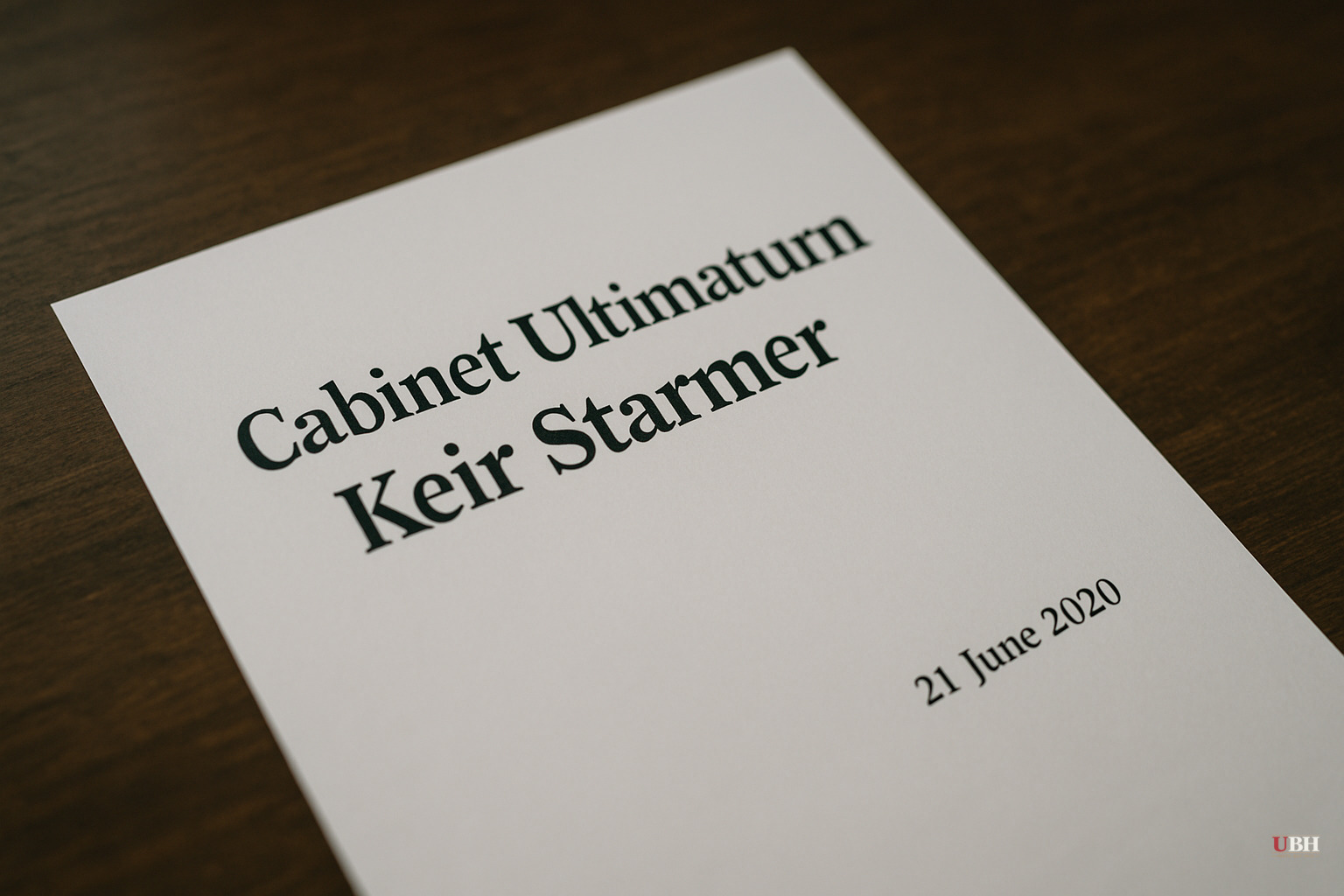
Since cabinet ministers pushed Starmer to set an exit timetable over the weekend, the public posture from Downing Street has remained unchanged: the prime minister is 'determined to fight for his job,' according to a Sunday morning statement cited by BBC News. But the private picture looks starkly different.
A senior Starmer ally told the Sun on Sunday that there is 'just a 25 per cent chance that he fights on now.' The Sunday Telegraph reported that a senior government figure told the paper Starmer recognises 'the game is up.' The Observer, citing expectations among his own supporters, reported that if Starmer does announce a departure plan, it would aim for a September exit, letting his successor be confirmed at the Labour Party conference.
Those are three separate sourcing streams, none of them opposition voices, all pointing the same direction.
The Cost of Dragging It Out
Simon Case, who served as the UK's most senior civil servant from 2020 to 2024 under four prime ministers, put a real-world frame on the standoff in an interview Sunday with BBC's Sunday with Laura Kuenssberg. Case said leadership uncertainty is 'enormously disruptive' and presents a 'big challenge and a big problem for government.'
His most pointed comment was economic: 'The amount of money we are paying for the enormous level of debt that the country has are going up with every moment of uncertainty.' Rising borrowing costs on sovereign debt are a measurable, direct consequence of political instability, and Case named it plainly.
Case also flagged John Healey's recent resignation as Defence Secretary as a concrete example of how leadership paralysis defers real decisions. 'Current decisions aren't being taken,' he said, according to BBC.
What Burnham's Win Actually Changed
Andy Burnham won the Makerfield by-election on Thursday, June 19, giving him a seat in Parliament and a platform to mount a formal leadership challenge. Fox News Digital reported that Starmer congratulated Burnham on X, writing that voters 'chose Labour's campaign of hope and optimism over division and hate.'
Burnham's allies have stayed quiet this weekend, according to BBC News, in an apparent bid to give Starmer room to make his own call without public pressure forcing his hand. The team around Wes Streeting, another potential challenger, similarly went dark on interviews.
The Sunday Times reported that if Burnham became prime minister, he would sack Rachel Reeves as Chancellor. Ed Miliband, Pat McFadden, Wes Streeting, and John Healey have all been discussed as potential successors in various combinations, according to the paper.
A Labour source told the Sunday Times that 'you would start to see resignations from the middle to the end of next week' if Starmer has not announced a departure date by then.
The Strongest Case for Starmer Staying
Starmer was elected with a substantial parliamentary majority in 2024. He has led the Labour Party since 2020. Forcing out a sitting prime minister through internal party pressure, less than two years into a government, sets a precedent that destabilizes the very institution of elected government. Case himself acknowledged this problem when he noted how damaging the churn of Johnson-Truss-Sunak was for policy continuity and market confidence.
If Starmer's critics force him out, they own the next government's results. Burnham has no track record at national level. Replacing one leader under pressure with an untested one solves the political problem for ambitious MPs while potentially creating a governing problem for the country. That concern deserves a fair hearing, even if the arithmetic inside Labour currently runs against Starmer.
Where Things Stand as of Sunday, June 21
Downing Street's official position has NOT changed as of this morning. No announcement has been made. The Observer's expectation of a Monday statement remains an expectation, not a confirmed event.
Fox News Digital noted it reached out to the prime minister's office for comment and received no response beyond the previously stated position that Starmer intends to remain in office.
The one concrete, ticking deadline in the sources: the Labour source quoted by the Sunday Times said resignations would begin 'from the middle to the end of next week' if no departure timetable has been set. That gives Starmer, at most, until roughly Wednesday or Thursday before the cabinet revolt shifts from private pressure to public defections.
Whether he announces Monday or holds out longer, that is the clock he is now working against.
Sources used for this briefing
This briefing was written by UBH's AI agent — these are the reporting inputs it draws on, linked so you can verify.