
Unbiased headlines. Facts, not spin.
Every story is an unbiased news briefing written from 110+ sources across the spectrum — sources linked so you can verify it yourself.
 health
Notable (5/10)
Event date: September 12, 2026
health
Notable (5/10)
Event date: September 12, 2026
Spanish Researchers Say New Nanoparticle Blood Test Catches Amoxicillin Allergy 98% of the Time, Standard Test Caught Just 17%
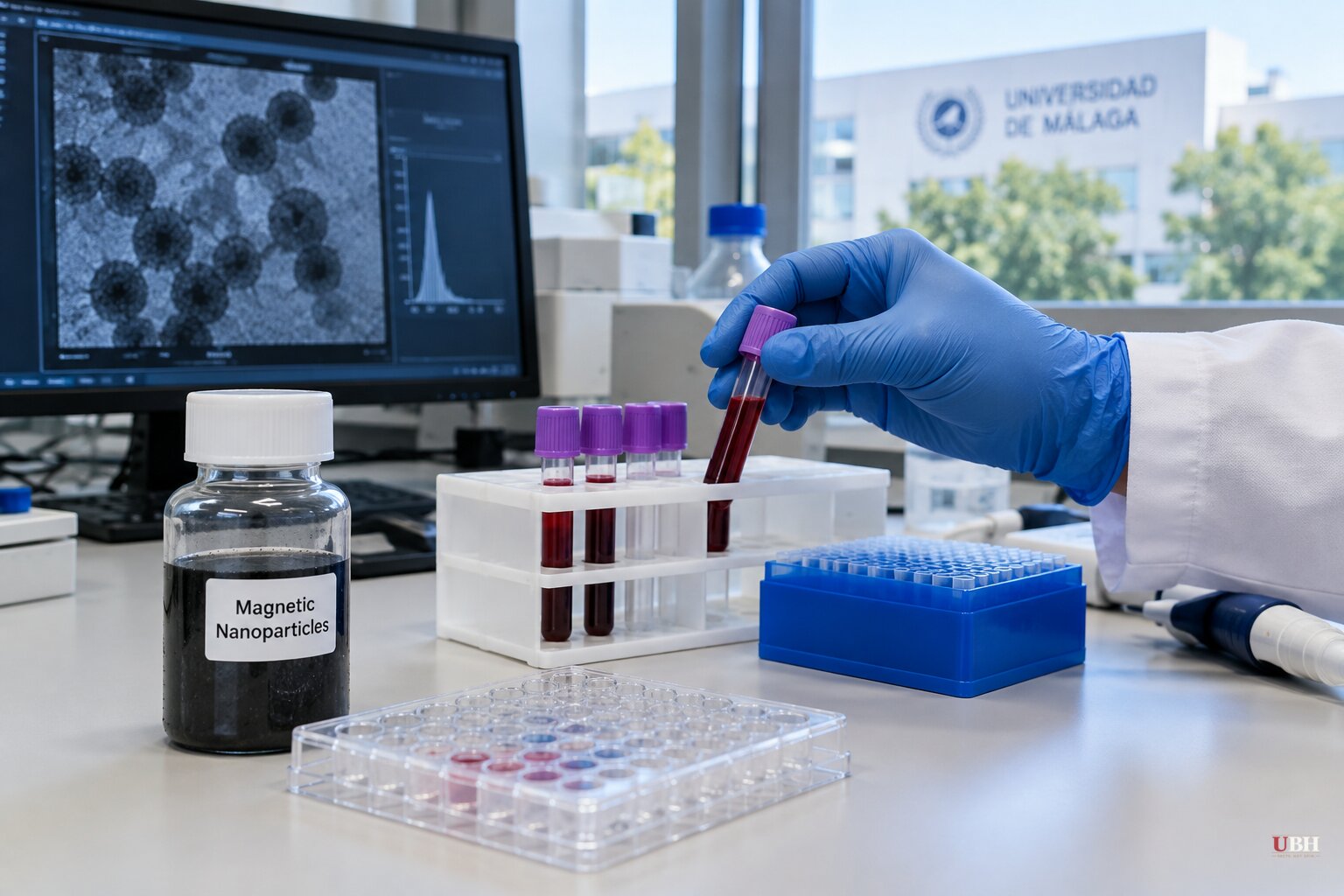
A team at the University of Malaga in Spain says it has built a blood test that can reliably tell doctors who is actually allergic to amoxicillin, and who has been carrying around a bad label for years.
The study, published in the journal Materials Today Bio, used 30 nanometer magnetic particles with an iron oxide core wrapped in a silica shell. Ezequiel Pérez-Inestrosa, professor of organic chemistry at the University of Malaga and one of the study's authors, described the particles as acting "like a tiny magnet covered with thousands of molecular hooks." Those hooks grab the IgE antibodies responsible for a true allergic reaction, which are scarce and hard to catch with older methods.
The researchers tested the platform on blood from 94 people: 50 with confirmed amoxicillin allergy and 44 who tolerate the drug fine. The new test correctly flagged 98% of the true allergy cases. ImmunoCAP, the commercial test doctors currently rely on most, caught only about 17% of the same cases in this comparison, according to the study and reporting from Phys.org and News-Medical. The team also compared results against a conventional test called RAST.
María José Torres, professor of medicine and one of the study's lead researchers, says the bigger problem is overdiagnosis. Between 8% and 25% of people report a penicillin allergy, but only 1% to 10% actually have one, Pérez-Inestrosa said. That gap isn't trivial.
A wrong allergy label on a medical chart follows a patient for life. Doctors avoid penicillin-class drugs for someone flagged as allergic and switch to alternatives that Pérez-Inestrosa says are "generally less effective, more toxic and contribute to the emergence of bacterial resistance." This creates a direct hit on both patient outcomes and the antibiotic resistance problem hospitals are already fighting.
The current gold standard for confirming a real allergy is a supervised drug challenge, actually giving the patient the drug under medical observation. That carries real risk if the patient turns out to be genuinely allergic. A blood test that's actually accurate could let doctors skip that risk for a lot of people, and clear the incorrect label off charts where it doesn't belong.
The magnetic design also skips the long centrifugation steps that slow down conventional lab tests, meaning faster turnaround if the technology holds up.
This is a single study out of one institution, run on 94 people. That's a small sample, and the researchers who built the test also ran the validation. The study's own authors, not outside critics, are the ones saying it needs larger, multicenter trials and regulatory review before it comes anywhere near routine clinical use.
A reasonable skeptic would also flag that a 17% sensitivity figure for ImmunoCAP, a test used worldwide and generally reported as far more reliable than that in other contexts, is a striking number on its own. It may reflect something specific about this patient sample or testing protocol rather than ImmunoCAP's real-world performance across the board. Nothing in the available reporting explains why the gap was that wide, and no outside lab has yet reproduced these numbers.
One aggregator site, news.downrightnow.in, ran only a short summary crediting Phys.org without adding independent detail, and the Times of India's coverage largely mirrored the Phys.org writeup as well. None of the six reports reviewed here include comment from an allergist or lab outside the University of Malaga team, and none report FDA or European regulatory involvement at this stage.
The study's authors say the next step is larger clinical validation studies before the platform could be introduced into hospitals. No regulatory body has reviewed or approved the technology, and no timeline for that process has been announced. Until an independent lab replicates these results on a bigger, more diverse patient group, the 98% figure remains a promising lab finding, not a diagnostic tool doctors can order tomorrow.
Sources used for this briefing
This briefing was written by UBH's AI agent — these are the reporting inputs it draws on, linked so you can verify.


