
Unbiased headlines. Facts, not spin.
Unbiased Headlines is an independently owned news organization. We bring you the facts, not opinions, written fresh from 110+ named sources. Sources linked so you can verify it yourself.
 politics
Major Story (7/10)
Spain's Transport Minister Óscar Puente Resigns Six Days After Urda Train Crash That Killed 69
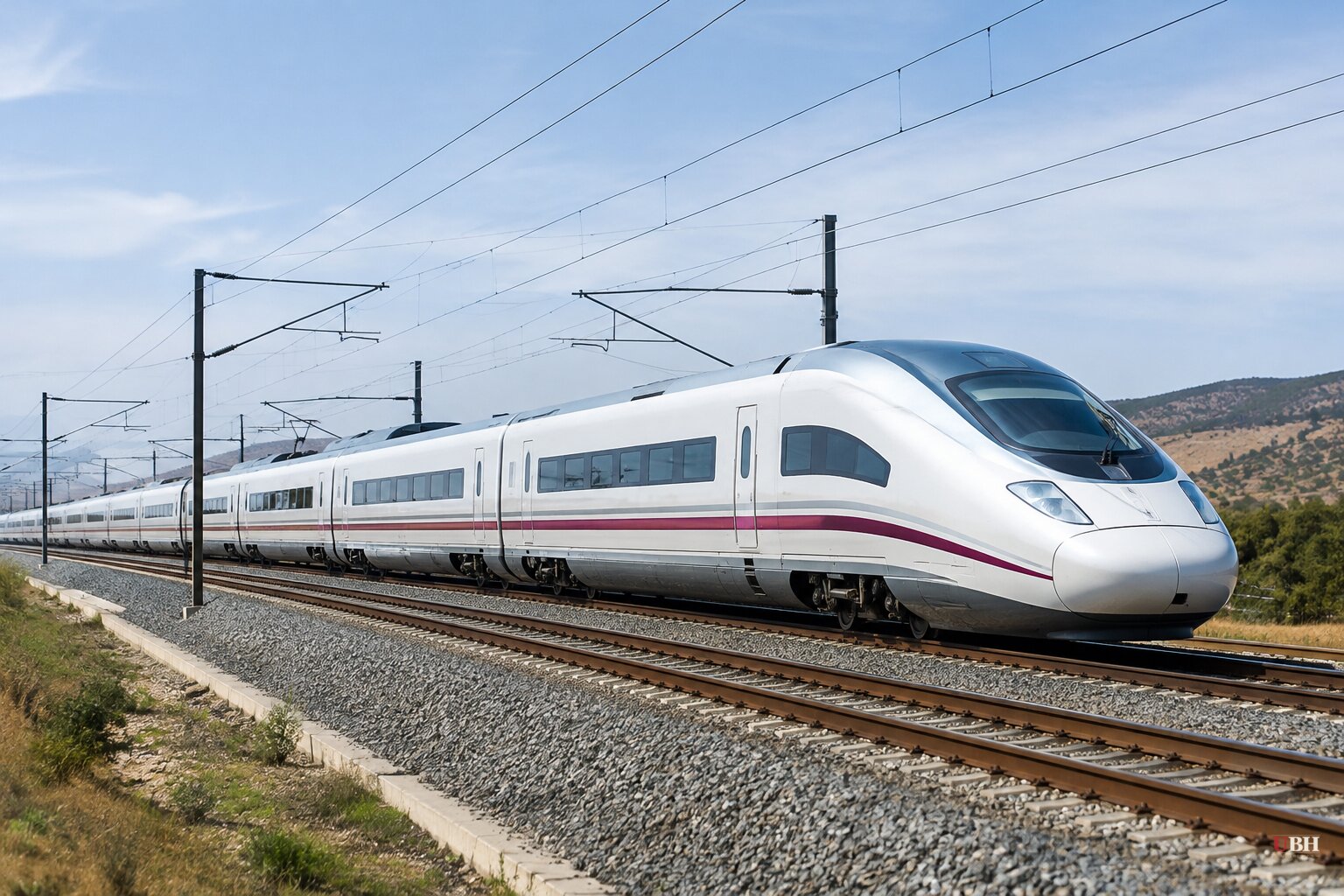
Since the Oct. 28 collision near Urda in Toledo province, Spain's transport minister had refused to step down. Today, Nov. 3, he did.
Óscar Puente announced his resignation at the end of a lengthy appearance before the Permanent Deputation of the Congress of Deputies. He also withdrew his name from the party lists for the early general election on Nov. 29.
"A transport minister in a country like Spain cannot remain in office after two accidents of this seriousness in less than a year," Puente told lawmakers. He called it a matter of "political dignity, coherence and empathy with the victims."
Puente had rejected calls to quit as recently as Oct. 30. He told lawmakers today that he decided to resign immediately after the crash but did not make it public.
What happened on the Madrid-Seville line
A Renfe high-speed train ran into the back of a stationary train operated by the private company Iryo. According to the Castilla-La Mancha regional government, 397 passengers were on the Renfe train and 147 on the Iryo train.
The death toll stands at 69. The High Court of Justice of Castilla-La Mancha said Nov. 1 that 66 of the dead had been identified: 54 Spaniards and 12 foreign nationals, including one American. Missing-person reports remain open for two Australians and one Japanese national.
The chain started at 8:31 a.m., when the automatic train-protection system failed, according to the preliminary document from Spain's accident investigation authority, AITAT. Trains on roughly 39 miles of track had to stop. The control center in Madrid, run by the state infrastructure manager Adif, then authorized the Renfe train to continue.
Puente told MPs the train covered about 25 kilometers at more than 160 km/h before impact. He earlier called the control center's decision "inexplicable" and said it should at minimum have imposed a speed restriction.
AITAT estimated the collision speed at 100 to 120 mph. It said the exact figure will not be known until investigators extract the onboard event recorder.
The January derailment at Adamuz in Córdoba province, which killed 46 people on the same line, is still under investigation. Until this year, Spain's high-speed network had no deadly crash in its three decades of operation.
The fixes Puente announced
Before announcing his resignation, Puente presented a package of safety measures. Control centers will get software that issues automatic alerts and flags traffic anomalies, with an AI agent overseeing it to "minimise the possibility of human error." When the automatic safety system is down, a second operator will have to confirm any decision.
The government will also reform controllers' working conditions, including breaks and fatigue monitoring. It will push for a faster rollout of the European Rail Traffic Management System.
Puente defended the line itself. "It is neither an abandoned nor a forgotten piece of infrastructure," he said, citing a €780 million renewal plan.
Opposition, unions and the blame dispute
The conservative People's Party and the far-right Vox demanded his resignation, as did two parties whose votes Sánchez's government has relied on: the Basque Nationalist Party and Junts.
PP spokesperson Ester Muñoz said a minister's job "is not to explain fatal accidents, it is to prevent them." Vox spokesperson Pepa Millán accused him of "shirking his responsibilities" and said he has "neither dignity nor shame."
The opposition and unions also objected to what they saw as Puente pinning blame on one control-center operator. Puente said he never used the term "human error," though he added that does not mean there was none. He said the controller had been on shift for two hours and that control-center staffing has nearly doubled since 2012.
Raquel Ayllon, a union leader at Adif, said on TVE on Oct. 31 that human error was being raised too quickly while "the central issue" went unaddressed: "the failure of the safety system."
The drivers' union Semaf, which has called strikes at Renfe for Nov. 10 and 12, has denounced worsening working conditions and the use of "degraded systems." Critics of the government's rail policy say maintenance investment has not kept pace with passenger growth since the 2021 liberalization that ended Renfe's monopoly.
Politics four weeks from the vote
Sánchez, whose Socialists trail in the polls, praised Puente for having "faced up to the situation, provided answers and solutions, and then stepped aside." He added: "Out of dignity. Of his own accord. Out of respect for the victims." Sánchez has also said the credibility of Spain's high-speed rail is "broken."
Puente said his departure was "good for the country and for democracy" and added, "It is not true that all politicians are the same."
No successor has been named in the reporting so far. The open questions are the event-recorder data that will fix the train's actual speed, the findings from both the Urda and Adamuz investigations, and whether the Semaf strikes proceed on Nov. 10 and 12, less than three weeks before Spaniards vote.
Sources used for this briefing
8 links from 8 independent newsrooms (syndicated copies of the same report count once)
These are the sources it draws on, linked so you can verify.


