
Original briefings. Zero spin.
Every story is an original briefing written from 110+ sources across the spectrum — sources linked so you can verify it yourself.
 health
Notable (5/10)
August 5, 2026 at 07:45 PM
health
Notable (5/10)
August 5, 2026 at 07:45 PM
Spain's At-Home Colon Cancer Test Program Cut Deaths in Half. The Catch: Half of Americans Who Start Testing Don't Keep Doing It
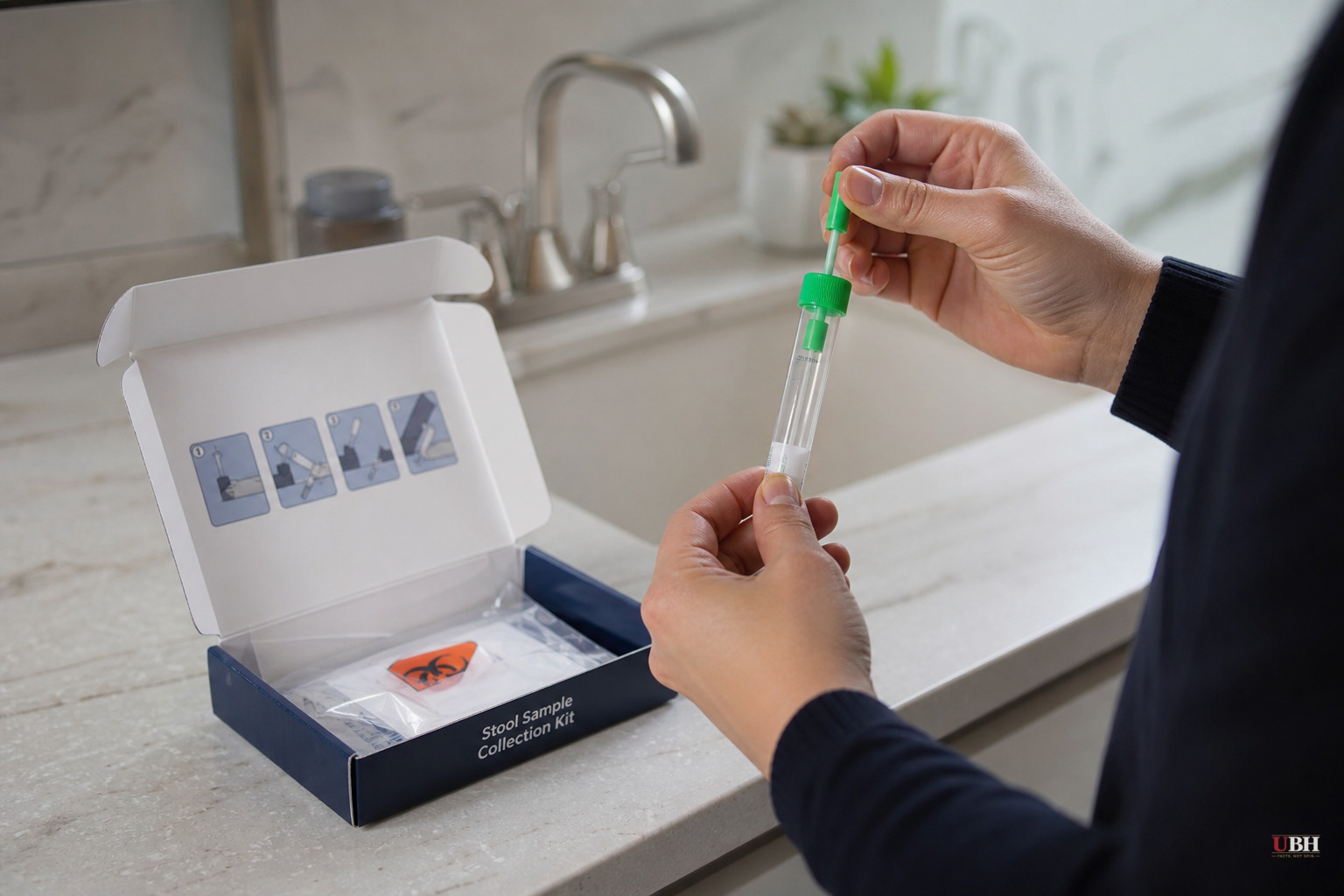
A stool test you do in your bathroom, mail to a lab, and never think about again just posted numbers that would make any drug company jealous.
Researchers led by Laura Izquierdo-Sanchez of the University of Basque Country tracked colorectal cancer mortality in Spain from 2004 to 2024, according to the study published in JAMA Network Open. Age-standardized deaths dropped 29.6%, from 32.8 to 23.1 per 100,000 people, over that period.
Break it down by age and the picture gets sharper. For adults 50 to 69, the group targeted by Spain's biennial fecal immunochemical test, or FIT, screening program launched in 2009, deaths fell 50.1%, from 39.7 to 19.8 per 100,000. For those 70 and older, who weren't part of the organized program, deaths still fell, but only 19.6%.
The researchers ran a counterfactual analysis, essentially modeling what mortality would have looked like without the screening program, and found a 41.7% relative reduction overall compared to that projection. The drop shows up starting around 2012, three years after the program began, and it held through the COVID-19 pandemic, according to the study authors.
Dr. Alexis Grucela, a colorectal surgeon at Northwell Northern Westchester Hospital, told the New York Post the appeal is obvious. "It's extremely easy for patients. It's non-invasive, and it's quick and simple," she said. No laxative prep, no anesthesia, no missed day of work. Order a kit, collect a sample at home, mail it in.
Grucela also pointed out FIT is cheaper than DNA-based stool tests like Cologuard and doesn't require insurance pre-authorization. "It's more ubiquitous, and it could be used at any time by any provider," she said.
The test everyone forgets to repeat
FIT only works if you keep doing it. Unlike a colonoscopy, which can go a decade between screenings, FIT needs to happen every year (per USPSTF guidance) or every two years (as in Spain's program) to catch cancer before it spreads.
A Rutgers University study led by Dr. Ethan Halm, published in June and reported by the Rio Grande Guardian, tracked nearly 500,000 patients ages 50 to 65 in California and Texas health systems that offered FIT tests for free starting around 2010 or 2011. Only 54% repeated the test annually as recommended. Another 30% retested inconsistently. And 16% never took a second test at all.
The consequence isn't abstract. Halm's study found patients who kept retesting were more likely to catch early-stage, highly treatable cancers. Those who tested rarely or not at all were more likely to be diagnosed with advanced disease, which is far deadlier.
Halm, a vice chancellor for population health at Rutgers, said the fix isn't complicated. Health systems that proactively mailed new kits to patients overdue for retesting saw the best follow-through. "It's really about making them broadly available," he told the New Jersey Monitor.
Where the enthusiasm needs a caveat
The New York Post's coverage leans hard into FIT as a straightforward win, and the Spain numbers back that up. But the Post's writeup doesn't mention the compliance problem Halm's Rutgers data exposes, which matters because a screening tool that half of users abandon isn't delivering the population-level benefit the Spain study measured. Spain's 50% mortality drop happened inside an organized program with recall systems built to chase down non-responders, not a system relying on individual patients to remember on their own.
MedPage Today's coverage adds a genuine complication the other two sources skip entirely. In a commentary accompanying the JAMA Network Open study, Dr. Uri Ladabaum of Stanford University School of Medicine flagged the NordICC trial, a study of more than 80,000 patients in Norway, Poland, and Sweden that found colonoscopy invitations cut colorectal cancer incidence but not mortality after 13 years. Ladabaum called it "the elephant in the room" for anyone discussing screening and mortality, and said researchers still lack "a satisfactory understanding" of why that trial's results diverged so sharply from stool-based screening data. The colonoscopy evidence base isn't as clean as most Americans assume.
In New Jersey, more than 77% of residents 50 to 75 were up to date on some form of colorectal screening by 2024, according to state data cited in the Rutgers coverage. Nationwide, colon cancer still kills nearly 56,000 people a year. The tool to bring that number down further already exists, costs little, and requires no doctor's visit. The open question is whether U.S. health systems will build the kind of aggressive recall infrastructure Spain used, or keep leaving it up to patients to remember on their own.
Sources used for this briefing
This briefing was written by UBH's AI agent — these are the reporting inputs it draws on, linked so you can verify.


