
Unbiased headlines. Facts, not spin.
Unbiased Headlines is an independently owned news organization. We bring you the facts, not opinions, written fresh from 110+ named sources. Sources linked so you can verify it yourself.
 tech
Notable (6/10)
Event date: November 22, 2026 ·
SpaceX Lenders Sought Earth-Only Clause for Chips Backing $40 Billion-Plus Nvidia Financing, FT Reports
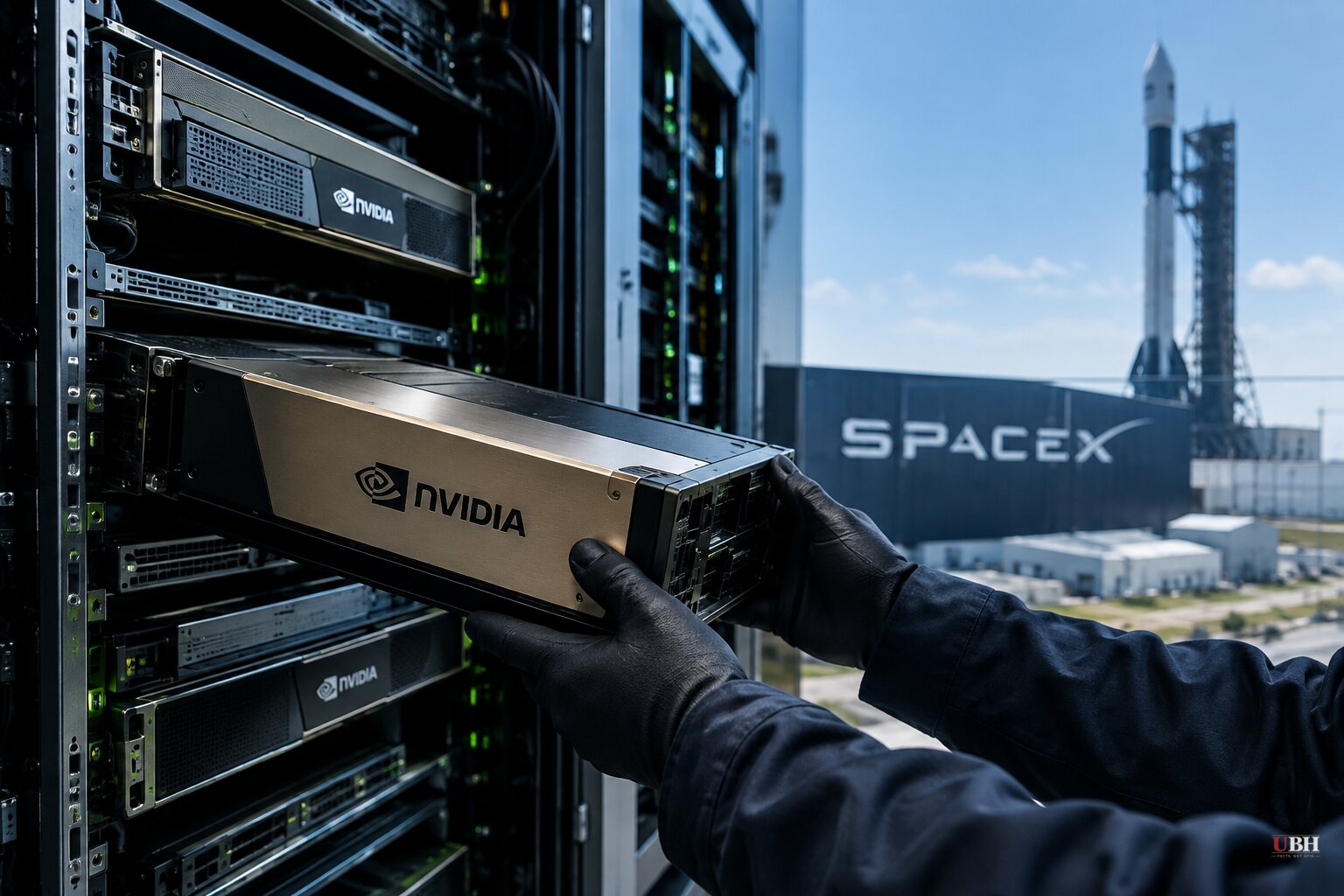
The lenders financing SpaceX's Nvidia chip purchases wanted a guarantee the hardware would never leave the ground. The Financial Times reported, citing people familiar with the matter, that investors in the debt sought a clause keeping the chips that secure it out of SpaceX's planned orbital data centers.
The concern is simple. If SpaceX defaulted and the chips were sitting in a satellite, creditors could not recover and resell them.
What SpaceX has said
SpaceX says the Nvidia equipment covered by the deal will go into data centers on Earth. That is the company's stated position.
What remains unclear is whether the restriction made it into the final financing documents. The FT could not verify that, and SpaceX has not published the terms. According to the FT, an earlier draft of the proposal contained language that would have let lenders challenge any orbital use of the chips.
How the deal is built
The package is called Project Saturn. It will fund Nvidia Vera Rubin NVL72 systems. Apollo and Goldman Sachs led the transaction and announced pricing on about $44 billion in notes, saying strong investor demand increased the size of the deal.
The headline number has moved. A regulatory filing described a binding commitment with an Apollo-managed entity for roughly $40 billion, and CNBC reported the financing closed Oct. 26. Other accounts put the package at $43 billion. Musk said the financing was primarily callable debt for GPUs, with delivery expected in the first and second quarters of 2027.
The structure resembles aircraft leasing. Ars Technica reported that a vehicle called Saturn Funding Trust, a fully owned subsidiary of asset-backed lender WHCO, would buy the GPUs and lease them to SpaceX for quarterly payments. Ars described it as a five-year triple-net, hell-or-high-water finance lease.
In plain terms, SpaceX owes the payments for five years whether the chips break, become obsolete, or the project loses money. It also pays to operate them. Those terms favor lenders heavily, which is why a missing Earth-only clause stands out.
Why chip location matters to creditors
Chip-backed debt works because the collateral can be seized and resold. Compute Credit Index Research data cited by TechCrunch shows some H100s selling for about half their 2023 cost basis, while certain H200 configurations sell for the same price as at their 2024 introduction.
That resale value is the lenders' backstop. A GPU installed in a satellite roughly 300 miles up, moving at 17,500 miles per hour, cannot be repossessed in any practical sense. Nobody has tried to launch a chip fleet of this scale, and the FT's sources said lenders would treat chips sent to orbit as lost.
Musk's orbital plans
The worry is not hypothetical, because Musk has pushed orbital computing publicly. In January, SpaceX asked the Federal Communications Commission for permission to launch and operate up to one million satellites for an orbital data center system. The design calls for sun-facing solar panels, radiators to shed heat, and laser links relaying data through Starlink.
Musk said at the start of 2026 that he expects space to be the cheapest place to run data centers within two to three years. At the Baron Investment Conference this month, he said a fully reusable Starship should cut the cost of putting hardware in orbit.
Starship is not there yet. In its most recent flight test, SpaceX landed the orbital stage back at its Texas launch site but failed to recover the booster. It is not clear when that second stage will fly again or what refurbishing it will cost.
SpaceX has also unveiled its first-generation AI1 satellite, with a 120-kilowatt payload and a span larger than a Boeing 747.
The near-term plan is on the ground
SpaceX's ground buildout is moving faster than anything in orbit. On the company's most recent earnings call, Musk said he had sent engineers from the rocket team to speed up the data center effort, including casting turbine blades for generators faster than existing suppliers can.
SpaceX is also planning a $24 billion gas-powered AI supercomputer at Starbase, Texas, on top of the Colossus 1 and Colossus 2 sites near the Tennessee-Mississippi border.
Ground projects face their own constraints. TechCrunch noted that many data center projects are delayed by land, power and local opposition, and that markets are still watching whether compute demand and buyers' revenue hold up.
What comes next
The GPUs are due in the first half of 2027. By then, the final debt terms will determine whether SpaceX can put chips in orbit without defaulting on its own financing.
SpaceX has not said whether the Earth-only restriction is in the signed documents, and the lenders have not commented publicly.
Sources used for this briefing
6 links from 6 independent newsrooms (syndicated copies of the same report count once)
These are the sources it draws on, linked so you can verify.


