
Unbiased headlines. Facts, not spin.
Unbiased Headlines is an independently owned news organization. We bring you the facts, not opinions, written fresh from 110+ named sources. Sources linked so you can verify it yourself.
 tech
Notable (6/10)
Port of Los Angeles Blocked 120 Million Cyberattack Attempts in August; Corpus Christi Reports Thousands a Day
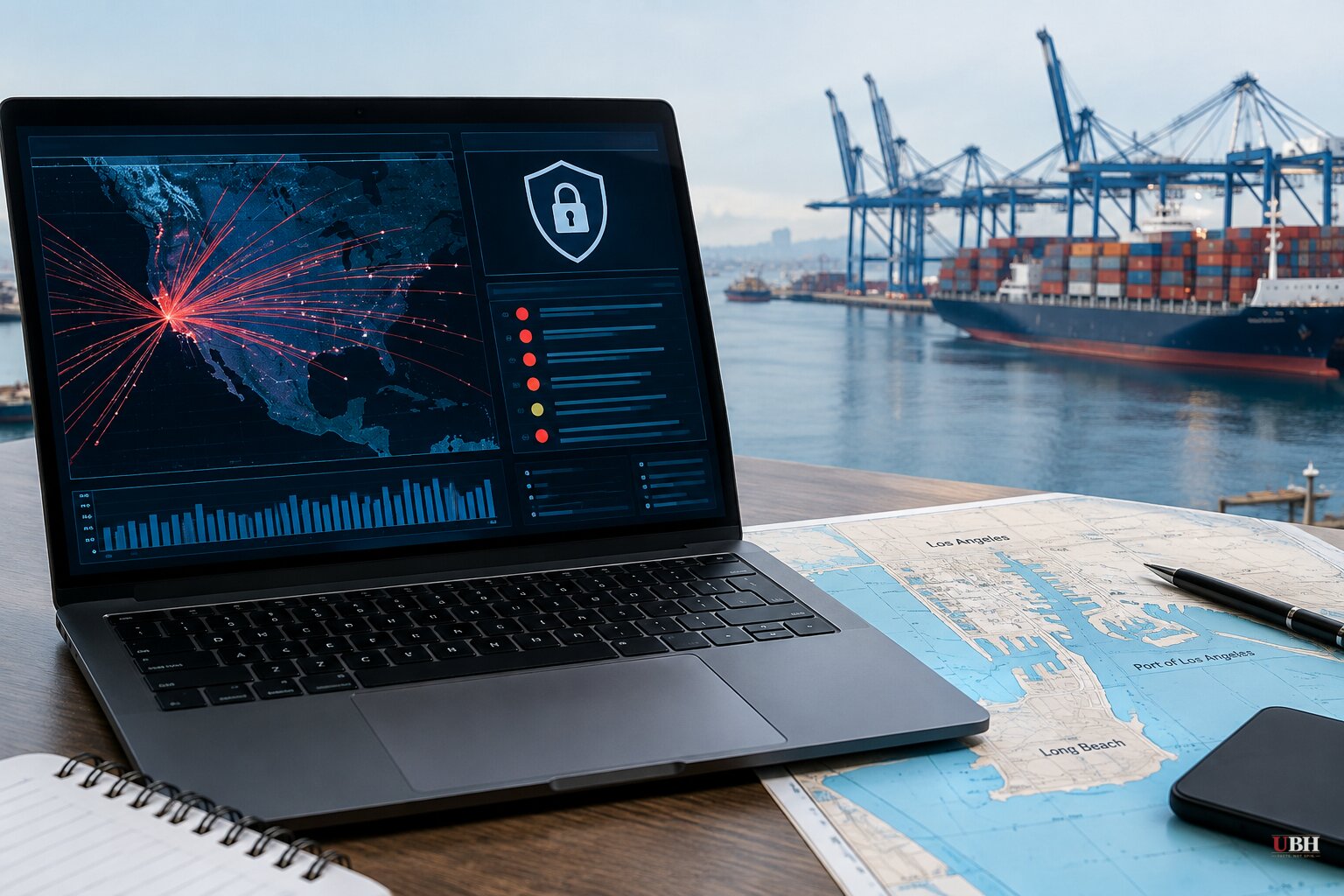
The Port of Los Angeles blocked about 120 million attempted cyberattacks in August, nearly double its 2023 monthly average. Port Executive Director Gene Seroka has said the attempts included network exploitation, credential harvesting and malware.
The number was back in the news after a Financial Times report on Sunday, Nov. 22, that put U.S. port security in a wider frame.
Corpus Christi: Thousands of Probes a Day
The Port of Corpus Christi in Texas is the largest U.S. gateway for crude oil exports, moving about 2.3 million barrels a day. CEO Kent Britton says it faces "hundreds, if not thousands" of attempted intrusions daily.
Hackers are probing the port's networks and sending messages that impersonate senior executives to trick employees into granting access. "They're poking at our systems and trying to find vulnerabilities," Britton said. "With AI, it'll only get more complicated."
Britton said some attempts came from countries and organizations known for malicious activity. He declined to name them.
The port is preparing to bring its cybersecurity team up to four people and is seeking more help from Washington. Four people, for the nation's biggest crude export hub.
If its systems go down, the fallback is old-fashioned. Tugboats can escort vessels through parts of the channel. The harbor master's office can run traffic with two-way radios, binoculars and paper records.
"If you're playing defense, you have to get it right every time," Britton said. "If you're planning offense, you only have to get it right once."
What Broke
On Aug. 4, a cyberattack disrupted operations at all three North Carolina Ports facilities, in Wilmington, Morehead City and Charlotte. The agency activated its cybersecurity contingency plan and brought in state and federal partners, including the Coast Guard.
"In Wilmington, the operations team implemented a delayed opening and transitioned to manual gate processing, allowing the IT team to focus on system recovery efforts," a North Carolina Ports spokesperson told WECT. The agency contained the breach and began restoring systems. The spokesperson said there was no indication sensitive data had been compromised. Officials had not identified who was responsible.
Also in August, the Coast Guard and FBI boarded two foreign-flagged tankers after indications their networks had been compromised near the Strait of Gibraltar. The vessels were carrying crude oil and liquefied petroleum gas from the Mediterranean to Galveston, Texas. Security inspections took place on Aug. 21 and 24. Investigators have not publicly identified suspects.
This month, shipping giant Maersk disclosed a data breach. The company said operations were unaffected and the incident did not involve ransomware.
The Coast Guard recorded a 17% increase in maritime cyber incidents in 2025. It says increasingly connected networks and equipment controls mean a breach can shut a terminal gate, interrupt cargo handling or disrupt ship systems, putting crews and supply chains at risk.
How to Read the 120 Million
The Los Angeles figure counts attempts that the port's defenses stopped. It is not a count of successful breaches.
In 2023, a port spokesman said the tally covers everything from the spam and phishing messages that reach ordinary inboxes to more serious threats, multiplied across roughly 900 employees. That year the port reported blocking 750 million attempts, about 62.5 million a month, so August ran at nearly twice that pace.
Corpus Christi gives only a rough daily range. The two ports count differently, so their numbers cannot be ranked against each other.
Seroka says the Los Angeles cybersecurity team has grown in recent years and now runs a seven-layer digital defense. He told Bloomberg Television the effort is "front of mind every day."
AI and the Federal Role
The FBI recently warned that hackers are using artificial intelligence to automate attacks. Officials also worry AI could help criminals find weaknesses faster, a concern Britton echoed.
Ports are mostly run by state and local authorities, but the cargo and energy they move is a national security matter. A shutdown at Corpus Christi would hit crude exports directly. Whether Washington answers Britton's request for help, and in what form, has not been announced.
No one has been publicly named as responsible for the tanker or North Carolina incidents, and the Coast Guard and FBI have not said what they found aboard the two vessels.
Sources used for this briefing
7 links from 6 independent newsrooms (syndicated copies of the same report count once)
These are the sources it draws on, linked so you can verify.


