
Unbiased headlines. Facts, not spin.
Unbiased Headlines is an independently owned news organization. We bring you the facts, not opinions, written fresh from 110+ named sources. Sources linked so you can verify it yourself.
 finance
Major Story (7/10)
SpaceX Closes $40 Billion in Debt to Buy GPUs, Musk Says
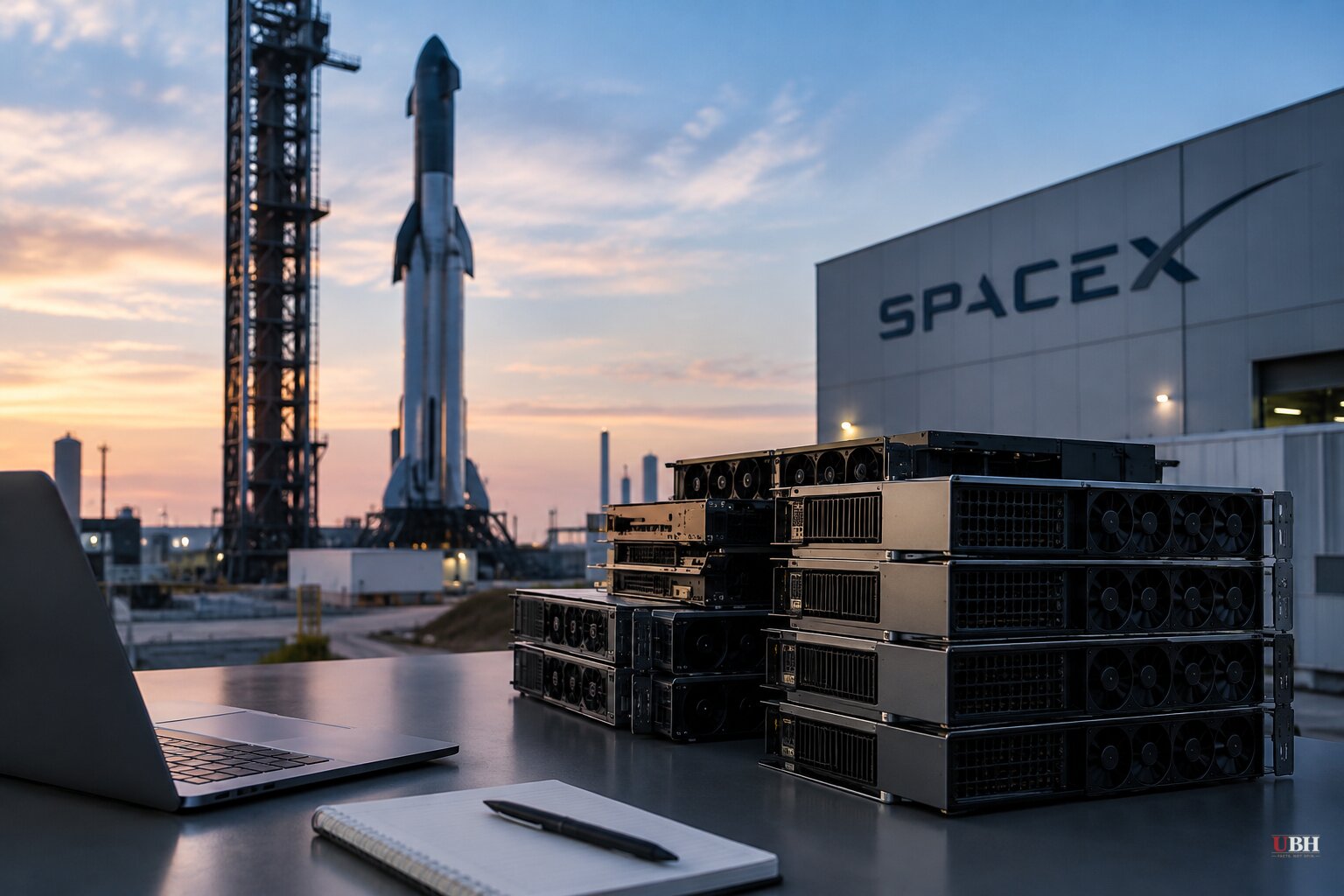
Elon Musk says SpaceX has closed $40 billion in debt financing to buy graphics processing units.
Musk announced it Sunday, Oct. 25, in a post on X replying to venture investor Chamath Palihapitiya. He said SpaceX got the deal done because it is "investment grade" and has "Starlink & launch revenue."
He added detail in a second reply. "This is primarily callable debt for GPU purchases that will arrive in Q1 and Q2," he wrote, meaning the first half of 2027. Callable debt lets the borrower repay early. Musk said the financing is not a significant factor this quarter.
What Musk has and has not disclosed
Musk did not name the lenders, the interest rate, the maturity or the closing date. SpaceX has not put out a separate announcement.
The figure matches earlier reporting by Bloomberg, which said SpaceX was seeking about $40 billion: roughly $10 billion in bank loans and $30 billion in investment-grade debt, with Apollo Global Management reportedly leading. Other reports said PIMCO was interested and that structures using GPUs as collateral were discussed. Neither SpaceX nor Musk has confirmed that breakdown for the finished deal.
Bloomberg also reported earlier that the financing plan had hit obstacles amid credit market volatility. Musk's account is that the deal closed anyway, because of SpaceX's credit rating and non-AI revenue.
Musk's warning to the neoclouds
Musk said debt markets have, over the past few weeks, "almost entirely shut off access to money for any company that doesn't have substantial revenue independent of AI data centers." He predicted the 200-plus "neoclouds" will see "guppy-level death and consolidation. Some will make it through, but not many."
Neoclouds are smaller firms such as CoreWeave and Lambda that rent GPU capacity to AI developers, often with heavy borrowing. Palihapitiya, who said he owns energized land for data centers, called them disorganized and poorly capitalized and expects stranded or underused compute in 2027.
That is Musk and Palihapitiya describing the market. Neither offered lending data, and Musk has an obvious stake in the story: SpaceX is one of the borrowers competing for the same capital.
When a user suggested SpaceX wanted to push the neoclouds down so some would accept buyouts, Musk replied that SpaceX is not buying any neoclouds. "Pointless," he wrote.
The spending behind the debt
SpaceX reported third-quarter results on Oct. 20. Revenue was $14.58 billion, up 161%, against analyst estimates of $12.74 billion. Earnings per share were $0.35 against estimates of $0.14.
Capital expenditures were $19.59 billion. Of that, $16.44 billion came from the AI unit, SpaceXSI, which funds data centers like Colossus in Memphis and products like Grok.
CFO Bret Johnsen said the company is focused on "capital efficiency, strong returns on invested capital, and maintaining a robust, investment-grade balance sheet." He guided fourth-quarter capex to $35 billion to $40 billion. Musk said SpaceX is on track to bring roughly 200,000 GB300 chips online every month for the rest of the year, with next year shifting mostly to Nvidia's Vera Rubin hardware.
The customers are the justification. SpaceX has disclosed that Anthropic pays $1.25 billion a month for access to about 325,000 Nvidia GPUs and Google pays $920 million a month for about 110,000. Reflection AI is part of a deal worth $150 million a month. SpaceX has also disclosed an unnamed hosting customer expected to generate $1.1 billion a month starting in December.
That is about $2.3 billion a month from the three named customers, plus the new one. SpaceX expects cumulative compute capacity to approach 10 gigawatts by the end of 2027.
Shares and the Tesla question
SpaceX shares (SPCX) closed Friday, Oct. 23, at $147.49, up 1.89%. That put its market cap near $1.98 trillion, with a 52-week range of $104.83 to $225.64. After the Oct. 20 earnings release, shares rose more than 6% in after-hours trading to above $157.
On the same call, Musk said SpaceX and Tesla have each formed special committees of independent directors, at shareholders' request, to consider a merger. He said he will not take part because he is a conflicted party.
"Some people out there assume that a SpaceX and Tesla merger is a certainty, and I think that would be overstating it," Musk told analysts. "The special committees have not reached agreement on the terms of any transaction. And obviously there's no guarantee that they will."
He argued a merger could make sense given shared work on superintelligence software, chip design, the Terafab, robotics and the Starmind constellation.
The new debt adds to a balance sheet already carrying heavy AI commitments. Any merger terms would have to account for it, but the special committees have set none. What to watch next is SpaceX's fourth-quarter capex against its $35 billion to $40 billion guide, and whether Musk or the company ever names the lenders and terms.
Sources used for this briefing
7 links from 7 independent newsrooms (syndicated copies of the same report count once)
These are the sources it draws on, linked so you can verify.


