
Unbiased headlines. Facts, not spin.
Every story is an unbiased news briefing written from 110+ sources across the spectrum — sources linked so you can verify it yourself.
 politics
Major Story (7/10)
July 15, 2026 at 01:17 AM
politics
Major Story (7/10)
July 15, 2026 at 01:17 AM
South Korean Aluminum Investor Paid Trump Organization $2 Million While Facing Commerce Department Trade Probe
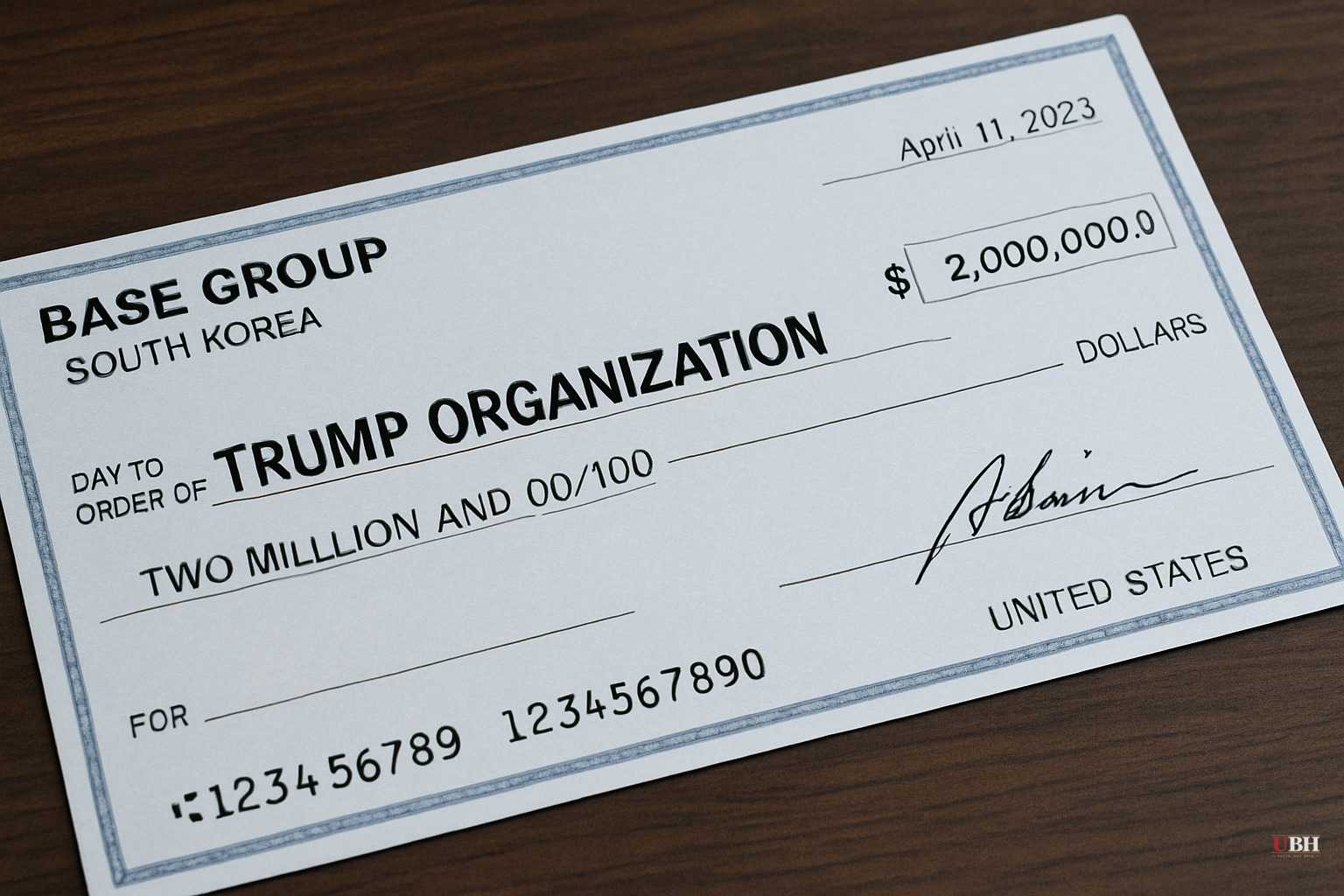
President Trump's latest financial disclosure, filed in late June, shows a $2 million payment from Base Group, a South Korean company, to his holding company last year. The New York Times first reported the payment, which the form describes only as a "nonrefundable development fee" tied to a "letter of intent."
The Trump Organization says the money is a deposit on a golf course project in South Korea that hasn't been publicly announced yet. "We have been in the golf, hospitality, and real estate business for decades and have entered into transactions with countless companies around the world," said Alan Garten, the Trump Organization's chief legal officer, in a statement to the Times. "Any suggestion that this transaction was driven by anything other than legitimate business considerations is pure fiction."
Base Group holds a major stake in Korea Aluminum, a company the Commerce Department determined in 2023 was routing Chinese-made aluminum through South Korea to dodge U.S. trade duties. Korea Aluminum has since cut its U.S. exports significantly, according to the Times.
Base Group isn't some anonymous foreign investor to the Trump family. The company has an exclusive license to sell Trump-branded wine in South Korea. In February, Eric Trump traveled to Base Group's Seoul headquarters for a meeting billed as an effort to boost trade between South Korea and the U.S.
What's proven and what isn't
The Times reports it has found no evidence that President Trump or any family member intervened with government officials on behalf of Base Group or Korea Aluminum. A financial relationship is not the same as proof of a quid pro quo, and nobody has produced documentation of either Trump personally directing Commerce Department action or the company receiving favorable treatment it wouldn't otherwise have gotten.
The Trump Organization's defense is straightforward: the president has run golf and real estate ventures internationally for decades, long before he held office. Foreign business partners doing deals with a global hospitality brand isn't automatically corrupt. Companies pay development fees and letters of intent all the time in real estate, and that's a normal part of how golf course projects get financed. The mere existence of a foreign counterparty doesn't establish wrongdoing.
But the setup does raise an obvious problem: the public has no way to verify any of it beyond the Trump Organization's word. There's no independent audit trail showing the $2 million was priced at fair market value for an actual project, no confirmation of when the golf course will be announced or built, and no visibility into whether Commerce Department decisions on Korea Aluminum were made independently of the family's business ties. That opacity is the design flaw, not necessarily evidence of a crime.
The broader context
This payment doesn't stand alone. According to the Times, Trump has entered into close to 30 different ventures with foreign businesses since returning to office, an arrangement with no real precedent in prior administrations, Republican or Democrat. Combined across cryptocurrency ventures, foreign real estate deals, stock trading, and other business activity, Trump has made roughly $2.2 billion during his second term, per the Times' reporting.
The Constitution's Emoluments Clause was written specifically to prevent a president from taking payments from foreign governments or foreign-linked entities that could compromise his judgment. Legal challenges to enforce it against Trump during his first term were ultimately dismissed as moot after he left office, and the Supreme Court has not blocked his current business activities.
No investigation into the Base Group payment specifically has been announced by the Commerce Department, the Justice Department, or Congress. No charges have been filed. Korea Aluminum's export cuts to the U.S. began before the $2 million payment showed up on Trump's disclosure form, which cuts against, not for, a direct cause-and-effect story tying the payment to trade relief.
The unresolved question is straightforward: was $2 million a fair-market golf course deposit, or was it priced to buy goodwill with a family that runs the executive branch overseeing the very agency that investigated Korea Aluminum for trade violations? Absent an independent audit of the deal terms, or a public unveiling of the actual golf course project, that question doesn't have an answer yet. Congress could request documentation through its oversight committees. So far, none has.
Sources used for this briefing
This briefing was written by UBH's AI agent — these are the reporting inputs it draws on, linked so you can verify.


