
Unbiased headlines. Facts, not spin.
Unbiased Headlines is an independently owned news organization. We bring you the facts, not opinions, written fresh from 110+ named sources. Sources linked so you can verify it yourself.
 economy
Major Story (8/10)
economy
Major Story (8/10)
Social Security Benefits Rise 3.6% for 2027, Average Retiree Check Up $75 to $2,170
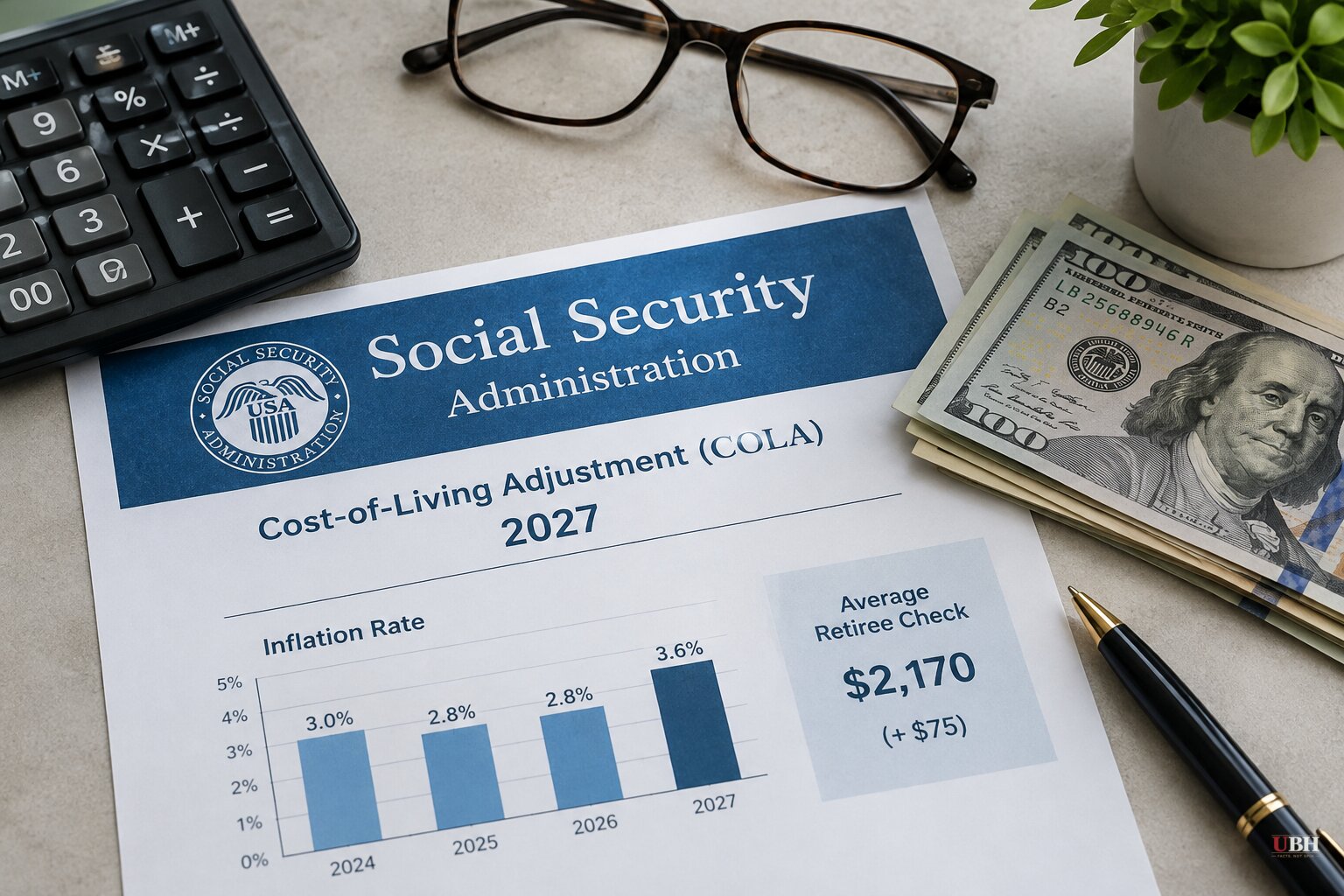
Social Security benefits will rise 3.6% in January, the Social Security Administration announced today, Oct. 14. It is the biggest annual adjustment since the 8.7% increase that took effect in 2023.
The 2026 adjustment was 2.8%.
The agency said the average retired worker's check will climb about $75 a month, from $2,095 to $2,170. Other averages the SSA published:
- Elderly couples with both spouses receiving benefits: up $117, from $3,238 to $3,355.
- Disabled workers: up $59, from $1,642 to $1,701.
- Widows and widowers living alone: up $69, from $1,936 to $2,005.
Those are averages. Individual payments vary.
Why the number jumped
Inflation reaccelerated. The Labor Department said consumer prices rose 3.7% over the 12 months ending in September, up from 3.4% in August, with gasoline a major driver. Fuel prices have surged since the outbreak of the war in Iran this spring.
The COLA is not calculated from that headline number. The SSA takes the average of the Consumer Price Index for Urban Wage Earners and Clerical Workers (CPI-W) for July, August and September, compares it with the same three months a year earlier, and rounds to the nearest tenth. Because it averages a quarter, it won't match any single month's reading.
Social Security experts had projected 3.5% to 3.6% last month.
Who gets it, and what else changes
About 72 million Social Security recipients will see the increase in January, the SSA said. About 7.3 million Supplemental Security Income recipients get higher payments starting Dec. 31.
The maximum amount of earnings subject to the Social Security payroll tax rises from $184,500 to $192,300. Higher earners will pay tax on more of their income next year.
Commissioner Frank Bisignano said in a statement that the agency "will implement this cost-of-living adjustment for 76 million Americans, giving them greater financial stability." He added: "Under President Donald J. Trump, Social Security is delivering better, faster, higher-quality service for the American people."
Advocates say it falls short
Senior advocacy groups welcomed the raise but said it doesn't make up lost ground.
"While a 3.6% COLA is certainly welcome, it wouldn't necessarily restore the purchasing power seniors have already lost," said Shannon Benton, executive director of the Senior Citizens League. "The COLAs are designed to keep pace with inflation, not make up for years of falling behind." The 2026 adjustment of 2.8% has lagged CPI for the last seven months.
Nancy Altman, president of Social Security Works, pointed to the gap between the COLA and September's inflation figure. "People are getting crushed by prices," she said in an email. "As important as the Social Security COLA is, it is not keeping up with prices."
AARP CEO Myechia Minter-Jordan called the COLA "critically important" and said one in five older Americans have no retirement savings. An AARP survey found 76% of respondents said a 3.5% COLA would not be enough. Separately, a Senior Citizens League survey found 89% of older Americans considered this year's 2.8% adjustment inadequate.
Some advocates want the formula itself changed. They argue CPI-W, which tracks spending by working-age urban households, understates costs for retirees, who spend more on health care. Some advocates favor switching to the CPI-E, an index built around elderly households.
The funding problem underneath
NBC News reported that core inflation, which strips out food and energy, has held around 2.5%, above the Federal Reserve's 2% target. Energy is not the only pressure on prices.
A bigger check also means bigger outlays. The program's trustees have said the Old-Age and Survivors Insurance Fund will be unable to pay full benefits at the end of 2032 unless funding is replenished. That is roughly six years away.
The benefit is a lifeline for many. Census Bureau data show Social Security keeps nearly 21 million older Americans out of poverty. An August AARP survey of 1,085 people age 50 and up found just over half of recipients call it their main source of income.
What happens next
Beneficiaries can check their online Social Security accounts for their new amount starting in late November. Mailed notices go out beginning in early December. The first higher retirement checks arrive in January, and the SSI increase begins Dec. 31.
The 2032 depletion date for the retirement trust fund is still on the books. Congress has not acted on it.
Sources used for this briefing
7 links from 7 independent newsrooms (syndicated copies of the same report count once)
These are the sources it draws on, linked so you can verify.


