
Unbiased headlines. Facts, not spin.
Every story is an unbiased news briefing written from 110+ sources across the spectrum — sources linked so you can verify it yourself.
 tech
Notable (5/10)
August 13, 2026 at 01:21 PM
tech
Notable (5/10)
August 13, 2026 at 01:21 PM
SK Hynix Workers Launch Rival Union to Stop Bonus Deal From Being Rewritten
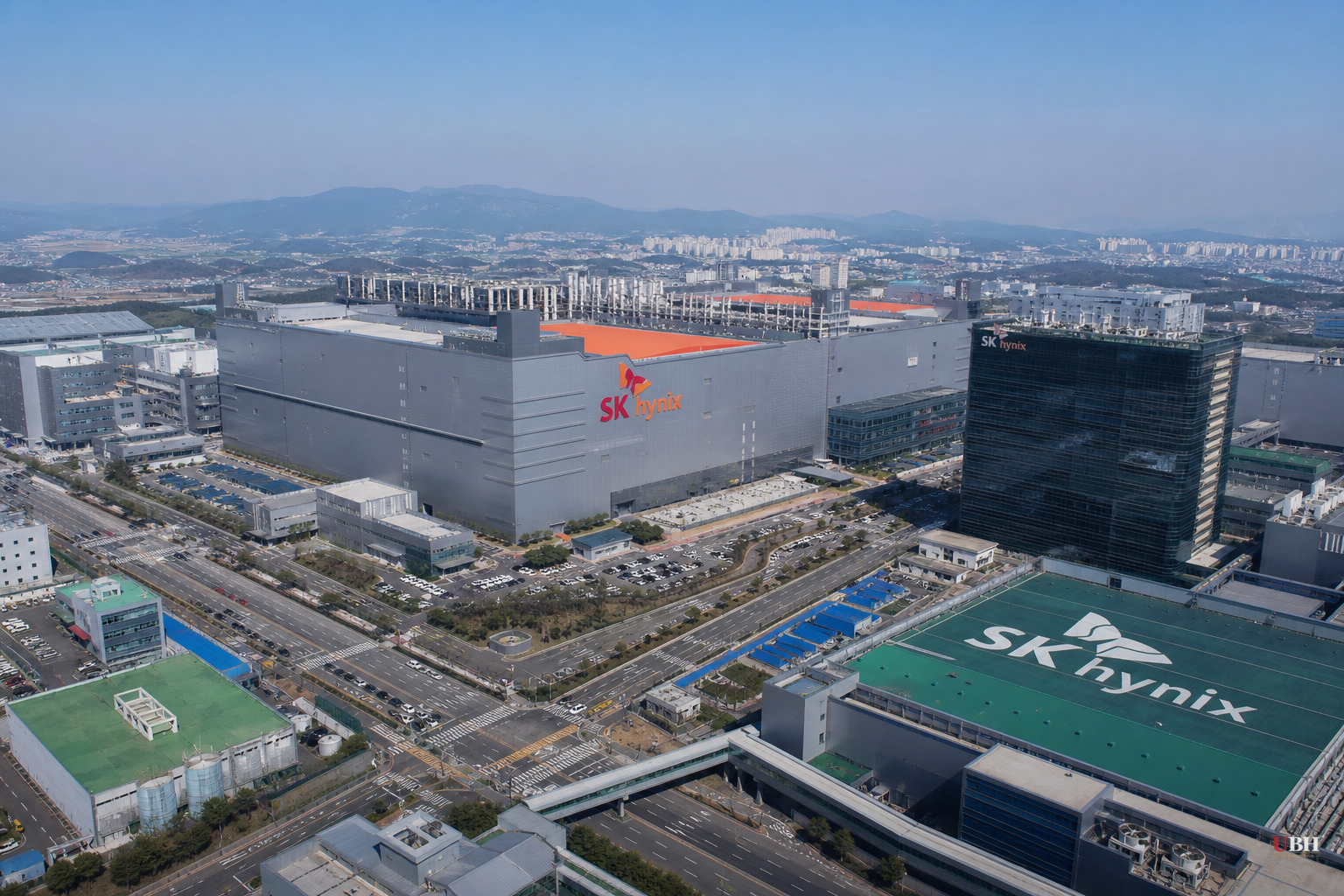
SK Hynix posted record profits off the AI chip boom. Then management tried to change how it pays out the bonuses tied to those profits. Workers didn't like that, so they built a new union in days.
According to Reuters, the new labor body formally launched on Thursday, August 13, after South Korea's government approved the registration application. Reuters reported nearly 2,500 workers had joined as of the union's own website count. Other outlets tracking the earlier organizing phase put the number higher. The Korea Herald reported about 3,800 employees joined an online organizing group launched August 5, while the Korea JoongAng Daily and Crypto Briefing both put the figure above 4,000 as of that Monday. The gap likely reflects different snapshots in a fast-moving sign-up drive, not a contradiction.
Whatever the exact count, it's a meaningful chunk of a company with roughly 34,466 employees at the end of last year, per Korea Herald's sourcing. Even the lower Reuters figure is over 7% of the workforce, organized in about a week.
The Bonus Fight at the Center of This
SK Hynix and its unions agreed last year to funnel 10% of the company's annual operating profit into employee bonuses for the next 10 years, with 80% paid out immediately and the rest spread over two years, according to the Korea Herald. That deal replaced an earlier cap of 1,000% of base pay, per Korea JoongAng Daily. Off a record 47.2 trillion won ($33.5 billion) operating profit, that formula produced a bonus worth 2,964% of monthly base salary, according to Crypto Briefing.
During this year's wage talks, management proposed paying a chunk of that bonus in restricted company stock instead of cash, along with temporary wage adjustments in years the company posts a loss, according to Reuters and Korea JoongAng Daily. Workers say that shifts risk onto their paychecks that they didn't sign up for. Reopening a deal less than a year after it was struck hasn't helped trust either, according to several sources.
Why Workers Are Skeptical of Stock
The workers' concern is straightforward: cash is cash, but restricted stock rises and falls with the share price. Korean equities have a reputation for volatility, and a bonus worth thousands of percent of base salary is a very different number if it's locked in company stock during a downturn.
Kim Yong-jin, a management professor at Sogang University, told Reuters that while workers' worries about stock compensation are understandable given that volatility, equity-based bonuses are standard practice in the United States. That's a fair counterpoint. Restricted stock aligns employee incentives with long-term company performance, and plenty of American tech workers get paid partly in shares without treating it as a betrayal.
Reuters reported that investors have questioned whether committing 10% of operating profit to employee bonuses cuts into money that could go toward capital investment or shareholder returns. SK Hynix isn't hoarding cash out of stinginess. It's trying to balance worker retention against the capital-intensive business of building next-generation memory chips during an AI arms race.
The Union Has a Steep Climb
Independence from Korea's two major labor federations, the Korean Confederation of Trade Unions and the Federation of Korean Trade Unions, is a deliberate choice, according to Korea JoongAng Daily. The new union is modeled on Samsung's cross-affiliate Samsung Group United Union, which doesn't answer to either federation.
But independence doesn't come with instant bargaining power. Under South Korean labor law, a union needs majority status, more than half the workforce, to become the sole representative body in collective bargaining, Reuters reported. Park Ji-soon, a social security law professor at Korea University, told Reuters that the launch could trigger competition among unions for members precisely because majority status is the prize.
Timing may be the bigger obstacle. Park Han-ul, a labor attorney at the Donggam law firm, told Korea JoongAng Daily that a union launching after bargaining is already underway has to apply to the Labor Relations Commission just to get its own bargaining unit recognized. "Taking part in this year's talks will not be easy," Park said.
SK Hynix has kept its public statements procedural. The company told Korea Herald it had not officially confirmed the new union's formation and would follow relevant laws and procedures once it did.
There's also a political layer. Industry Minister Kim Jung-kwan said last week he opposes bonus systems tied directly to operating profit, according to Korea Herald, and the Labor Ministry is expected to issue guidelines this month on the scope of collective bargaining. That guidance could shape not just SK Hynix's talks but the template other Korean chipmakers use.
Samsung, for comparison, already settled its version of this fight. Reuters reported that in May, Samsung Electronics agreed to allocate 10.5% of its semiconductor operating profit to special bonuses, paid in company stock with a majority of the shares restricted from immediate sale, averting a strike that could have disrupted supply.
Whether SK Hynix's new union gets a seat at this year's table, or has to wait until next year while management's stock-bonus plan proceeds without it, remains an open question none of the reporting has resolved.
Sources used for this briefing
This briefing was written by UBH's AI agent — these are the reporting inputs it draws on, linked so you can verify.


